
Anabolism vs. Catabolism: The Two Sides of Your Metabolism

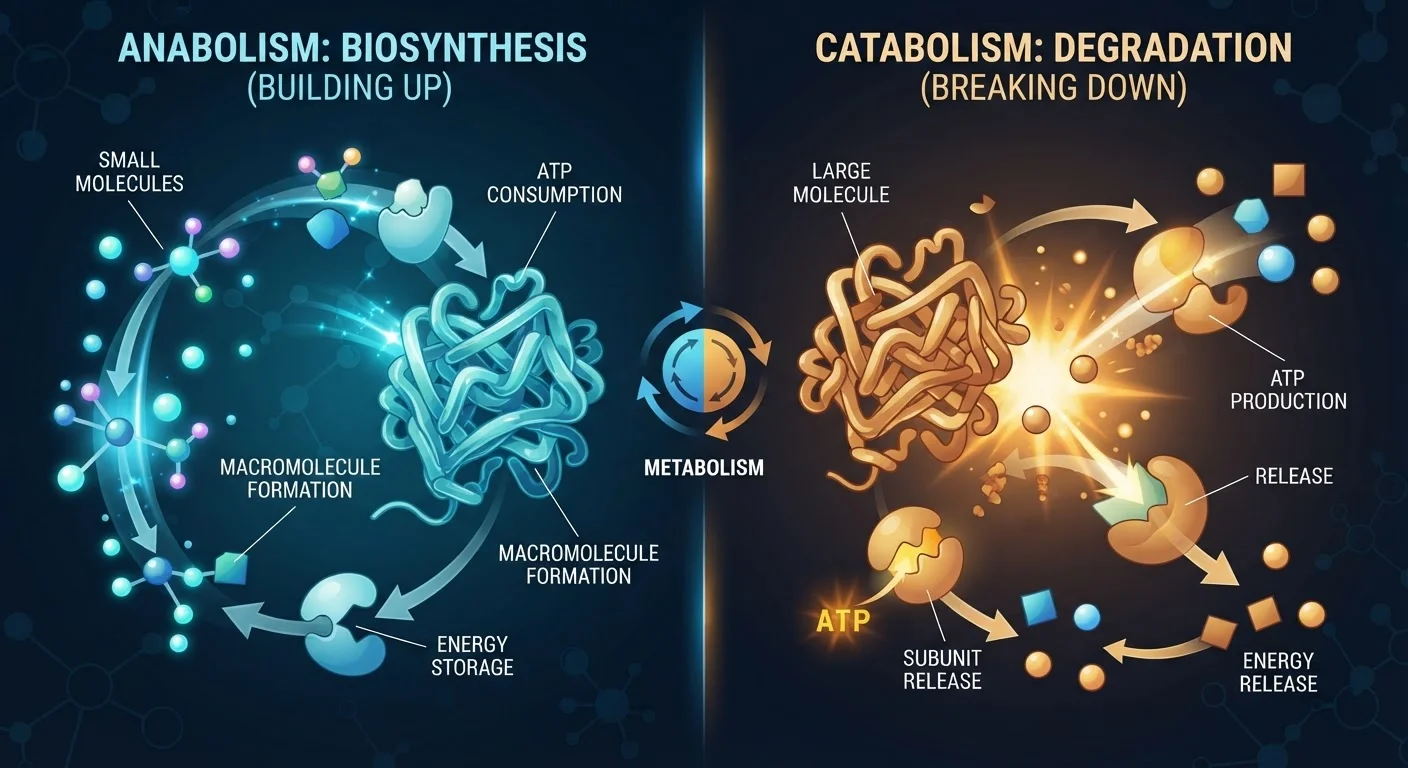
Photo: YetaWellness.com | Explore Trending Blogs editorial
Key Takeaways
- Metabolism is not one process - it is the sum of anabolic (building) and catabolic (breaking down) reactions.
- Anabolism uses energy to construct complex molecules like proteins, glycogen, and body fat.
- Catabolism releases energy by breaking down complex molecules into simpler ones.
- Neither process is inherently 'good' or 'bad' - both are essential for survival and health.
- The balance between anabolism and catabolism shifts in response to nutrition, activity, sleep, and hormones.
- Supporting this balance through sustainable habits - not extreme interventions - is key to metabolic health.
What Metabolism Actually Splits Into
When people talk about metabolism, they often treat it as a single dial - fast or slow, efficient or sluggish. In reality, metabolism is a collection of thousands of chemical reactions occurring simultaneously throughout your body. These reactions fall into two broad categories: anabolism and catabolism.
Together, they are referred to as metabolic processes - the ongoing biological work that keeps every cell in your body functioning. Understanding the distinction between them isn't just academic; it reframes how you think about energy, body composition, and everyday health decisions.
| Criterion | Anabolism | Catabolism |
|---|---|---|
| Primary direction | Building up (synthesis) | Breaking down (degradation) |
| Energy relationship | Consumes ATP (energy-requiring) | Produces ATP (energy-releasing) |
| Example processes | Muscle protein synthesis, glycogen storage | Glycolysis, fat oxidation, gluconeogenesis |
| Key hormones | Insulin, growth hormone, testosterone | Cortisol, glucagon, epinephrine |
| Triggered by | Feeding, rest, resistance exercise | Fasting, stress, endurance exercise |
| Role in body composition | Muscle gain, fat storage, tissue repair | Fat burning, muscle breakdown (extreme cases) |
| Occurs during sleep? | Yes - peak anabolic repair window | Yes - light fat oxidation during fasting sleep |
Anabolism: Building Up
Anabolism encompasses all the metabolic reactions that construct larger, more complex molecules from smaller building blocks. These are energy-consuming processes - they require ATP (adenosine triphosphate, the body's primary energy currency) to drive the work of assembly.
Key anabolic processes include:
- Muscle protein synthesis: Amino acids from dietary protein are linked together to form new muscle fibers, particularly in response to resistance exercise.
- Glycogen synthesis: Glucose molecules are assembled into glycogen chains stored in the liver and muscles for future energy use.
- Fat storage (lipogenesis): Excess dietary energy - from any macronutrient - can be converted into triglycerides and stored in adipose tissue.
- Bone and tissue repair: Cells use anabolic pathways to regenerate bone matrix, connective tissue, and organs throughout the lifespan.
Anabolic activity is strongly influenced by hormones including insulin, growth hormone, and testosterone - all of which rise or fall in response to nutrition, sleep quality, and physical activity.
Catabolism: Breaking Down
Catabolism is the complementary process - the breakdown of complex molecules into simpler ones, releasing energy in the process. Where anabolism spends ATP, catabolism generates it.
Key catabolic processes include:
- Glycolysis: Glucose (from food or stored glycogen) is broken down to produce ATP for immediate energy needs.
- Fat oxidation (lipolysis): Stored triglycerides are broken down into fatty acids and glycerol, then oxidized for energy - particularly during low-intensity activity or fasting.
- Protein catabolism: Under conditions of prolonged fasting, severe caloric restriction, or intense stress, muscle protein can be broken down into amino acids and converted to glucose through a process called gluconeogenesis.
- Autophagy: A specialized catabolic process in which cells break down and recycle damaged or dysfunctional components - an area of active research in longevity science.
Cortisol and glucagon are among the key catabolic hormones, rising during fasting, stress, and high-intensity physical exertion.
How the Balance Shifts - and Why It Matters
Your body is never purely in one state or the other. Anabolism and catabolism occur simultaneously, but their relative dominance shifts based on context. After a protein-rich meal and resistance workout, anabolic signaling tends to dominate. During a 12-hour fast or a long endurance effort, catabolic pathways ramp up to meet energy demands.
This balance has real implications for body composition. When anabolism consistently outpaces catabolism - particularly in muscle tissue - the result over time is muscle growth. When catabolism dominates for extended periods without adequate nutritional support, muscle loss (catabolism of lean tissue) can occur alongside fat loss.
Importantly, this balance also shifts across the lifespan. Research suggests that anabolic efficiency declines with age, partly explaining the gradual muscle loss many adults experience after their 30s - a phenomenon known as sarcopenia. This is one reason adequate protein intake and resistance training are consistently emphasized in guidelines for older adults.
Neither Side Is the Enemy
For a broader look at how these processes connect to everyday habits, see our guide on what's actually worth your attention when it comes to daily metabolic health.
This article is for general informational and educational purposes only and does not constitute medical advice. Consult a qualified healthcare professional for guidance specific to your individual health needs.
The content on this site is for informational purposes only and is not a substitute for professional advice. Always consult a qualified professional for guidance specific to your situation.