
Carbohydrates vs. Fats as an Energy Source: How Your Body Chooses

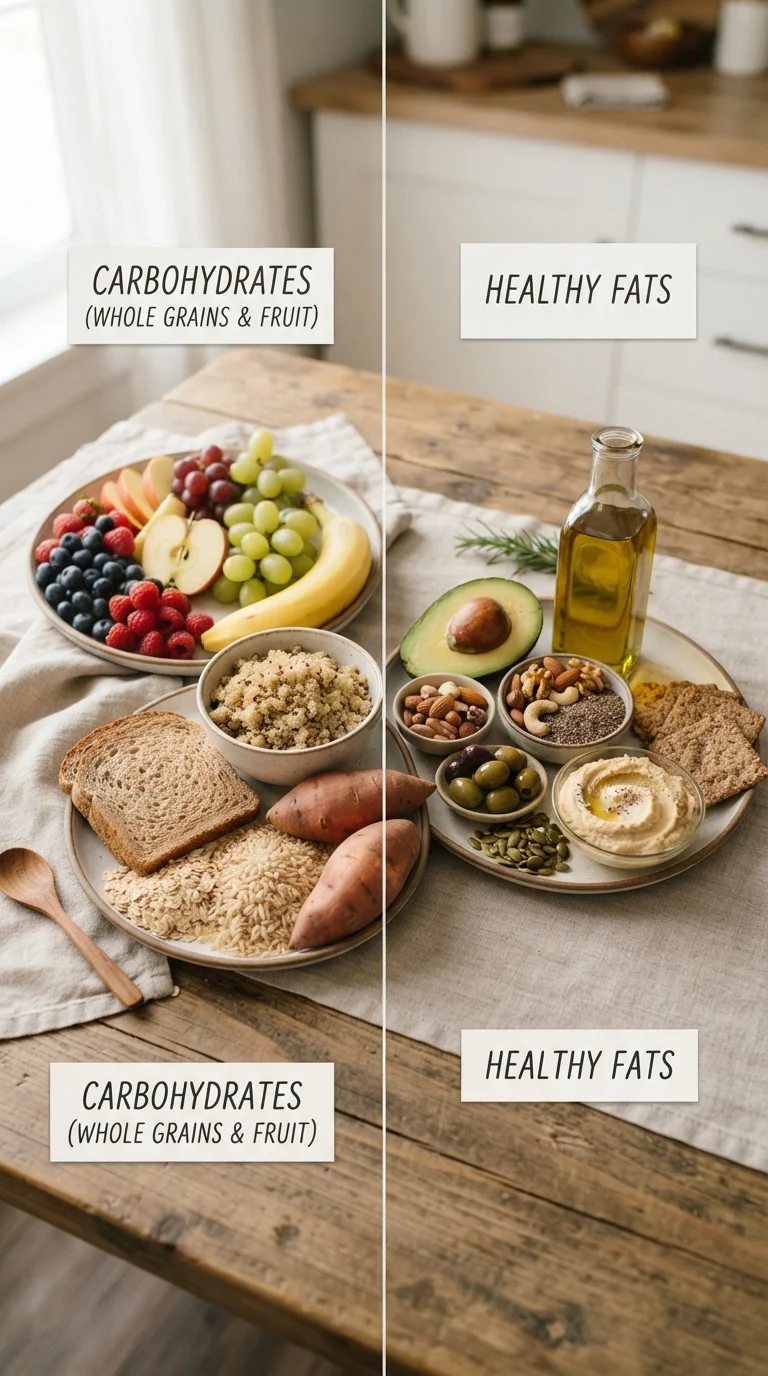
Photo: YetaWellness.com | Explore Trending Blogs editorial
Key Takeaways
- Your body preferentially burns carbohydrates during high-intensity exercise because they convert to energy faster.
- Fat becomes the dominant fuel source during low-intensity activity and at rest.
- Both macronutrients can coexist in a healthy diet; neither needs to be eliminated.
- Insulin levels and glycogen availability are key signals that shift your body's fuel preference.
- The brain relies almost exclusively on glucose, making carbohydrate intake important for cognitive function.
- Individual factors like fitness level and diet composition influence how efficiently your body uses each fuel.
How Your Body Decides Which Fuel to Burn
Your cells are remarkably adaptable energy consumers. They can extract usable fuel — in the form of ATP, the molecule that powers virtually every cellular process — from carbohydrates, fats, and even protein. But the body does not make this selection randomly. Two primary signals drive the choice: exercise intensity and circulating fuel availability.
When you eat carbohydrates, they are broken down into glucose. Some glucose enters the bloodstream immediately; the rest is stored as glycogen in your liver and muscles. When blood glucose and insulin levels are elevated, your body favors burning glucose. When those levels drop — during fasting, low-carb eating, or extended physical effort — fat mobilization increases and fatty acids become the dominant energy substrate.
To understand the full role each macronutrient plays, see our overview of all three macronutrients and their biological functions.
Carbohydrates: Speed and Efficiency
Carbohydrates are the body's high-octane fuel. Through a process called glycolysis, glucose can be converted to ATP rapidly — without requiring oxygen. This makes carbs indispensable during high-intensity exercise, when oxygen delivery to muscles temporarily can't keep pace with demand.
The brain is particularly reliant on glucose. Unlike muscle tissue, the brain cannot efficiently oxidize fat under normal dietary conditions. It consumes roughly 120 grams of glucose per day under typical circumstances, which is why carbohydrate intake supports cognitive function and focus.
Not all carbohydrates behave identically. Simple carbohydrates digest quickly, causing a rapid rise in blood glucose. Complex carbohydrates, found in whole grains, legumes, and vegetables, break down more slowly and provide steadier energy. Learn how simple and complex carbs differ and what each means for your daily energy levels.
| Criterion | Carbohydrates | Dietary Fats |
|---|---|---|
| Calories per gram | 4 kcal | 9 kcal |
| Speed of energy release | Fast (glycolysis) | Slow (beta-oxidation) |
| Preferred during high-intensity exercise | Yes | No |
| Dominant fuel at rest | Partial contribution | Primary source |
| Brain fuel under normal diet | Primary (glucose) | Minimal contribution |
| Storage capacity in body | Limited (glycogen ~400–500g) | Large (adipose tissue) |
| Requires oxygen to produce ATP | Not always (anaerobic path available) | Yes (aerobic only) |
Fats: The Long-Burning Reserve
Dietary fats are energy-dense — providing about 9 calories per gram compared to carbohydrates' 4 calories per gram — and the body's total fat reserves represent a far larger energy store than glycogen. Fat oxidation (the process of breaking down fatty acids for fuel) is slower than glycolysis, but extremely efficient during lower-intensity, longer-duration activities.
During rest and light-to-moderate exercise, fat supplies a substantial portion of your energy needs. As exercise intensity climbs past roughly 65–70% of your maximum heart rate, your body shifts progressively toward carbohydrate burning because fat oxidation simply cannot keep pace with the ATP demand.
It's worth noting that body composition influences this ratio. Muscle and fat tissue affect resting energy burn differently, and individuals with greater aerobic fitness tend to oxidize fat more efficiently even at moderate intensities — an adaptation built through consistent endurance training.
What Determines the Balance Day-to-Day
Several practical factors shift your carb-to-fat fuel ratio across an ordinary day:
- Meal timing and composition: After a carbohydrate-containing meal, glucose and insulin rise, suppressing fat oxidation temporarily. During fasting periods — such as overnight — fat utilization increases.
- Physical activity level: Low-intensity movement (walking, light housework) draws heavily on fat. Intense exercise (running, interval training) relies predominantly on glycogen.
- Glycogen status: When muscle glycogen stores are depleted — after prolonged exercise or very-low-carb eating — the body upregulates fat metabolism to compensate.
- Overall diet pattern: Consistently low carbohydrate intake encourages metabolic adaptations that increase fat oxidation over time, though this does not eliminate the efficiency advantage carbohydrates hold at high intensities.
Many popular narratives overstate the importance of choosing one fuel source exclusively. Common macronutrient myths — like the idea that carbs inherently cause weight gain — distort what the evidence actually shows about how the body uses fuel.
Fiber, technically a form of carbohydrate, adds another layer of nuance: it resists digestion and does not contribute meaningfully to blood glucose or calorie supply. See how fiber fits into the carbohydrate story for a fuller picture.
This article is for general informational and educational purposes only and is not a substitute for professional medical or dietary advice. Consult a qualified healthcare provider before making significant changes to your diet, especially if you have an existing health condition.
The content on this site is for informational purposes only and is not a substitute for professional advice. Always consult a qualified professional for guidance specific to your situation.