
How Muscle and Fat Tissue Affect Your Resting Energy Burn

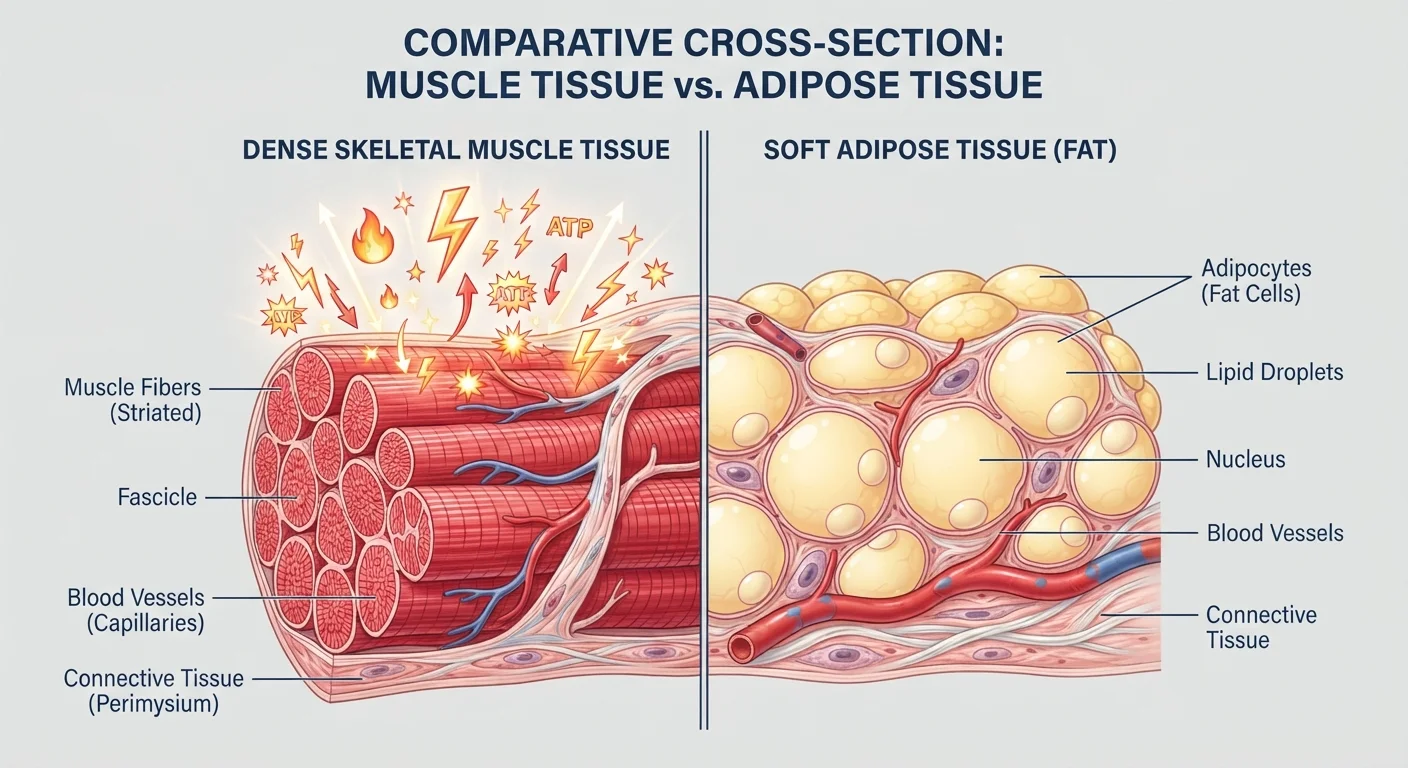
Photo: YetaWellness.com | Explore Trending Blogs editorial
Key Takeaways
- Muscle tissue burns more calories at rest than fat tissue, but the difference per pound is more modest than many popular claims suggest.
- Your basal metabolic rate is driven primarily by your total lean mass, organ size, and body composition - not just muscle alone.
- Gaining muscle can meaningfully raise resting energy expenditure over time, especially across significant changes in body composition.
- Fat tissue is not metabolically inert - it plays active roles in hormone signaling and energy storage.
- No single tissue tells the whole story; organs like the liver and brain account for a large share of resting calorie burn.
Why Your Body Composition Shapes Your Resting Burn
When people talk about having a "fast" or "slow" metabolism, they're often unknowingly describing the effects of body composition. Your body composition - the ratio of muscle, fat, bone, and other tissues - plays a meaningful role in determining how many calories your body burns while you're at rest.
This resting energy burn is what scientists call basal metabolic rate (BMR) - the minimum energy your body needs to maintain basic functions like breathing, circulation, and cellular repair. Understanding how different tissues contribute to this number helps demystify a lot of common claims about metabolism.
~13 kcal
Burned per kg of muscle at rest daily
Estimated resting metabolic rate of skeletal muscle tissue, per published physiology research.
~4.5 kcal
Burned per kg of fat at rest daily
Estimated resting metabolic rate of adipose tissue, compared to the higher demand of muscle and organs.
~50-60%
Of BMR attributed to organ metabolism
The liver, brain, heart, and kidneys together account for a large share of basal metabolic rate despite their small mass.
Muscle vs. Fat: The Metabolic Reality
It's commonly stated that muscle "burns more calories than fat," and this is true - but the magnitude is often exaggerated. Research estimates that skeletal muscle burns roughly 13 kilocalories per kilogram per day at rest, while adipose (fat) tissue burns approximately 4.5 kcal/kg/day. Translated to familiar units, one pound of muscle burns around 6 calories per day at rest; one pound of fat burns about 2.
That's a real difference, but it means that gaining five pounds of muscle - a meaningful achievement that typically requires months of dedicated resistance training - would increase your resting burn by roughly 30 calories per day. Not dramatic, but cumulative over time and compounded by the extra calories burned during the exercise itself.
For a deeper look at how these two tissues differ structurally and functionally, see Muscle vs. Fat: Why the Same Weight Can Mean Very Different Things.
The Overlooked Role of Organs
A common misconception is that muscle mass is the dominant driver of resting metabolism. In reality, your internal organs - particularly the liver, brain, heart, and kidneys - are among the most energy-hungry tissues in the body on a per-kilogram basis. Though they represent only a small fraction of total body weight, these organs collectively account for a substantial portion of BMR.
This is why two people with similar muscle mass can have meaningfully different metabolic rates based on organ size, age, and other physiological factors. It's also one reason why metabolism changes across the lifespan in ways that go beyond simply losing muscle. To understand how age interacts with these changes, see How Age Changes the Way Your Body Burns Energy.
Fat Tissue Is Not Metabolically Inert
Adipose tissue has a reputation as passive storage, but that framing is incomplete. Fat cells - called adipocytes - produce hormones including leptin, which helps regulate appetite, and adiponectin, which influences insulin sensitivity and inflammation. These functions make fat an active participant in metabolic regulation, even if it demands far fewer calories to maintain than muscle or organ tissue.
The location of fat in the body also matters. Visceral fat, stored around internal organs, is more metabolically disruptive than subcutaneous fat stored under the skin. This is one reason body composition assessments often look beyond total fat percentage to fat distribution. Beyond resting burn, daily energy expenditure is also shaped by movement - including non-exercise activity thermogenesis (NEAT) and the thermic effect of food.
This article is for general informational and educational purposes only and is not a substitute for professional medical advice. Consult a qualified healthcare provider for guidance specific to your health needs.
Frequently Asked Questions
The content on this site is for informational purposes only and is not a substitute for professional advice. Always consult a qualified professional for guidance specific to your situation.