
How Age Changes the Way Your Body Burns Energy

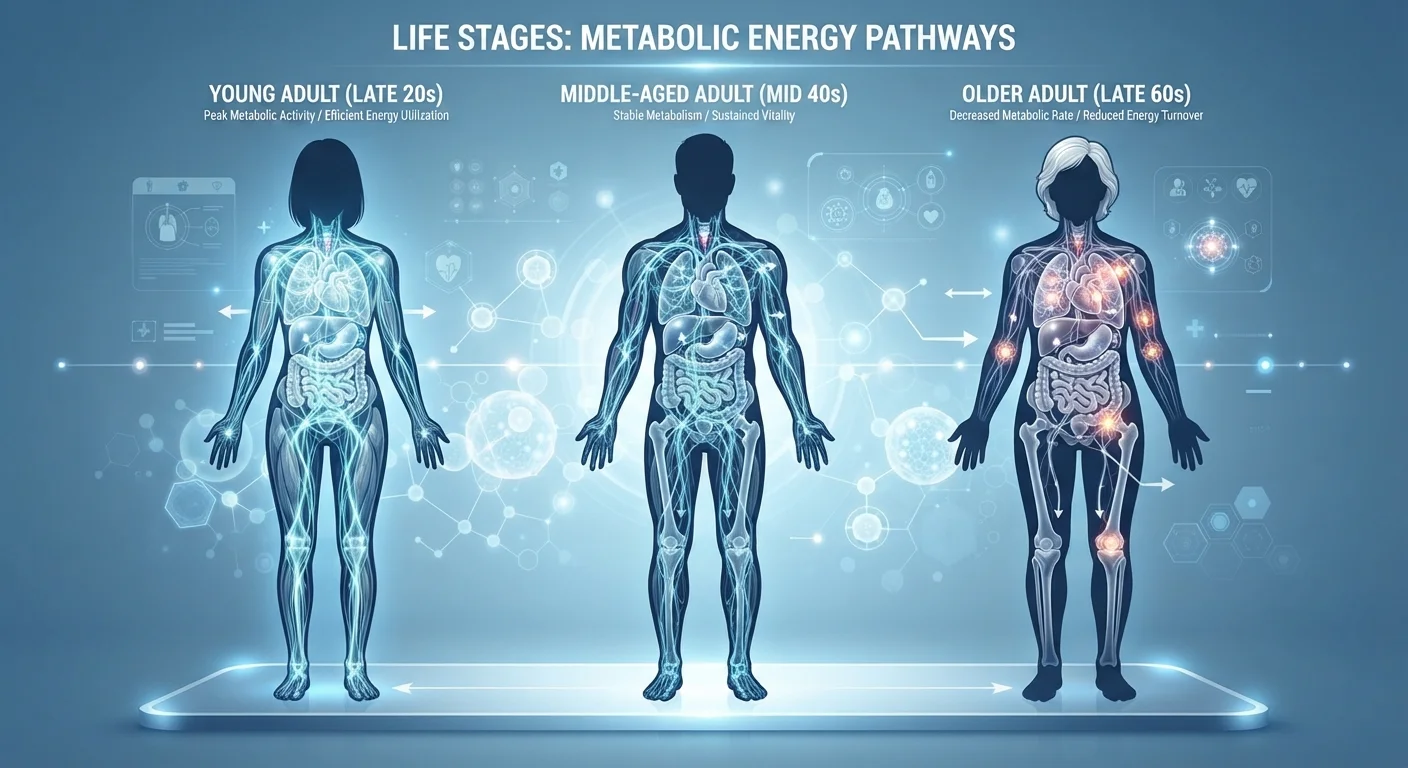
Photo: YetaWellness.com | Explore Trending Blogs editorial
Key Takeaways
- Metabolism does change with age, but the most dramatic slowdown occurs after age 60, not in your 30s or 40s.
- Loss of muscle mass - not aging itself - is a primary driver of declining resting energy expenditure.
- Hormonal shifts, including changes in thyroid and sex hormones, contribute to metabolic changes over time.
- Staying physically active and preserving muscle mass can meaningfully offset age-related metabolic decline.
- Total energy expenditure involves more than BMR - physical activity and digestion also play significant roles.
What Actually Drives Your Metabolic Rate
When people talk about metabolism "slowing down," they're usually referring to basal metabolic rate (BMR) - the energy your body expends at complete rest just to keep essential functions running: breathing, circulation, cell repair, and temperature regulation. BMR accounts for roughly 60-70% of total daily energy expenditure for most adults. For a deeper look at this foundation, see how BMR is calculated and what drives it.
BMR is not a fixed number. It's influenced by body size, body composition, hormonal status, and cellular activity. Of these, body composition - specifically the ratio of muscle to fat - is among the most influential variables. Muscle tissue is metabolically active, requiring energy even when you're not exercising. Fat tissue is comparatively less so. As the balance between muscle and fat shifts over time, so does the body's resting energy demand.
Multiple factors influence metabolic rate, including genetics, sex, and hormones - many of which change meaningfully across a lifetime.
The Biology of Metabolism Across Life Stages
The body's energy-burning profile is not static - it evolves from infancy through older adulthood. In early childhood, metabolic rates are extremely high relative to body size, supporting rapid growth and brain development. These rates peak in the first year of life, then gradually decline through adolescence and into early adulthood.
A landmark 2021 study published in the journal Science - involving more than 6,400 participants across 29 countries - found that total energy expenditure, when adjusted for body size and composition, stays surprisingly stable between ages 20 and 60. The pronounced metabolic slowdown commonly attributed to one's 30s and 40s appears to be more a product of lifestyle change and muscle loss than of aging biology itself.
After age 60, however, a genuine biological decline becomes more apparent. Cellular energy production becomes less efficient, organ mass can decrease, and the hormonal environment shifts - all contributing to a measurable reduction in energy expenditure. This is explored in detail in The Aging Metabolism: Separating Myth From Biology.
~1-2%
Annual muscle mass loss after age 50
Sarcopenia - age-related muscle loss - can proceed at this rate without physical activity intervention, according to general clinical estimates.
Age 60
When significant metabolic decline typically begins
A 2021 study in Science found total energy expenditure remains stable from ages 20-60, with measurable decline occurring in the decades beyond.
60-70%
Share of daily energy use attributed to BMR
Basal metabolic rate - the energy burned at rest - accounts for the majority of an adult's total daily energy expenditure.
The Muscle Mass Connection
One of the most consequential metabolic changes with age is sarcopenia - the gradual, age-associated loss of skeletal muscle mass and strength. This process typically accelerates after age 50 and can proceed at a rate of roughly 1-2% of muscle mass per year without intervention, though individual rates vary.
Because muscle is metabolically expensive tissue, its loss directly reduces resting energy expenditure. This creates a feedback loop: reduced activity leads to muscle loss, which lowers metabolic rate, which can increase fat accumulation if energy intake remains constant. Understanding how muscle and fat tissue affect resting energy burn is key to interpreting these changes accurately.
The good news is that sarcopenia is not inevitable in its severity. Resistance training - such as weightlifting or body-weight exercises - is one of the most evidence-supported strategies for preserving and even rebuilding muscle tissue at older ages. For a broader view of how body composition shifts across the lifespan, see how muscle and fat shift from youth to old age.
How Hormones Shape the Picture
Hormonal changes are a significant, though often overstated, contributor to metabolic shifts with age. Several key hormones decline or fluctuate as people grow older:
- Thyroid hormones - which set the pace of cellular metabolism - can decline subtly with age, lowering the rate at which cells convert nutrients to energy.
- Sex hormones (estrogen and testosterone) influence muscle maintenance and fat distribution. Declines during menopause and andropause can contribute to shifts in body composition that indirectly affect metabolic rate.
- Growth hormone and insulin-like growth factor 1 (IGF-1) both decline with age, reducing the body's capacity for muscle protein synthesis.
- Insulin sensitivity tends to decrease with age, affecting how efficiently the body processes glucose for energy.
These hormonal interactions are complex and interconnected. For a fuller explanation, see hormones that regulate metabolism.
Preserving Muscle Is Preserving Metabolism
What This Means in Practical Terms
Understanding the biology of age-related metabolic change is more useful than trying to "fight" it. The most evidence-supported approaches for supporting metabolic health as you age involve lifestyle habits that preserve muscle mass and sustain physical activity - not extreme dietary restriction, which can itself have negative metabolic consequences. See why crash diets can slow metabolic rate over time for more on that dynamic.
Nutritional habits also play a meaningful role. Adequate protein intake, in particular, supports muscle protein synthesis and helps offset sarcopenia. Nutritional habits that aging bodies rely on offers an evidence-based overview of this topic.
For broader context on how physical health naturally changes over time, the Body Changes Over Time hub brings together research across multiple systems and life stages.
This article is for general informational and educational purposes only and does not constitute medical advice. Always consult a qualified healthcare professional for guidance tailored to your individual health needs.
Frequently Asked Questions
The content on this site is for informational purposes only and is not a substitute for professional advice. Always consult a qualified professional for guidance specific to your situation.