
Hormones That Regulate Metabolism: Thyroid, Insulin, and Beyond

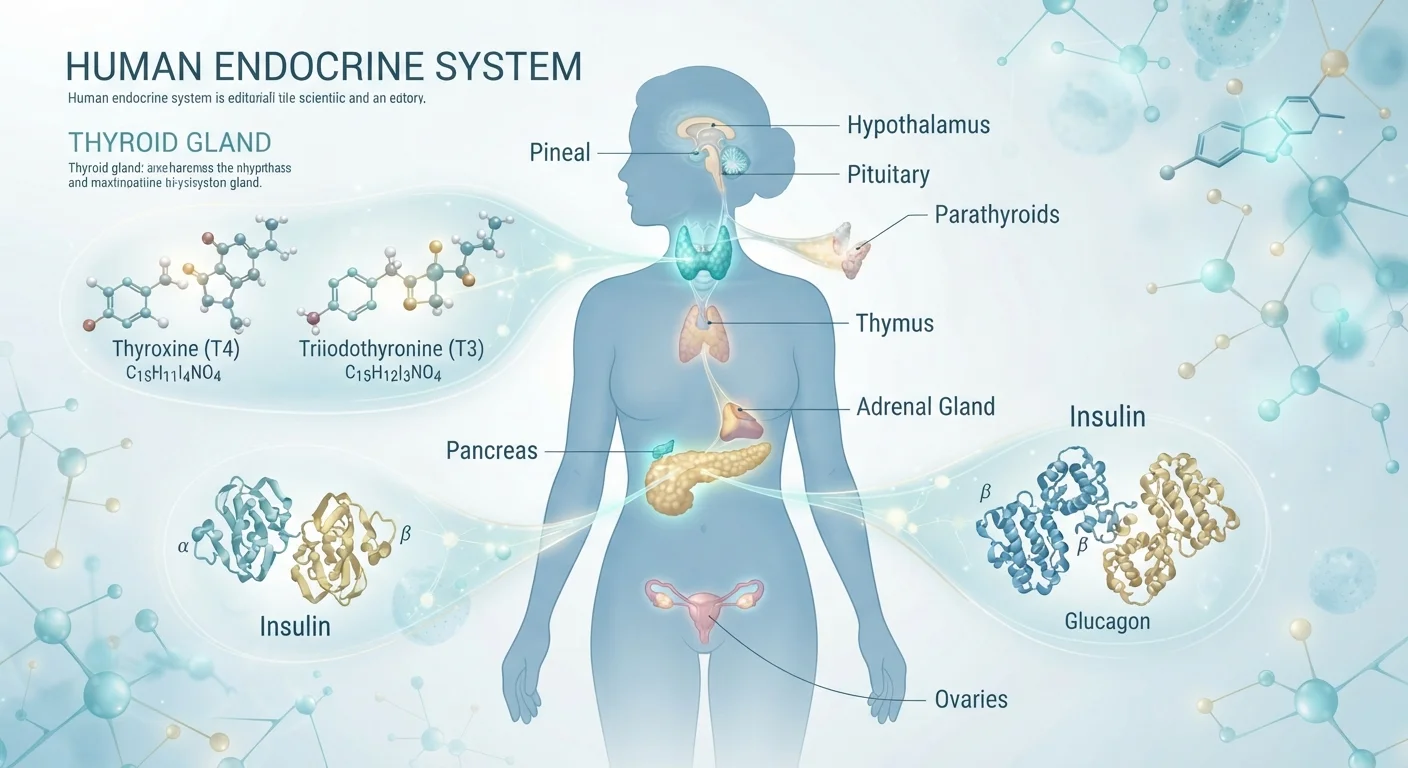
Photo: YetaWellness.com | Explore Trending Blogs editorial
How Hormones Drive Metabolic Function
Metabolism - the sum of all chemical processes that convert food into usable energy - doesn't run on autopilot. It's precisely regulated by a network of hormones that signal cells when to burn fuel, when to store it, and how quickly to operate. Understanding these hormonal messengers helps clarify why metabolism isn't simply a matter of willpower or calorie math. As explored in our article on why metabolism and weight are more complicated than a calorie equation, hormonal and behavioral factors interact in ways that go well beyond simple arithmetic.
| Primary metabolic hormone | Thyroid hormone (T3/T4) (American Thyroid Association) |
| Insulin's main function | Directs glucose into cells for energy use or storage |
| Cortisol rhythm | Peaks in early morning; follows a circadian pattern |
| Leptin's role | Signals the brain that fat stores are sufficient |
| Ghrelin's role | Stimulates hunger; rises before meals, falls after eating |
| Hormones involved in metabolism | Thyroid hormones, insulin, glucagon, cortisol, leptin, ghrelin (and others) |
The major metabolic hormones include thyroid hormones, insulin, cortisol, leptin, and ghrelin. Each operates through distinct pathways, yet they interact constantly - meaning a disruption in one system can produce ripple effects across others.
Thyroid Hormones: The Metabolic Throttle
The thyroid gland, located at the base of the neck, produces two primary hormones: thyroxine (T4) and triiodothyronine (T3). T3 is the more metabolically active form; T4 is largely converted into T3 in peripheral tissues. Together, these hormones influence the metabolic rate of nearly every cell in the body.
When thyroid output is insufficient - a condition called hypothyroidism - the body's energy production slows. Common signs may include fatigue, weight changes, cold sensitivity, and sluggish digestion. Conversely, excess thyroid hormone (hyperthyroidism) can accelerate metabolism, leading to unintended weight loss, rapid heartbeat, and heat intolerance.
Thyroid function is itself regulated by the pituitary gland via thyroid-stimulating hormone (TSH), illustrating that metabolic regulation is a layered, feedback-driven system rather than a single switch. Those curious about factors that influence metabolic rate will find thyroid function consistently near the top of the list.
Insulin and Glucagon: Fuel Routing Signals
Insulin, produced by the beta cells of the pancreas, is released in response to rising blood glucose after a meal. Its primary role is to facilitate glucose uptake into cells - particularly muscle and fat tissue - and to signal the liver to store excess glucose as glycogen. When glucose is efficiently taken up and used, energy metabolism proceeds normally.
Insulin resistance - a state in which cells respond less effectively to insulin's signals - forces the pancreas to produce more insulin to achieve the same effect. Over time, this can alter how the body partitions fuel, often favoring fat storage. Insulin resistance is associated with type 2 diabetes, metabolic syndrome, and cardiovascular risk, though its causes involve genetics, body composition, activity levels, and other hormonal factors.
Glucagon, insulin's counterpart, is released when blood glucose drops. It signals the liver to break down glycogen and release glucose back into circulation, preventing dangerous lows. The dynamic balance between insulin and glucagon is central to metabolic stability throughout the day.
Cortisol, Leptin, and Ghrelin: Stress, Satiety, and Hunger
Cortisol, often called the stress hormone, is produced by the adrenal glands and follows a daily rhythm - peaking in early morning to support alertness and energy mobilization. In short bursts, cortisol is adaptive: it raises blood glucose and primes the body for action. Chronically elevated cortisol, however, can impair insulin sensitivity, promote visceral fat accumulation, and disrupt sleep - all of which affect metabolic health. As detailed in our discussion of factors influencing body composition beyond diet and exercise, stress hormones play a meaningful role in how the body distributes fat.
Leptin is secreted by fat cells and signals the brain that energy stores are adequate, suppressing appetite. In theory, more body fat means more leptin and less hunger - but in practice, many individuals with elevated fat mass develop leptin resistance, in which the brain stops responding to the signal effectively.
Ghrelin, produced mainly in the stomach, rises before meals and falls after eating. It's one of the primary hunger-stimulating hormones and can increase following periods of caloric restriction, which partly explains why appetite often intensifies after intentional weight loss.
These hormonal dynamics also shift over time. Our article on how age changes the way your body burns energy examines how hormonal profiles evolve across the lifespan.
Thyroid hormones (T3/T4)
Hormones produced by the thyroid gland that regulate the basal metabolic rate of nearly all body cells. T3 is the more active form; T4 is largely converted to T3 in peripheral tissues.
Insulin resistance
A condition in which cells respond less effectively to insulin, requiring the pancreas to produce more of the hormone to manage blood glucose. It is associated with metabolic syndrome and type 2 diabetes.
Leptin resistance
A state in which the brain fails to respond appropriately to leptin signals from fat cells, often resulting in continued appetite even when energy stores are adequate.
Glucagon
A pancreatic hormone that raises blood glucose by signaling the liver to break down stored glycogen. It acts in opposition to insulin to maintain blood sugar balance.
Cortisol
A steroid hormone produced by the adrenal glands in response to stress and as part of the daily circadian rhythm. It mobilizes energy and can impair insulin sensitivity when chronically elevated.
Ghrelin
A hunger-stimulating hormone produced primarily in the stomach. Ghrelin levels rise before meals and can increase during periods of caloric restriction, contributing to stronger appetite sensations.
What Hormonal Imbalances Can Mean for Metabolism
Hormonal disruptions - whether from medical conditions, chronic stress, poor sleep, or other factors - can meaningfully alter how efficiently the body processes energy. It's important to recognize, however, that not every metabolic complaint signals a diagnosable hormone disorder. Many hormonal shifts exist on a continuum, and their effects vary widely between individuals.
If you suspect a hormonal issue is affecting your health or energy levels, the appropriate path is evaluation by a qualified healthcare provider. Blood tests such as thyroid panels, fasting glucose, and insulin markers can provide clinically meaningful data - but interpreting results and guiding treatment requires professional judgment, not self-diagnosis.
For everyday metabolic support that doesn't depend on a prescription, our companion piece on what's actually worth your attention for daily metabolic health separates evidence-backed habits from overhyped claims.
This article is for general informational and educational purposes only and is not a substitute for professional medical advice, diagnosis, or treatment. Always consult a qualified healthcare provider with any questions you may have regarding a medical condition or before making changes to your health routine.
The content on this site is for informational purposes only and is not a substitute for professional advice. Always consult a qualified professional for guidance specific to your situation.