
Body Composition, Explained: What the Numbers on Your Scale Can't Tell You

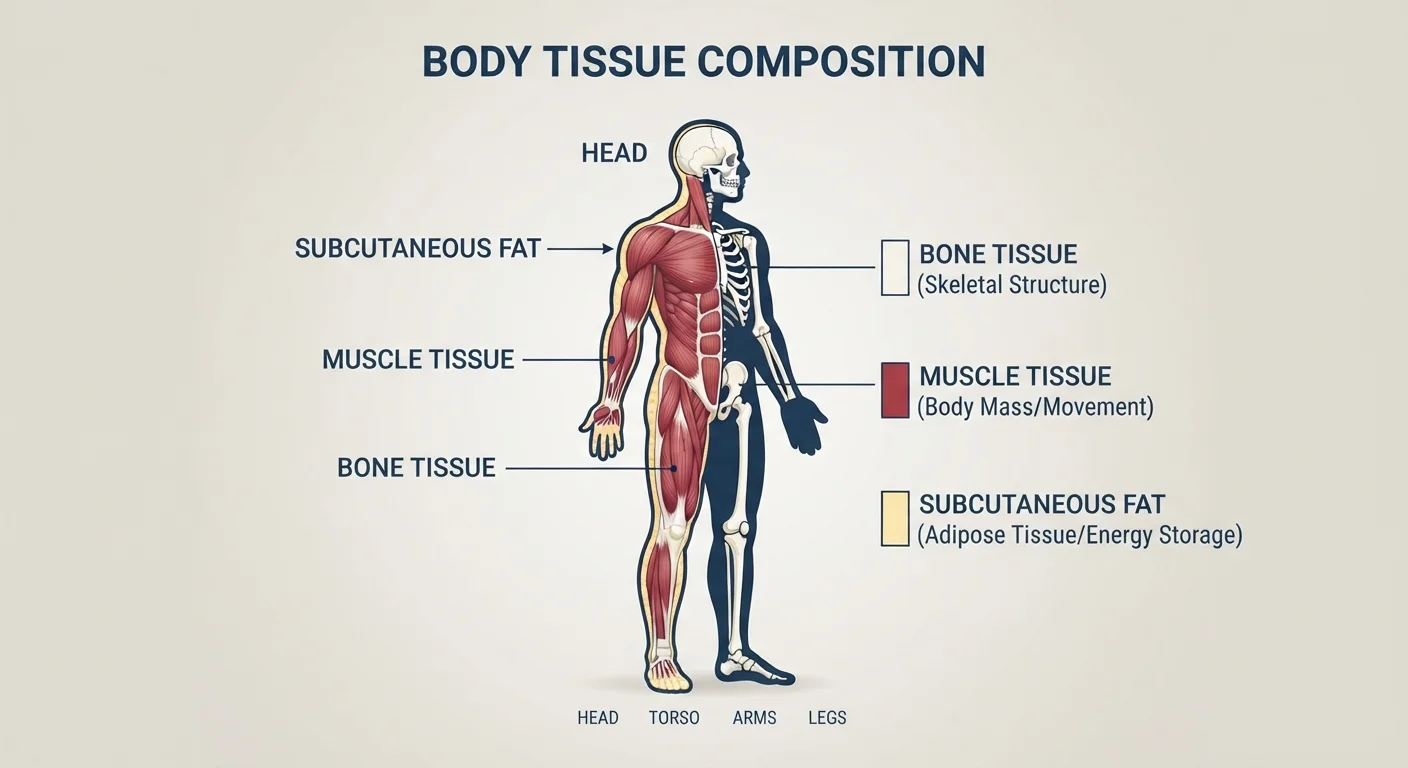
Photo: YetaWellness.com | Explore Trending Blogs editorial
Key Takeaways
- Body weight alone cannot distinguish between fat mass, muscle mass, bone density, or water - body composition can.
- Lean mass (muscle and bone) is metabolically active and plays a critical role in long-term health.
- Two people with identical weights can have dramatically different health risks based on body composition.
- Fat distribution - particularly visceral fat around organs - matters as much as total fat percentage.
- Body composition metrics are more informative than BMI alone, but no single number tells the complete story.
- Consult a qualified healthcare provider to interpret body composition data in the context of your personal health.
Why the Scale Is an Incomplete Tool
Your bathroom scale measures gravitational pull on your entire body - bones, organs, muscle, fat, blood, and the water you drank an hour ago. It produces one number that collapses all of that complexity into a single value. That number has real limitations as a health indicator.
Consider this: a pound of muscle and a pound of fat weigh the same, but they occupy different amounts of space, behave differently metabolically, and carry different implications for long-term health. Someone who has gained five pounds of skeletal muscle through resistance training and someone who has gained five pounds of adipose (fat) tissue will show identical changes on a standard scale - yet their physiological situations are quite different.
This is the core argument for understanding body composition. It reframes the question from how much do you weigh? to what is your body made of? - a fundamentally more useful question when thinking about health. For a broader look at what "healthy weight" science actually supports, see what healthy weight actually means.
The Four Main Components of Body Composition
Body composition models vary in complexity. The simplest divides the body into two compartments: fat mass and fat-free mass. More detailed models distinguish four components:
- Fat mass: All adipose tissue in the body, including essential fat (which supports hormone production, organ protection, and neurological function) and storage fat.
- Skeletal muscle mass: The contractile tissue attached to bones that powers movement and contributes significantly to resting metabolic rate.
- Bone mineral mass: The dense mineral content of the skeleton. Often underappreciated, bone mass affects both total weight and long-term structural health. Our related article on bone density and body composition explores this component in depth.
- Residual mass: Organs, connective tissue, and body water - the remaining lean tissue that isn't muscle or bone.
Understanding these compartments helps explain why two people at the same weight can have dramatically different metabolic rates, physical capacities, and health risk profiles.
~60-70%
Proportion of body weight that is lean mass in most adults
Lean mass - muscle, bone, organs, and water - typically makes up the majority of body weight, though proportions vary by sex, age, and fitness level.
2-5%
Minimum essential fat percentage (men); women require more
Essential fat supports hormone production, neurological function, and organ protection; the American College of Sports Medicine identifies higher essential fat thresholds for women due to sex-specific physiological needs.
3-8%
Muscle mass lost per decade after age 30 without intervention
This age-related muscle loss, known as sarcopenia, underscores why tracking lean mass - not just weight - becomes increasingly important with age, according to research published in sports medicine and gerontology literature.
Fat Distribution: Where Fat Sits Matters as Much as How Much
Not all body fat carries the same health implications. Research consistently distinguishes between subcutaneous fat - stored just beneath the skin - and visceral fat, which accumulates around abdominal organs including the liver, pancreas, and intestines.
Visceral fat is metabolically active in ways that subcutaneous fat is not. It releases inflammatory compounds and free fatty acids directly into the portal circulation, which has been associated in research literature with increased risk for insulin resistance, type 2 diabetes, and cardiovascular disease. This is why waist circumference and waist-to-hip ratio are used alongside body fat percentage as risk indicators - they serve as proxies for visceral fat accumulation in clinical assessment.
A person can have a relatively modest total body fat percentage while still carrying disproportionate visceral fat, or vice versa. This is another reason total weight - and even total fat percentage - tells only part of the story. Our comparison of body composition metrics covers how these different measurements relate to each other.
“Body weight is a crude measure. What matters far more is body composition - the ratio of fat to lean tissue - and where fat is distributed across the body. These factors carry distinct health implications that a scale simply cannot reveal.”
— Dr. Steven Blair, Professor of Exercise Science, University of South Carolina; researcher in physical fitness and health outcomes
Lean Mass and Metabolic Health
Skeletal muscle is the body's primary site of glucose disposal and a major driver of resting metabolic rate - the energy your body burns at rest. Greater lean mass generally correlates with a higher baseline caloric expenditure and improved insulin sensitivity. This is why body composition shifts that favor lean mass retention or gain are associated with metabolic benefits, independent of changes in total weight.
Muscle mass also has a direct functional dimension: strength, mobility, fall prevention, and recovery from illness or injury all depend partly on lean tissue reserves. These functional consequences make skeletal muscle a meaningful health indicator beyond aesthetics.
It's worth noting that body composition is not static. It shifts across the lifespan - influenced by age, hormonal changes, physical activity, nutritional patterns, and health status. Tracking composition over time can reveal trends that a static weight measurement would miss entirely. Understanding how metabolism and weight interact adds important context to these shifts.
This article is for general informational purposes only and does not constitute medical advice. Consult a qualified healthcare professional for guidance specific to your health situation.
Frequently Asked Questions
The content on this site is for informational purposes only and is not a substitute for professional advice. Always consult a qualified professional for guidance specific to your situation.