
Muscle vs. Fat: Why the Same Weight Can Mean Very Different Things

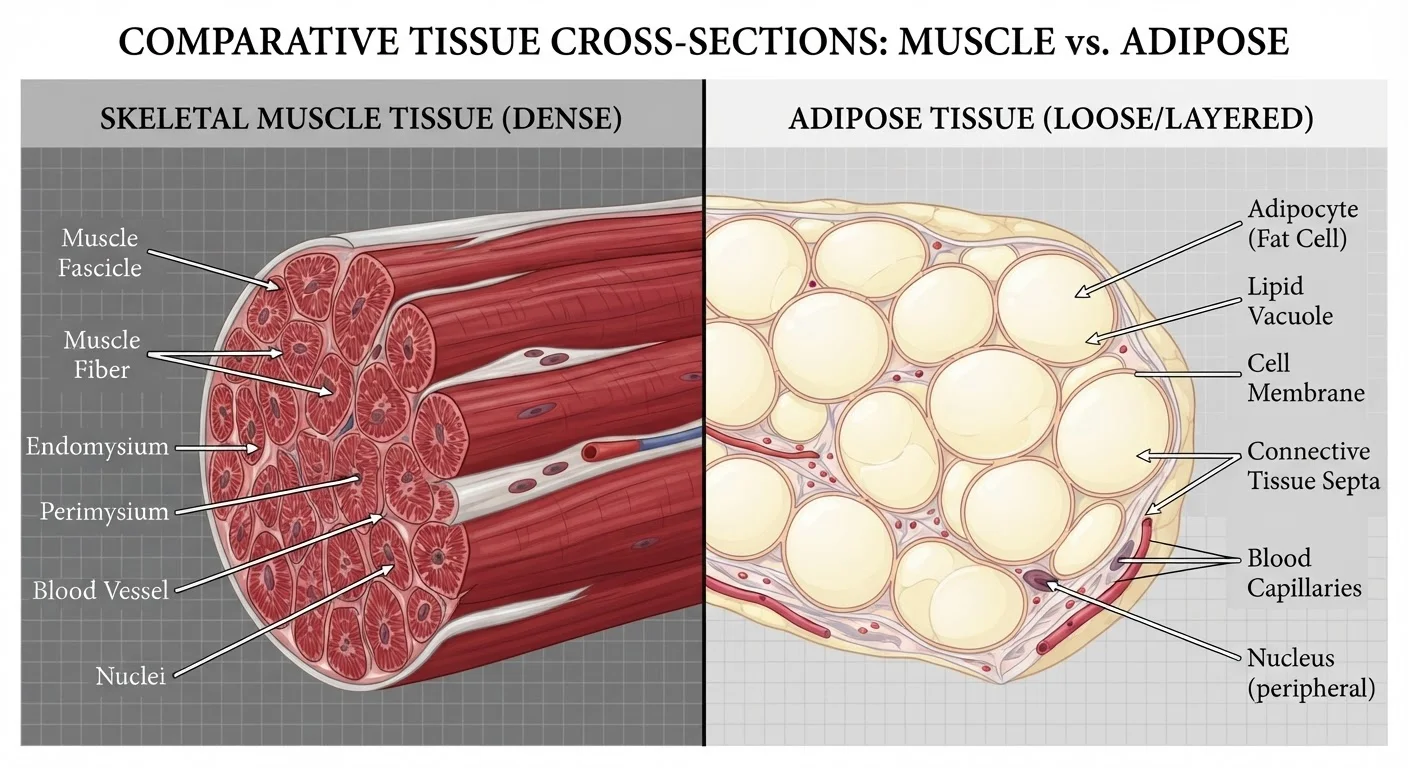
Photo: YetaWellness.com | Explore Trending Blogs editorial
Key Takeaways
- Muscle and fat weigh the same per pound but differ dramatically in density, volume, and metabolic function.
- Adipose tissue is not inert - it actively produces hormones and participates in metabolic signaling.
- Greater muscle mass is associated with a higher resting metabolic rate and improved insulin sensitivity.
- Scale weight alone cannot distinguish changes in muscle from changes in fat.
- Both tissues are physiologically necessary; extremely low body fat carries serious health risks.
- Body composition measurement tools vary widely in accuracy and accessibility.
The Density Difference: Why the Same Weight Looks So Different
One of the most persistent misconceptions in health and fitness is that muscle weighs more than fat. It doesn't - a pound is a pound. What differs is density. Muscle tissue is roughly 18% denser than fat tissue, which means a pound of muscle occupies noticeably less physical space in the body than a pound of fat.
This density gap explains why two individuals at the exact same body weight can have dramatically different body shapes, clothing sizes, and physical capacities. It also explains why someone engaging in resistance training may see little change on the scale while their body visibly recomposes - gaining denser muscle while losing fat volume simultaneously.
For a deeper look at why scale weight is an incomplete health metric, see what body composition really measures.
| Criterion | Skeletal Muscle Tissue | Adipose (Fat) Tissue |
|---|---|---|
| Density | ~1.06 g/cm³ - compact, takes up less space | ~0.9 g/cm³ - less dense, more volume per pound |
| Primary role | Movement, force generation, glucose disposal | Energy reserve, insulation, hormone signaling |
| Metabolic activity at rest | High - consumes significant calories at rest | Low - minimal direct calorie burn at rest |
| Hormone production | Produces myokines (e.g., irisin) during exercise | Produces adipokines (e.g., leptin, adiponectin) continuously |
| Insulin sensitivity impact | Greater muscle mass generally improves sensitivity | Excess visceral fat associated with reduced sensitivity |
| Essential to survival? | Yes - movement, respiration, circulation depend on it | Yes - essential fat underpins hormonal and organ function |
| Measurable via scale alone? | No - requires body composition assessment | No - requires body composition assessment |
Metabolic Function: What Each Tissue Actually Does
Muscle tissue is metabolically expensive - it demands energy even at rest. Skeletal muscle accounts for a substantial portion of the body's resting energy expenditure, primarily because it continuously cycles proteins, maintains ion gradients across cell membranes, and supports baseline contractile tone. Importantly, muscle tissue also plays a central role in glucose disposal: it is the primary site where insulin facilitates the uptake of blood glucose, making muscle mass a significant factor in insulin sensitivity.
Fat tissue - technically called adipose tissue - is far from the passive storage depot it's often portrayed as. Adipose cells (adipocytes) actively secrete hormones called adipokines, including leptin, which signals satiety to the brain, and adiponectin, which supports insulin sensitivity and has anti-inflammatory properties. The location of fat storage matters considerably: visceral fat (stored around internal organs) carries different metabolic implications than subcutaneous fat (stored just beneath the skin). Explore those distinctions in detail at the science of where body fat is stored.
To understand specifically how these two tissue types influence how many calories your body burns each day, see how muscle and fat affect resting energy burn.
~6 kcal/lb/day
Estimated resting calorie burn of muscle tissue
Research estimates vary, but skeletal muscle burns approximately 4-7 calories per pound per day at rest, significantly more than fat tissue.
~2 kcal/lb/day
Estimated resting calorie burn of fat tissue
Adipose tissue is far less metabolically active at rest, consuming only about 2 calories per pound per day under resting conditions.
18%
Greater density of muscle vs. fat
Muscle tissue is approximately 18% denser than fat tissue, which accounts for visible differences in body shape at identical body weights.
Essential Fat vs. Excess Fat: Not All Adipose Tissue Is the Same Problem
A common error in popular health discourse is treating all body fat as harmful. In reality, essential fat - stored in bone marrow, the nervous system, and major organs - is required for survival. It supports hormone synthesis, cushions organs against impact, insulates the body against temperature changes, and enables the absorption of fat-soluble vitamins A, D, E, and K. Learn more about those vitamins at how fat-soluble vitamins work.
Health researchers generally distinguish three broad categories of adipose tissue: essential fat, subcutaneous fat, and visceral fat. It is the accumulation of excess visceral fat - not fat per se - that research most consistently links to elevated cardiometabolic risk. This nuance matters: pursuing extremely low body fat percentages carries its own set of serious health risks, particularly for women, whose bodies require a higher proportion of essential fat for reproductive hormonal function.
Sex-Based Differences in Body Composition Norms
Body composition also shifts predictably across life stages. Hormonal changes, aging, and activity patterns all influence how much muscle and fat the body maintains over time. For more context, see how muscle and fat shift across the lifespan.
This article is for general informational and educational purposes only and does not constitute medical advice. Consult a qualified healthcare professional for guidance specific to your health circumstances.
The content on this site is for informational purposes only and is not a substitute for professional advice. Always consult a qualified professional for guidance specific to your situation.