
The Difference Between Fat-Soluble and Water-Soluble Vitamins

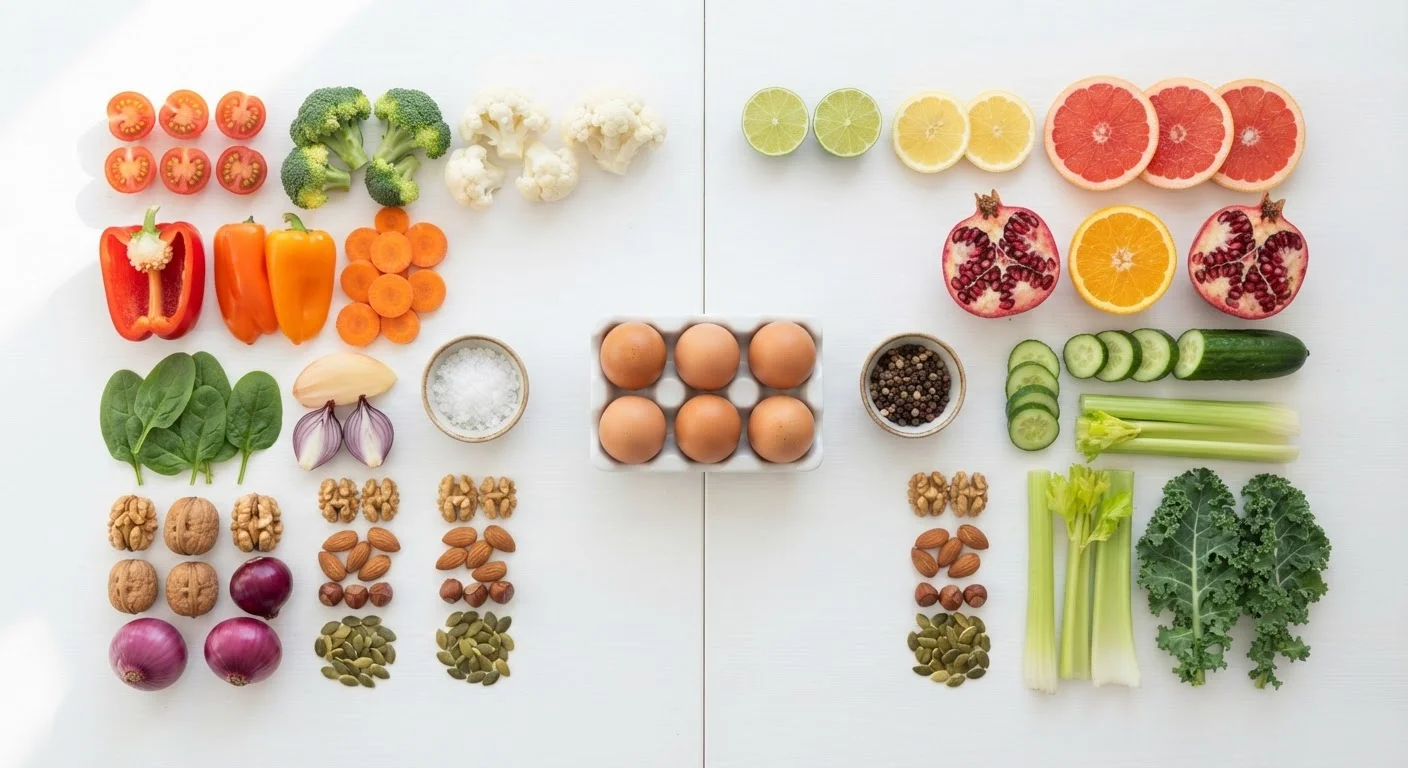
Photo: YetaWellness.com | Explore Trending Blogs editorial
Key Takeaways
- Fat-soluble vitamins (A, D, E, K) are stored in body fat and liver; water-soluble vitamins are not.
- Water-soluble vitamins (B vitamins and C) must be replenished more frequently through food.
- Eating dietary fat alongside fat-soluble vitamins significantly improves their absorption.
- Excess fat-soluble vitamins can accumulate to harmful levels; water-soluble excess is mostly excreted.
- Most healthy adults can meet their vitamin needs through a balanced, varied whole-food diet.
What Solubility Actually Means for Your Body
Every vitamin your body needs falls into one of two categories based on what it dissolves in: fat or water. This chemical property isn't just a textbook detail — it governs how each vitamin is absorbed from food, where it's stored, how long it lasts in your system, and how much is too much.
Fat-soluble vitamins — A, D, E, and K — dissolve in dietary fat. They travel through your lymphatic system before entering the bloodstream and are stored in body fat tissue and the liver. Water-soluble vitamins — the eight B vitamins and vitamin C — dissolve directly in water, enter the bloodstream quickly, and aren't stockpiled in meaningful amounts. Your kidneys filter out what cells don't immediately use, and excess is excreted in urine.
To understand what vitamins actually do once they're inside your body, see Vitamins and Minerals: What Your Body Actually Does With Them.
| Criterion | Fat-Soluble Vitamins | Water-Soluble Vitamins |
|---|---|---|
| Which vitamins | A, D, E, K | B1, B2, B3, B5, B6, B7, B9, B12, C |
| Absorption pathway | Requires dietary fat; enters via lymph | Absorbed directly into bloodstream |
| Storage in body | Stored in fat tissue and liver | Minimal storage; excreted in urine |
| Replenishment frequency | Less frequent; reserves buffer gaps | Needed regularly through daily diet |
| Toxicity risk from excess | Higher; can accumulate in tissue | Generally lower; excess mostly excreted |
| Impact of low-fat diet | Absorption significantly reduced | Absorption largely unaffected |
| Cooking sensitivity | Relatively stable with heat | Degrade with heat and water exposure |
Absorption, Storage, and Daily Needs
Because fat-soluble vitamins require fat for absorption, what you eat them with matters. A salad loaded with vitamin-K-rich leafy greens absorbs much more of that nutrient when dressed with olive oil than when eaten plain. Research consistently shows that even a modest amount of dietary fat — a few grams — meaningfully improves the uptake of fat-soluble vitamins from the same meal. For more on which fats are worth including, see Dietary Fat: Separating the Kinds Worth Eating from the Ones Worth Limiting.
Water-soluble vitamins, by contrast, are absorbed efficiently regardless of what else is on your plate. However, they need consistent replenishment. B12 is a partial exception — the body stores modest amounts in the liver — but most B vitamins and vitamin C need frequent dietary top-ups to maintain adequate levels.
The storage difference also affects risk. Because fat-soluble vitamins accumulate in tissue, consistently consuming very high doses — almost always through supplements rather than food alone — can lead to toxicity. Vitamin A toxicity (hypervitaminosis A), for example, is a documented medical concern associated with excessive supplementation. Water-soluble vitamins pose far less risk at high intakes, though very large doses of certain B vitamins (like B6) have been linked to nerve issues over long periods.
Practical Food-First Strategies for Both Types
You don't need to track every vitamin to eat well — a varied, whole-food diet covers most people's needs. Here's how to think about each category at the table:
- Fat-soluble vitamins: Pair orange and yellow vegetables (vitamin A precursors) with a fat source. Include fatty fish or fortified dairy for vitamin D. Use nuts, seeds, and plant oils for vitamin E. Dark leafy greens plus olive oil deliver vitamin K efficiently.
- Water-soluble vitamins: Eat a range of fruits and vegetables daily for vitamin C. For B vitamins, prioritize whole grains, legumes, eggs, meat, dairy, and leafy greens. Vegans and vegetarians should pay particular attention to vitamin B12, which occurs naturally only in animal products — a registered dietitian can help assess individual needs.
Cooking methods affect water-soluble vitamins more than fat-soluble ones. Vitamin C and many B vitamins degrade with prolonged heat and leach into cooking water. Steaming, roasting, or using cooking liquid in soups helps retain these nutrients.
This article is for general informational purposes only and is not a substitute for personalized medical or nutritional advice. If you have questions about your specific vitamin needs, speak with a qualified healthcare professional or registered dietitian.
The content on this site is for informational purposes only and is not a substitute for professional advice. Always consult a qualified professional for guidance specific to your situation.