
The Science of Body Fat: Where It's Stored and Why It Matters

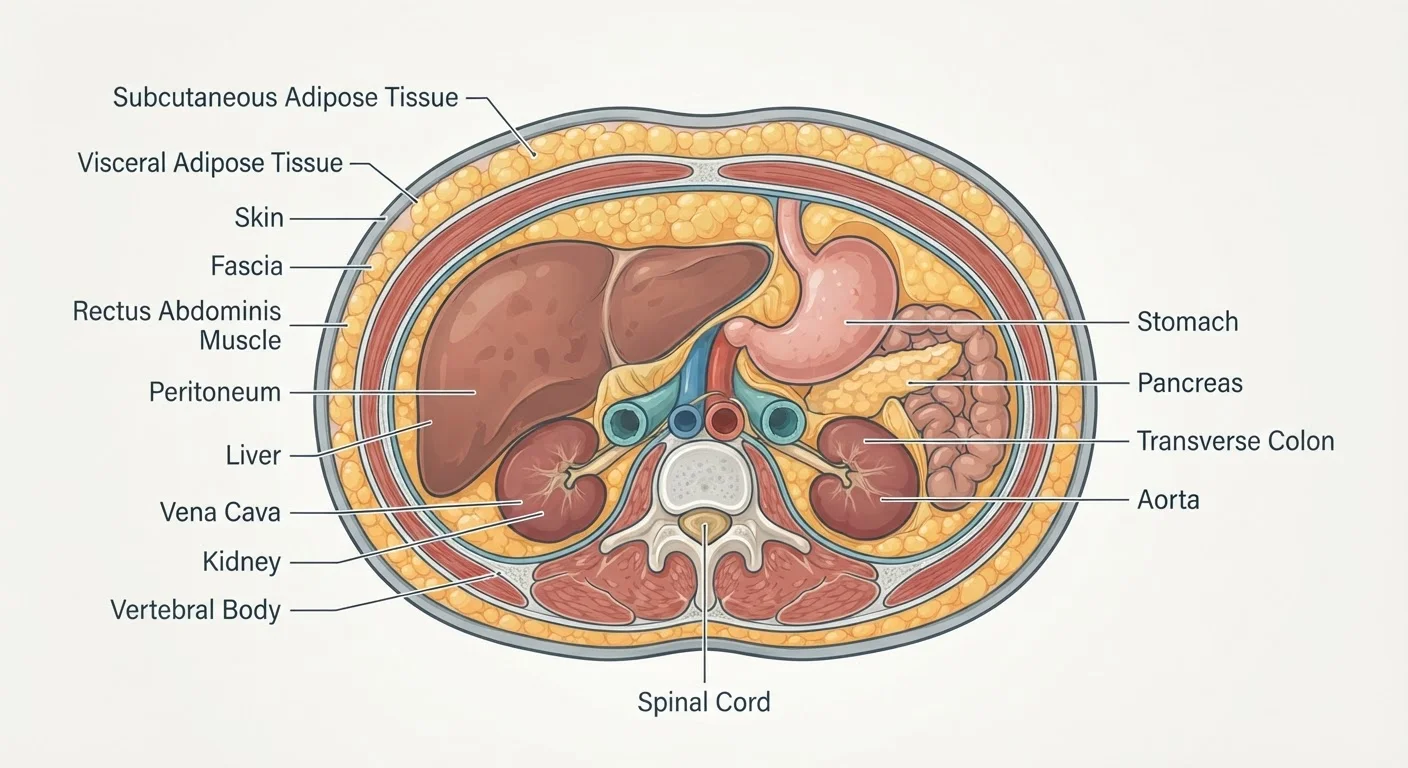
Photo: YetaWellness.com | Explore Trending Blogs editorial
Key Takeaways
- Body fat serves essential biological functions, including hormone production, insulation, and organ protection.
- Visceral fat, stored deep around abdominal organs, is more metabolically active and carries greater health risks than subcutaneous fat.
- Essential fat is the minimum amount the body needs to function; it cannot be safely eliminated.
- Fat distribution patterns vary significantly by sex, age, and genetics - not just by total body weight.
- Waist circumference and body fat percentage offer more context than scale weight alone.
- General health information here does not substitute for personalized guidance from a qualified healthcare provider.
Fat Is a Tissue, Not Just a Number
Body fat is often discussed as if it were simply excess material to be minimized. In reality, adipose tissue is a biologically active organ. It produces hormones - including leptin (which regulates appetite) and adiponectin (which supports insulin sensitivity) - and plays critical roles in immune function, temperature regulation, and nutrient storage.
Understanding fat starts with recognizing that not all of it is the same. The body stores fat in anatomically distinct depots, each with different cellular properties and metabolic behavior. This distinction matters far more to health than total fat mass alone. For a deeper look at how body composition is actually measured, see Body Fat Percentage, BMI, and Waist-to-Hip Ratio: Understanding the Differences.
The Three Major Fat Depots
Essential fat is the baseline the body cannot function without. It is embedded in the brain, bone marrow, spinal cord, and cell membranes. In addition to structural roles, essential fat is critical for absorbing fat-soluble vitamins - nutrients explored in depth in The Difference Between Fat-Soluble and Water-Soluble Vitamins. Women typically carry more essential fat than men due to reproductive biology.
Subcutaneous fat lies just beneath the skin and accounts for the majority of total body fat in most people. It serves as an energy reserve and thermal insulator. While excessive amounts can be associated with metabolic changes over time, subcutaneous fat - particularly in the lower body - is generally considered less metabolically disruptive than its visceral counterpart.
Visceral fat is stored within the abdominal cavity, wrapping around organs like the liver, pancreas, and intestines. It is far more metabolically active, releasing inflammatory cytokines and fatty acids that can directly impair organ function. Higher visceral fat is consistently linked in research to increased risk of insulin resistance, cardiovascular disease, and related conditions.
~90%
Of total body fat that is subcutaneous
Research estimates that subcutaneous fat makes up roughly 80-90% of total body fat in most adults, with visceral fat accounting for the remainder.
2x
Greater metabolic risk linked to abdominal fat
Studies published in journals including Obesity Reviews indicate that visceral fat is associated with roughly double the metabolic risk compared to the same volume of subcutaneous fat.
3-5%
Minimum essential fat for men
The American Council on Exercise estimates essential fat at approximately 3-5% for men and 10-13% for women, reflecting sex-based physiological differences.
Why Distribution Patterns Differ Between People
Where fat is deposited is not random. Sex hormones are the most significant driver of fat patterning. Estrogen tends to promote fat storage in the hips, thighs, and gluteal region (the gynoid or "pear" shape), which is more common in premenopausal women. Testosterone is associated with greater lean mass and typically less subcutaneous fat overall, but men - and postmenopausal women who see declining estrogen - tend to accumulate more abdominal fat.
Genetics also play a substantial role. Twin studies and genome-wide association research have identified gene variants that influence fat depot preference independent of total caloric intake. Age compounds this: as people grow older, fat tends to redistribute toward the abdomen and away from peripheral sites like the limbs, even when total body weight stays stable.
This complexity is precisely why body weight on a scale tells an incomplete story. Muscle vs. Fat: Why the Same Weight Can Mean Very Different Things explores this further. Sex-based differences in these patterns are discussed in detail in Why Body Composition Metrics Look Different for Women Than for Men.
What the Research Says About Health Implications
A consistent finding across metabolic research is that visceral adiposity - rather than total fat mass - is more predictive of cardiometabolic risk. Studies using imaging tools like MRI and CT have shown that two individuals with identical body weight and even similar body fat percentages can have very different visceral fat volumes, and therefore different metabolic risk profiles.
Waist circumference is one of the more practical clinical proxies for visceral fat. Research from organizations including the World Health Organization has identified threshold values that correlate with increased health risk, though these thresholds vary by population and should be interpreted by a healthcare provider in individual context.
It is also important to note that the relationship between fat and health is not linear or absolute. Emerging research on "metabolically healthy obesity" and the protective role of lower-body fat in certain populations underscores that body fat science is more nuanced than popular narratives suggest. Common Myths About Body Fat That Science Has Largely Moved Past addresses several widely held misconceptions in detail.
“Adipose tissue is not simply a passive reservoir for energy storage. It is an endocrine organ that actively communicates with the brain, liver, and immune system - and where it sits in the body profoundly shapes that conversation.”
— Gökhan Hotamisligil, Professor of Genetics and Metabolism, Harvard T.H. Chan School of Public Health
This article is for general informational and educational purposes only and is not a substitute for professional medical advice, diagnosis, or treatment. Consult a qualified healthcare provider with any questions about your individual health.
Frequently Asked Questions
The content on this site is for informational purposes only and is not a substitute for professional advice. Always consult a qualified professional for guidance specific to your situation.