
Metabolism Myths That Just Won't Die

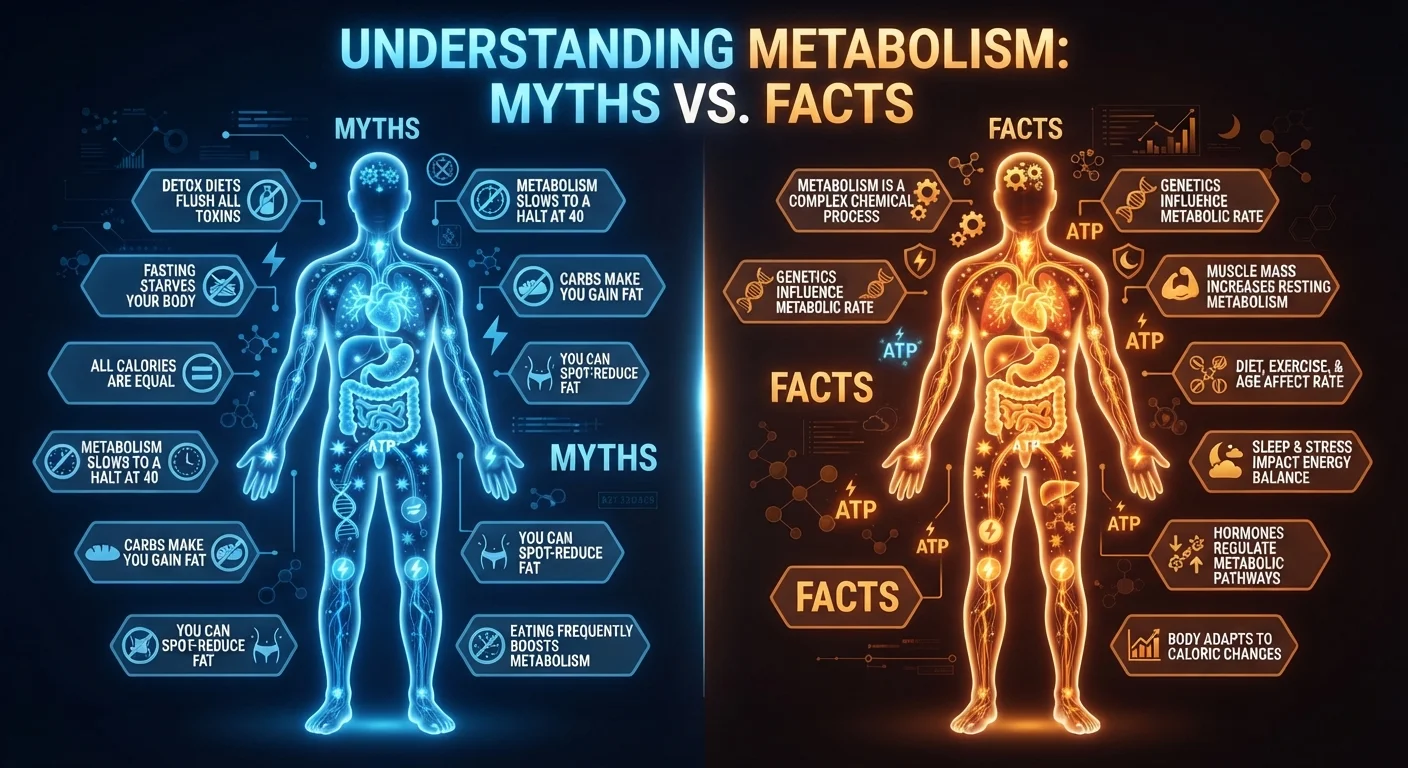
Photo: YetaWellness.com | Explore Trending Blogs editorial
Key Takeaways
- Eating more frequent small meals does not meaningfully speed up your metabolism.
- A 'slow metabolism' is rarely the primary driver of weight gain for most people.
- Muscle mass does raise resting metabolic rate, but the effect is more modest than often claimed.
- Metabolism does change with age, but the decline is more gradual than popular belief suggests.
- Severely restricting calories can trigger metabolic adaptation, reducing overall energy expenditure.
Why Metabolism Myths Persist
Metabolism is one of the most misunderstood concepts in everyday health conversation. It describes the full set of chemical processes your body uses to convert food into energy - and it operates across a far more complex range of variables than any single 'hack' can capture. Yet oversimplified explanations thrive because they offer appealing, actionable narratives: eat this way, move that way, and control your metabolic destiny.
The problem is that many of these narratives are built on a misreading of real science, outdated studies, or outright fabrication. Understanding where they go wrong isn't just an academic exercise - it helps you make genuinely informed choices about your health rather than chasing strategies that don't deliver. For a broader look at how diet culture shapes these misconceptions, see separating weight wellness fact from diet culture fiction.
The Most Persistent Metabolism Myths - Corrected
The following myth-fact pairs address the claims that resurface most often - in fitness communities, on social media, and in everyday conversation. Each one is grounded in current evidence, not popular consensus.
Myth
Eating many small meals throughout the day revs up your metabolism and helps you burn more calories.
Fact
Meal frequency has little to no meaningful effect on total daily energy expenditure for most people.
The idea that eating every two to three hours 'stokes your metabolic fire' became a fixture of fitness culture, but the evidence simply doesn't support it. The temporary rise in calorie burn after eating - known as the thermic effect of food (TEF) - is proportional to the total amount eaten, not how often you eat. Spreading the same daily calories across six meals produces roughly the same TEF as eating them across three. Research consistently shows that meal frequency does not significantly alter total daily energy expenditure in controlled conditions. What matters far more is the total quality and quantity of what you eat.
Myth
Weight gain is mostly caused by a slow metabolism - some people are just metabolically unlucky.
Fact
While metabolic rate varies between individuals, behavioral and environmental factors account for most weight differences.
It's tempting to attribute stubborn weight gain entirely to a sluggish metabolism, but the science paints a more nuanced picture. True clinically significant metabolic disorders - such as hypothyroidism - do exist and can affect weight, but they are relatively uncommon and diagnosable. Among healthy adults, the variation in resting metabolic rate (RMR) between people of similar body size is much smaller than most assume. Research on fast vs. slow metabolism shows that factors like sleep quality, stress, activity levels, and dietary patterns tend to have a far greater cumulative impact on body weight than baseline metabolic differences.
Myth
Building muscle dramatically boosts your resting metabolism, making fat loss effortless.
Fact
Muscle tissue does burn more calories at rest than fat tissue, but the per-pound advantage is more modest than popular claims suggest.
Skeletal muscle is metabolically active and does increase your resting metabolic rate (RMR) - this part is true. However, the commonly cited figure that one pound of muscle burns 50 or more calories per day at rest is a significant overestimate. Reliable estimates place the figure closer to 6-10 calories per pound per day. This means that adding several pounds of muscle has a real but relatively modest effect on total daily calorie burn. Resistance training remains highly valuable for overall health, functional strength, and body composition - but framing it as a dramatic 'metabolism booster' overstates the case.
Myth
Metabolism crashes dramatically after age 40, making weight management nearly impossible.
Fact
Metabolic slowdown with age is real but far more gradual and nuanced than the popular 'age 40 cliff' narrative.
Research published in Science found that total daily energy expenditure remains relatively stable from roughly ages 20 to 60, after which a more measurable decline occurs. The dramatic slowdown many people attribute to hitting a particular decade is largely explained by changes in muscle mass, physical activity levels, and hormonal shifts - factors that are at least partially modifiable. The biology of the aging metabolism is more gradual than popular belief suggests, and lifestyle habits play a meaningful role throughout adulthood.
Myth
Drastically cutting calories is the most effective strategy to speed up weight loss long-term.
Fact
Severe calorie restriction can trigger metabolic adaptation, reducing the body's energy expenditure and making sustained loss harder.
When calorie intake drops sharply, the body interprets this as a threat and responds by lowering its resting metabolic rate - a process often called metabolic adaptation or 'adaptive thermogenesis.' This survival mechanism reduces overall energy burn, meaning you need fewer calories just to maintain basic functions. The result can be a frustrating plateau even while continuing to restrict eating. Understanding why crash diets slow metabolic rate helps explain why moderate, sustainable approaches tend to be more effective over time than aggressive restriction.
This article is for general informational and educational purposes only and does not constitute medical advice. If you have concerns about your metabolism, weight, or related health conditions, please consult a qualified healthcare professional.
What Actually Supports Healthy Metabolic Function
Clearing away myths leaves room for what the evidence does support. Consistent physical activity - including both aerobic exercise and resistance training - contributes meaningfully to overall energy expenditure and body composition over time. Adequate sleep is increasingly recognized as a significant factor in metabolic regulation, with poor sleep linked to disruptions in hunger hormones and glucose metabolism. Managing chronic stress, staying well hydrated, and eating a varied diet rich in whole foods all support metabolic health without requiring any dramatic intervention.
No single habit is a magic lever. Metabolism responds to the cumulative, sustained pattern of how you live - not to isolated tricks. For a practical look at the everyday habits that genuinely matter, see what's actually worth your attention when thinking about metabolism daily.
The content on this site is for informational purposes only and is not a substitute for professional advice. Always consult a qualified professional for guidance specific to your situation.