
Foam Rolling: What It Does, What It Doesn't, and How to Use It Well

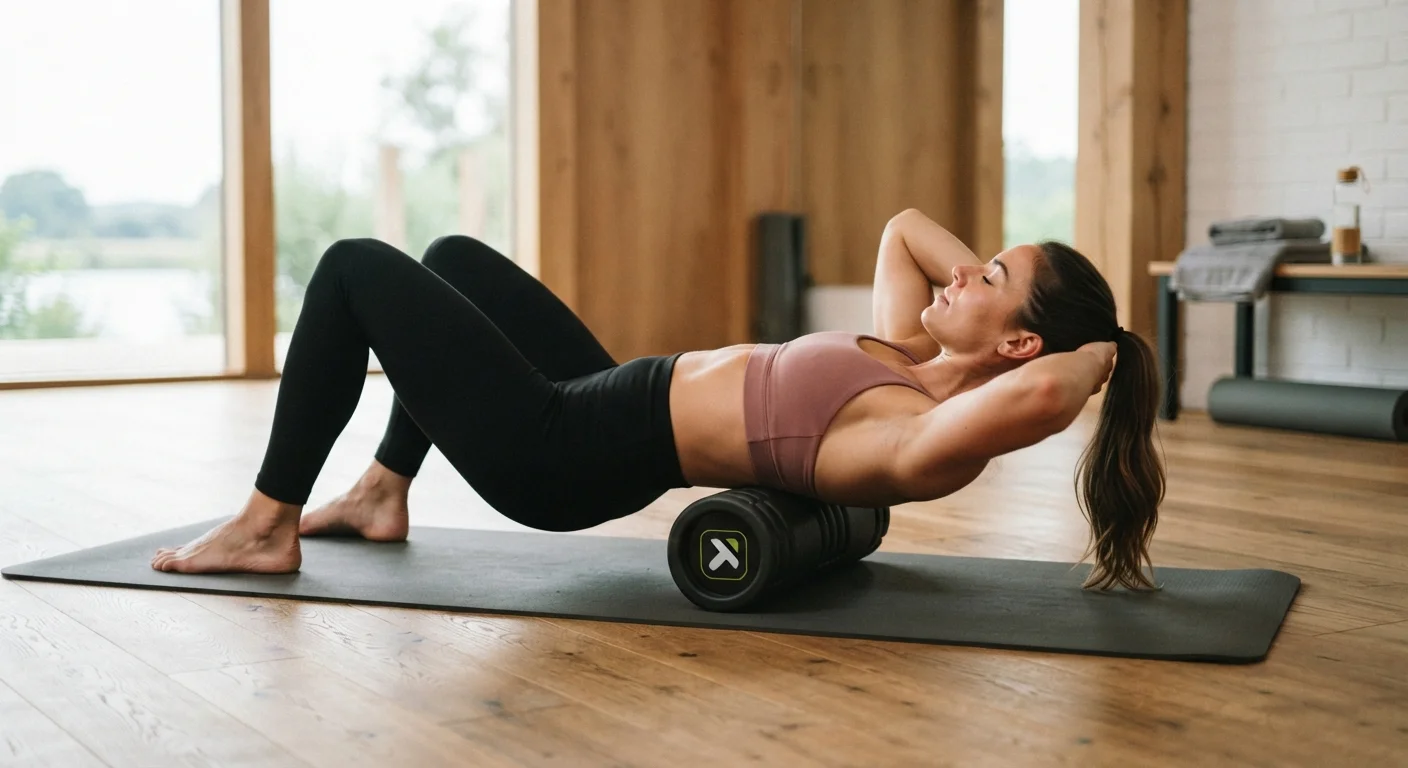
Photo: YetaWellness.com | Explore Trending Blogs editorial
Key Takeaways
- Foam rolling temporarily increases range of motion without significantly reducing muscle strength before exercise.
- Current research does not support claims that foam rolling breaks up scar tissue or permanently restructures fascia.
- Rolling slowly over tender areas for 30-90 seconds per muscle group appears to be most effective.
- Foam rolling works best as a complement to dynamic warm-ups and consistent stretching - not a standalone fix.
- People with certain conditions, including blood clots or nerve injuries, should consult a professional before foam rolling.
Temporarily increases range of motion before exercise
Multiple studies show that 1-2 minutes of rolling per muscle group produces short-term flexibility gains comparable to static stretching, without the performance trade-offs associated with prolonged static holds before activity.
May reduce delayed-onset muscle soreness (DOMS)
A review in the International Journal of Sports Physical Therapy found that post-exercise foam rolling modestly reduced perceived soreness in the 24-72 hours following intense training, potentially supporting faster return to activity.
Low cost and requires no professional assistance
A foam roller is a simple, widely available piece of equipment that requires no training space or appointment, making it practical for consistent daily use at home.
Supports muscle activation as part of a warm-up
Rolling a muscle group before exercise appears to help improve neural drive to that area, making it a useful primer when combined with dynamic warm-up movements.
Generally safe for most healthy adults
When used with appropriate pressure and technique, foam rolling carries a low risk of injury and can be adapted for a wide range of fitness levels and body types.
Does not permanently restructure fascia or break scar tissue
Fascia requires forces far exceeding what a foam roller can produce to change its physical structure. The perceived "release" is primarily a nervous system response, not a mechanical alteration of tissue.
Benefits are short-lived without follow-up movement
Range-of-motion gains from rolling typically dissipate within 10-20 minutes if not reinforced with dynamic movement or active stretching, limiting the carry-over effect.
Ineffective as a standalone treatment for chronic pain
Foam rolling alone is unlikely to address the underlying causes of persistent musculoskeletal pain. Relying on it in place of professional assessment may delay appropriate care.
Improper technique can cause discomfort or bruising
Rolling directly over bony structures, nerves, or with excessive pressure can cause local tissue irritation. This is particularly a concern for beginners who apply too much body weight.
Evidence quality remains mixed across outcomes
While short-term flexibility and soreness benefits are fairly well-supported, claims about long-term performance enhancement or injury prevention are not yet backed by consistent high-quality evidence.
What Foam Rolling Actually Does to Your Body
Foam rolling falls under a category called self-myofascial release (SMR) - applying sustained pressure to muscle and connective tissue to influence how that tissue behaves. When you roll over a tight area, you stimulate mechanoreceptors (pressure-sensitive nerve endings) in the muscle, which prompts a brief neurological relaxation response. This is the primary mechanism behind the sensation of release you feel.
What this means practically: foam rolling can temporarily reduce muscle stiffness and improve flexibility. Research published in the Journal of Athletic Training and similar peer-reviewed outlets consistently shows modest but real short-term gains in range of motion following rolling sessions - typically lasting 10-20 minutes after rolling ends.
Foam rolling also increases local blood flow to the rolled area, which may support the delivery of nutrients and removal of metabolic byproducts after exercise. This likely contributes to its modest effect on reducing delayed-onset muscle soreness (DOMS).
Who Should Exercise Caution
Common Claims That Overshoot the Evidence
The wellness industry has attached some ambitious claims to foam rollers that the current science doesn't fully support. Understanding where the evidence stops is just as important as knowing where it starts.
Does not permanently restructure fascia or break scar tissue
Fascia requires forces far exceeding what a foam roller can produce to change its physical structure. The perceived "release" is primarily a nervous system response, not a mechanical alteration of tissue.
Benefits are short-lived without follow-up movement
Range-of-motion gains from rolling typically dissipate within 10-20 minutes if not reinforced with dynamic movement or active stretching, limiting the carry-over effect.
Ineffective as a standalone treatment for chronic pain
Foam rolling alone is unlikely to address the underlying causes of persistent musculoskeletal pain. Relying on it in place of professional assessment may delay appropriate care.
Improper technique can cause discomfort or bruising
Rolling directly over bony structures, nerves, or with excessive pressure can cause local tissue irritation. This is particularly a concern for beginners who apply too much body weight.
Evidence quality remains mixed across outcomes
While short-term flexibility and soreness benefits are fairly well-supported, claims about long-term performance enhancement or injury prevention are not yet backed by consistent high-quality evidence.
None of this means foam rolling is ineffective - it simply means the mechanism is more neurological than structural, and the benefits are real but modest. Setting accurate expectations helps you use the tool appropriately rather than relying on it as a fix-all.
Where Foam Rolling Genuinely Helps
Within realistic boundaries, foam rolling offers several well-supported benefits for people engaged in regular physical activity.
Temporarily increases range of motion before exercise
Multiple studies show that 1-2 minutes of rolling per muscle group produces short-term flexibility gains comparable to static stretching, without the performance trade-offs associated with prolonged static holds before activity.
May reduce delayed-onset muscle soreness (DOMS)
A review in the International Journal of Sports Physical Therapy found that post-exercise foam rolling modestly reduced perceived soreness in the 24-72 hours following intense training, potentially supporting faster return to activity.
Low cost and requires no professional assistance
A foam roller is a simple, widely available piece of equipment that requires no training space or appointment, making it practical for consistent daily use at home.
Supports muscle activation as part of a warm-up
Rolling a muscle group before exercise appears to help improve neural drive to that area, making it a useful primer when combined with dynamic warm-up movements.
Generally safe for most healthy adults
When used with appropriate pressure and technique, foam rolling carries a low risk of injury and can be adapted for a wide range of fitness levels and body types.
These advantages make foam rolling particularly useful as a pre-workout warm-up addition or a post-workout recovery aid, provided it's paired with dynamic movement rather than used in isolation.
~10-15%
Short-term range-of-motion improvement after rolling
Multiple small-to-medium controlled trials have reported range-of-motion gains in this range following foam rolling sessions of 60-120 seconds per muscle group.
30-90 sec
Optimal rolling duration per muscle group
Research in sports rehabilitation literature suggests this window balances effectiveness with efficiency, with longer durations showing limited additional benefit.
24-72 hrs
Window when DOMS relief from rolling is most noted
Post-exercise rolling studies consistently identify this timeframe as when participants report the most noticeable reduction in perceived muscle soreness.
How to Foam Roll Effectively
Technique matters more than most people realize. Here's a research-informed approach:
- Roll slowly. Move approximately one inch per second over the target muscle. Fast rolling largely bypasses the neurological response you're seeking.
- Pause on tender spots. When you find a sensitive area, hold steady pressure there for 20-30 seconds rather than continuing to roll. This sustained pressure is where much of the benefit occurs.
- Spend 30-90 seconds per muscle group. Research suggests this duration is sufficient - longer sessions show diminishing returns in most studies.
- Apply moderate, tolerable pressure. Rolling should feel like firm pressure, not sharp or shooting pain. If pain is intense, reduce pressure by supporting more body weight on your hands or feet.
- Follow with movement. After rolling a muscle group, move through its full range of motion. This helps the nervous system integrate the increased mobility you've temporarily gained.
Common muscle groups to address include the calves, hamstrings, quadriceps, IT band region, thoracic spine (upper and mid-back), and lats. Avoid rolling directly over joints, bony prominences, or the lumbar spine.
This article is for general informational purposes only and does not constitute medical advice. If you have an injury, chronic condition, or are new to exercise, consult a qualified healthcare professional before beginning any new fitness or recovery practice.
The content on this site is for informational purposes only and is not a substitute for professional advice. Always consult a qualified professional for guidance specific to your situation.