
Colorectal Cancer Screening: Colonoscopy, Stool Tests, and What Separates Them

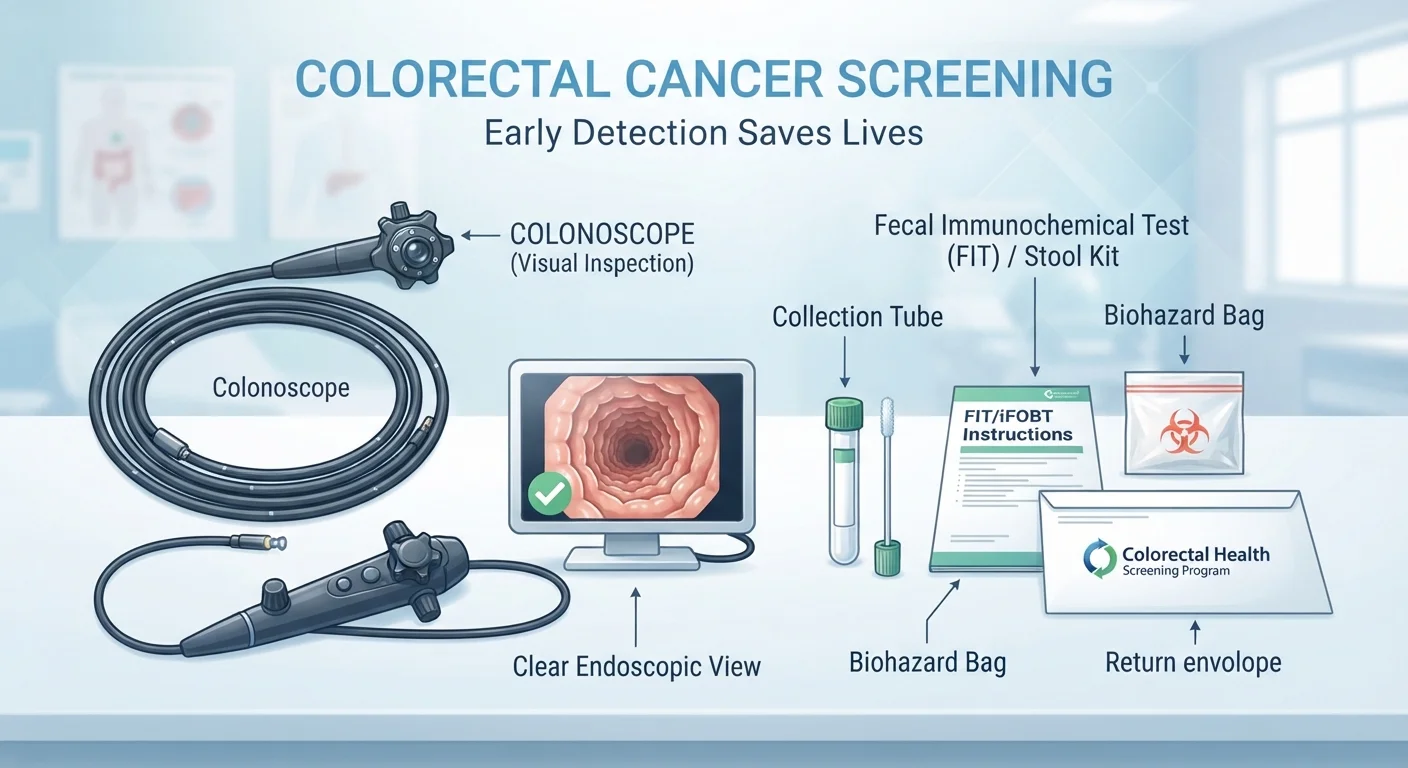
Photo: YetaWellness.com | Explore Trending Blogs editorial
Key Takeaways
- Colorectal cancer is highly treatable when caught early through regular screening.
- Colonoscopy and stool-based tests are both recommended options — no single method fits everyone.
- Screening typically starts at age 45 for average-risk adults, per major U.S. guidelines.
- Your personal health history, risk factors, and preferences all shape the right choice.
- Always consult your healthcare provider before selecting a screening approach.
Why Colorectal Cancer Screening Matters
Colorectal cancer is the second leading cause of cancer death in the United States when men and women are combined, according to the American Cancer Society. Yet it is also one of the most preventable cancers precisely because screening can detect precancerous polyps before they become malignant — or catch cancer in its earliest, most treatable stages.
If you're new to the concept of preventive testing, preventive screenings explained provides a helpful foundation. For colorectal cancer specifically, the U.S. Preventive Services Task Force (USPSTF) recommends that average-risk adults begin screening at age 45 and continue through age 75. Adults aged 76–85 should discuss screening with their provider based on individual health status.
What has changed in recent years is how many options now exist. Choosing a method is no longer binary — it's a conversation shaped by your risk profile, lifestyle, and comfort level.
Colonoscopy: The Comprehensive Standard
A colonoscopy allows a gastroenterologist to visually examine the entire lining of the colon and rectum using a flexible, camera-equipped tube. What makes it unique among screening tools is its dual capacity: it both detects and removes polyps in a single procedure.
How often: Every 10 years for average-risk adults with normal results.
Preparation required: Yes — a bowel-cleansing preparation the day before is necessary, which many patients cite as the most difficult part.
Sedation: Typically administered, meaning you'll need someone to drive you home and should expect to take the day off work.
What it can find: Polyps, early-stage cancer, and structural abnormalities throughout the entire colon.
If a polyp is found: It can often be removed immediately during the same procedure, potentially preventing cancer from developing.
Colonoscopy carries a small but real risk of complications including bleeding or, very rarely, perforation — risks that increase with age or certain health conditions. Your provider can help you weigh these against the benefits based on your individual circumstances.
| Colonoscopy | FIT | Stool DNA Test | |
|---|---|---|---|
| Frequency | Every 10 years (normal result) | Annually | Every 1–3 years |
| At-home collection | No | Yes | Yes |
| Sedation required | Yes, typically | No | No |
| Bowel prep required | Yes | No | No |
| Can remove polyps | Yes, during procedure | No | No |
| Follow-up colonoscopy if positive | N/A | Yes | Yes |
| Best suited for | Comprehensive single exam | Annual low-burden screening | DNA + blood marker detection |
Stool-Based Tests: Non-Invasive Alternatives
Stool-based tests work by detecting signs of colorectal cancer or precancerous changes in a stool sample, which you collect at home and mail to a lab. They involve no preparation, no sedation, and no time away from your daily routine.
Fecal Immunochemical Test (FIT)
FIT detects hidden blood in stool using antibodies specific to human hemoglobin. It is completed annually and is widely available through primary care providers. A positive result always requires a follow-up colonoscopy.
High-Sensitivity Guaiac Fecal Occult Blood Test (gFOBT)
An older method that also detects blood in stool, gFOBT requires some dietary restrictions before collection and is done annually. It is less commonly recommended today compared to FIT.
Stool DNA Test (sDNA)
This test combines FIT with detection of abnormal DNA shed by colorectal cancer or polyp cells. It is done every one to three years depending on the specific test and provider guidance. It has a higher sensitivity for certain polyps but also a higher false-positive rate than FIT alone, meaning more follow-up colonoscopies may result.
A key limitation of all stool tests: they cannot remove polyps. A positive result means you will need a diagnostic colonoscopy — so the overall burden may ultimately be similar for some patients.
How to Decide What's Right for You
No single screening method is objectively best for every person. Clinical organizations including the USPSTF and the American College of Gastroenterology endorse multiple approaches, recognizing that the most effective screening is the one a patient completes consistently.
Factors your provider will consider include:
- Personal or family history of colorectal cancer or polyps — those with elevated risk often need colonoscopy specifically, and may need to start before age 45.
- Prior screening results — a history of advanced polyps changes the recommended interval and method.
- Ability to complete bowel prep — for those with mobility challenges or certain health conditions, stool tests may be more practical.
- Access and insurance coverage — coverage varies by plan and test type; confirming this before scheduling avoids surprises.
- Personal preference — some people strongly prefer avoiding sedation; others want the reassurance of a direct visual exam.
Before committing to any screening method, it's worth reviewing key questions to ask before any screening — particularly around what a positive result means and what follow-up steps would look like.
This article is for general informational purposes only and does not constitute medical advice. Always speak with a qualified healthcare provider about which colorectal cancer screening option is appropriate for your individual health situation.
The content on this site is for informational purposes only and is not a substitute for professional advice. Always consult a qualified professional for guidance specific to your situation.