
Skin Cancer Checks: Self-Exams, Dermatologist Visits, and Knowing the Difference

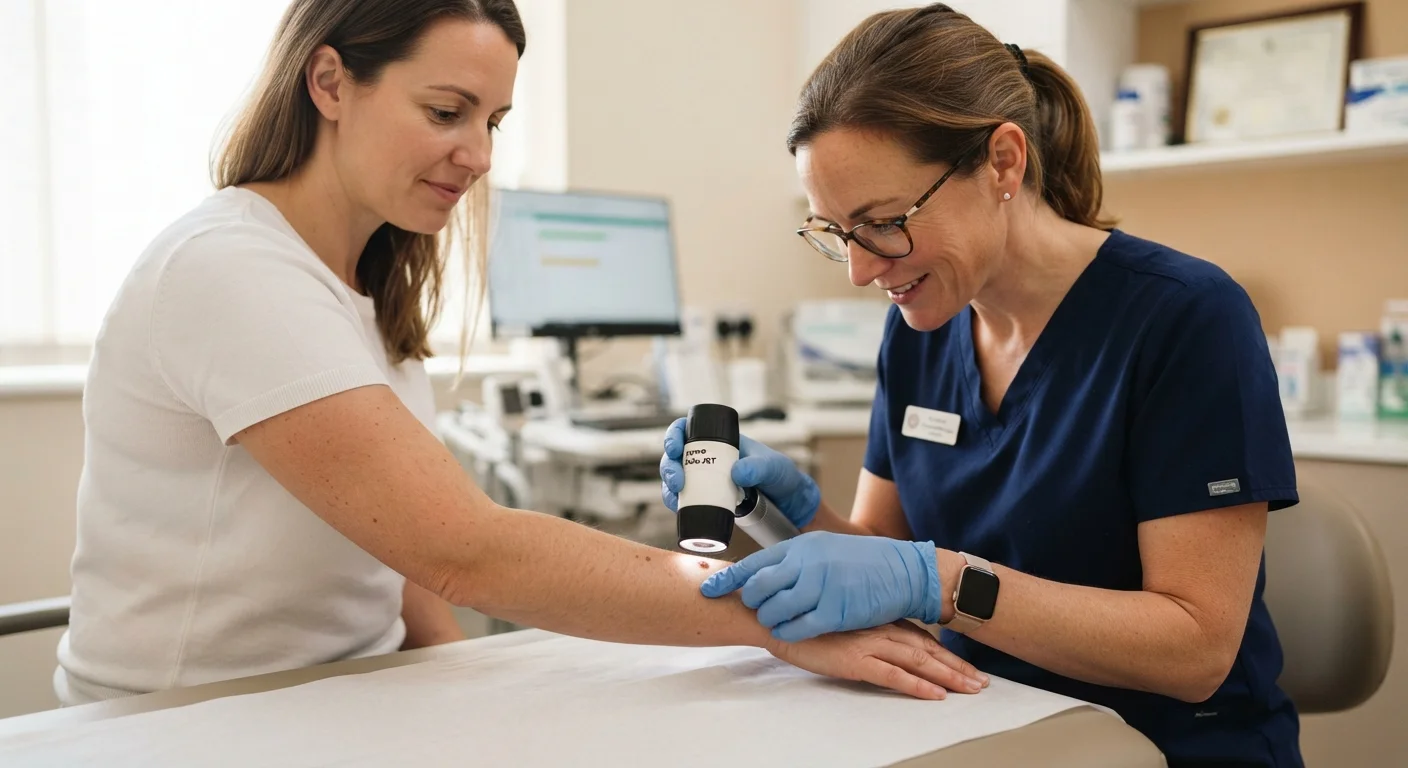
Photo: YetaWellness.com | Explore Trending Blogs editorial
Key Takeaways
- Monthly self-exams help you notice new or changing spots early, but cannot replace clinical evaluation.
- Dermatologists use specialized tools like dermoscopes to evaluate lesions invisible to the naked eye.
- The ABCDEs of melanoma — asymmetry, border, color, diameter, evolving — guide both self-checks and clinical triage.
- People with high-risk factors such as fair skin, history of sunburns, or a family history of melanoma may need annual professional checks.
- Any spot that changes, bleeds, itches, or simply looks new warrants prompt medical attention.
What a Skin Self-Exam Actually Involves
A skin self-exam is a systematic head-to-toe inspection you perform on your own body, ideally once a month. The American Academy of Dermatology recommends doing it in a well-lit room using a full-length mirror, a hand mirror for hard-to-see areas, and — where necessary — a trusted person to check your scalp and back.
The goal is not to diagnose anything. It is to build a mental map of your baseline — where your moles are, what they look like, and how they behave over time. You are looking for anything new, different, or changing. Dermatologists teach a simple framework called the ABCDEs of melanoma:
- A — Asymmetry: One half doesn't match the other.
- B — Border: Edges are irregular, ragged, or blurred.
- C — Color: Multiple shades of brown, black, red, white, or blue in a single spot.
- D — Diameter: Larger than a pencil eraser (about 6 mm), though melanomas can be smaller.
- E — Evolving: Any change in size, shape, color, or a new symptom like itching or bleeding.
No special equipment is required. What matters most is consistency — examining the same areas each month so that changes become obvious. Self-exams are especially valuable because skin cancer can appear in areas not routinely seen, such as the scalp, between toes, and under fingernails.
This article is for general health information only and is not a substitute for medical advice. Always consult a qualified healthcare professional about your individual situation.
What Happens During a Dermatologist Skin Check
A professional full-body skin exam is performed by a board-certified dermatologist or, in some settings, a trained nurse practitioner or physician assistant working under dermatologist supervision. The appointment typically lasts 15 to 30 minutes and involves a systematic visual inspection of the entire skin surface, including the scalp, nails, and mucous membranes.
The key clinical advantage is dermoscopy — a hand-held device that illuminates and magnifies lesions up to tenfold, revealing subsurface structures invisible to the naked eye. Studies consistently show that dermoscopy improves diagnostic accuracy for melanoma compared with the naked eye alone.
| Criterion | Skin Self-Exam | Dermatologist Skin Check |
|---|---|---|
| Who performs it | You, at home | Licensed dermatologist or clinician |
| Tools used | Mirrors, good lighting | Dermoscope, biopsy tools if needed |
| Recommended frequency | Monthly | Annually or as directed by provider |
| Can detect subsurface changes | No | Yes, via dermoscopy |
| Can confirm cancer diagnosis | No | Yes, via biopsy and pathology |
| Cost | Free | Varies; often covered by insurance |
| Primary purpose | Track baseline; spot changes early | Clinical evaluation and diagnosis |
When a lesion looks suspicious, the dermatologist may recommend a skin biopsy — removing a small sample of tissue for laboratory analysis. This is the only definitive way to diagnose skin cancer. A biopsy is a minor, in-office procedure performed under local anesthesia.
How often you need a professional check depends on your individual risk profile. People with a prior skin cancer diagnosis, a family history of melanoma, a large number of moles, or significant cumulative sun exposure may be advised to have annual or more frequent exams. If you are unsure about your risk, discussing it with your primary care provider is a good starting point. For broader context on why preventive screenings like these matter, see our guide to preventive screenings.
When to Escalate: Red Flags That Require Professional Attention
Knowing when to act on what you find during a self-exam is the critical bridge between the two approaches. Do not wait until your next scheduled appointment if you notice any of the following:
- A spot that meets one or more of the ABCDE criteria
- Any lesion that bleeds without injury or fails to heal within a few weeks
- A new growth or sore that itches, crusts, or oozes persistently
- A dark streak under a nail that appears without a history of trauma
- A mole that looks noticeably different from all your other moles — dermatologists call this the ugly duckling sign
Special Populations: Talk to Your Doctor First
Skin cancer is among the most common cancers in the United States, but it is also among the most treatable when detected early. Both self-exams and professional checks are necessary layers of the same protective strategy — not alternatives to each other. Used together, they give you the best chance of catching changes before they progress.
The content on this site is for informational purposes only and is not a substitute for professional advice. Always consult a qualified professional for guidance specific to your situation.