
Herd Immunity Explained: Why Individual Vaccination Protects the Community

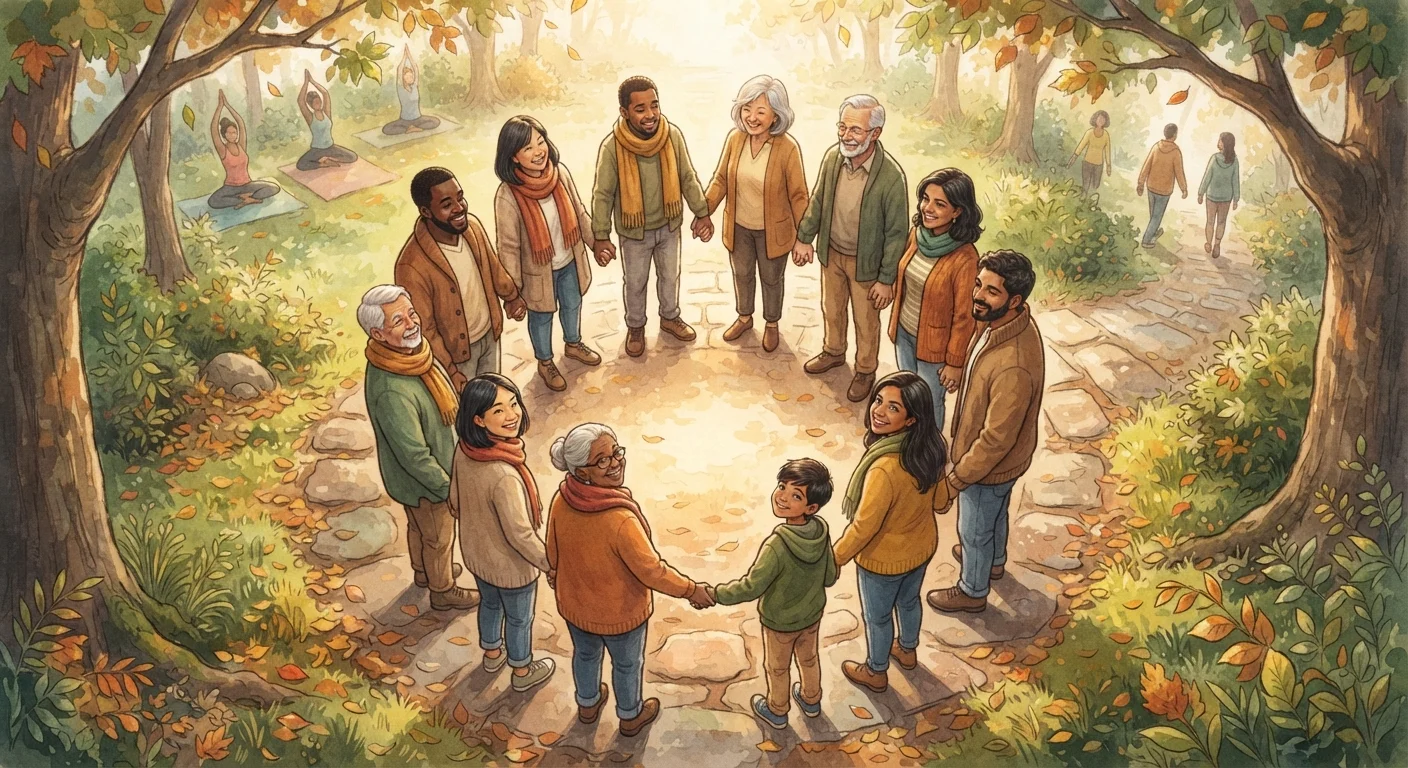
Photo: YetaWellness.com | Explore Trending Blogs editorial
Key Takeaways
- Herd immunity is reached when enough people are immune to stop a disease from spreading widely.
- The required vaccination rate differs by disease — measles requires roughly 95% coverage, while polio requires around 80–85%.
- People who cannot be vaccinated — such as infants and immunocompromised individuals — rely on herd immunity for protection.
- Vaccination gaps in a community can allow outbreaks to re-emerge even in previously well-protected populations.
- Natural infection can also contribute to immunity, but at far greater risk of serious illness and complications than vaccination.
The Chain of Transmission — and How Immunity Breaks It
Every infectious disease spreads through a chain: one infected person passes it to others, who pass it to more. Herd immunity works by interrupting that chain. When enough people in a community are immune — through vaccination or prior infection — a pathogen runs out of hosts to infect before it can reach vulnerable individuals.
Think of it as a firebreak in a forest fire. A large enough gap of immune people stops the spread before it reaches someone who has no protection. The more contagious a disease, the wider that firebreak needs to be — which is why different diseases have different herd immunity thresholds.
Measles, for example, is extraordinarily contagious. One infected person can, on average, infect 12–18 others in a fully susceptible population. That's why the CDC and the World Health Organization estimate that roughly 95% of a community must be immune to prevent measles from circulating. Polio is less contagious and requires a lower — though still high — threshold of around 80–85% immunity.
~95%
Population immunity needed to prevent measles spread
According to the CDC and WHO, measles requires one of the highest herd immunity thresholds of any vaccine-preventable disease due to its extreme contagiousness.
80–85%
Estimated herd immunity threshold for polio
The Global Polio Eradication Initiative uses this benchmark when assessing vaccination coverage targets in at-risk communities.
12–18
People one measles case can infect in an unprotected population
This figure — known as the basic reproduction number (R₀) — illustrates why even small gaps in measles vaccination coverage can trigger rapid outbreaks.
Who Relies on the Community for Protection
Not everyone can be vaccinated. Newborns are too young to receive several vaccines — the MMR (measles, mumps, rubella) vaccine, for instance, is not given until 12–15 months of age. People undergoing chemotherapy, those who have received organ transplants, and individuals with certain immune disorders may be medically advised against live vaccines. Some people have severe allergies to specific vaccine components.
These individuals have no personal shield. Their safety depends entirely on the people around them being vaccinated. This is the human case for herd immunity: getting vaccinated is not only a personal health decision, it is a contribution to the protection of neighbors, family members, and strangers who have no other option.
For a broader look at how vaccination needs evolve throughout life — including those early childhood windows — see our guide on immunization across a lifetime.
What Happens When Coverage Slips
Herd immunity is not a fixed achievement — it is a maintained state. When vaccination rates fall, even in communities that once had strong coverage, diseases can re-emerge. The United States experienced significant measles outbreaks in recent years, driven in part by clusters of unvaccinated individuals. Even vaccinated people in heavily affected areas face elevated exposure risk when community immunity erodes.
Vaccine hesitancy — driven by misinformation rather than medical contraindication — is one of the leading forces behind declining vaccination rates in some communities. Understanding and addressing those concerns matters for public health. If you've encountered common vaccine myths, our article on persistent vaccine myths and what the evidence shows addresses them directly with evidence.
It's also worth noting that some vaccines require booster doses to maintain protective immunity over time. When individuals fall behind on boosters, community-level immunity can weaken gradually, even without anyone actively declining vaccination. Learn more in our article on why vaccine-induced immunity isn't always permanent.
Check Your Own Vaccination Status
This article is for general health information and educational purposes only. It is not a substitute for personalized medical advice. Please consult a qualified healthcare provider about your vaccination needs and those of your family.
Frequently Asked Questions
The content on this site is for informational purposes only and is not a substitute for professional advice. Always consult a qualified professional for guidance specific to your situation.