
Understanding Total Daily Energy Expenditure

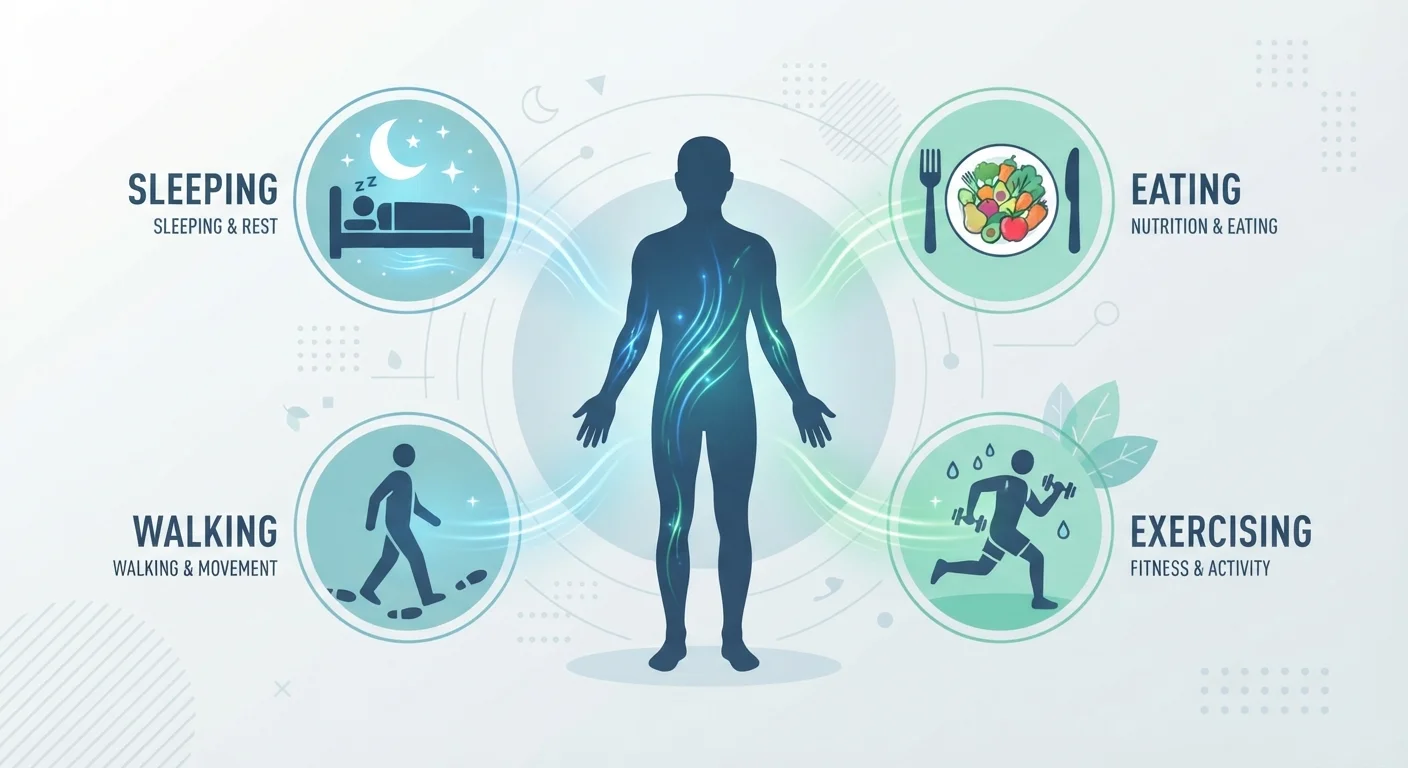
Photo: YetaWellness.com | Explore Trending Blogs editorial
Key Takeaways
- TDEE is the total number of calories your body uses in a single day across all functions.
- It is made up of four components: BMR, physical activity, NEAT, and the thermic effect of food.
- Basal metabolic rate is typically the largest share of TDEE, often 60-70% for sedentary individuals.
- TDEE varies significantly between people based on body composition, age, and lifestyle.
- Estimated TDEE figures are useful reference points, not precise prescriptions.
What Is Total Daily Energy Expenditure?
Your body is burning energy constantly - not just during a workout, but while you sleep, digest a meal, or sit at your desk. Total Daily Energy Expenditure (TDEE) is the sum of all the calories your body uses over a 24-hour period. It is, in the simplest terms, your body's full daily energy bill.
Understanding TDEE matters because it anchors nearly every meaningful conversation about nutrition, body composition, and metabolic health. Without a working sense of how much energy your body actually uses, it is difficult to evaluate any claim about diet or weight management with clear eyes.
TDEE is not a single fixed number. It shifts based on how active you are, how much muscle you carry, your age, and a range of physiological factors. Calculators and equations give estimates - they are useful tools, but no formula perfectly captures individual variation.
Total Daily Energy Expenditure (TDEE)
The total number of calories your body burns in a full day, including all bodily functions, movement, and digestion.
Basal Metabolic Rate (BMR)
The minimum energy your body needs to keep basic life-sustaining functions running while completely at rest - breathing, circulation, and cell maintenance.
Non-Exercise Activity Thermogenesis (NEAT)
Calories burned through everyday movement that isn't planned exercise, such as walking, fidgeting, or household chores.
Thermic Effect of Food (TEF)
The energy your body uses to digest, absorb, and process the nutrients in food after you eat.
Exercise Activity Thermogenesis (EAT)
The calories burned specifically during intentional, structured physical activity like workouts or sports.
Energy Balance
The relationship between the calories you consume through food and the calories your body expends - a foundational concept in understanding body weight over time.
The Four Components of TDEE
TDEE is built from four distinct energy-using processes. Understanding each one helps clarify where your daily calorie expenditure actually goes.
1. Basal Metabolic Rate (BMR)
BMR is the energy your body requires to sustain its most essential functions - breathing, circulation, cell repair, temperature regulation - while completely at rest. For most people, BMR accounts for roughly 60-70% of total daily energy use, making it the dominant driver of TDEE. For a thorough explanation of what sets BMR and how it is estimated, see our guide to basal metabolic rate.
2. Physical Activity (EAT)
Exercise Activity Thermogenesis (EAT) covers the calories burned during intentional exercise - running, strength training, swimming, cycling, and similar structured movement. This component is the most variable and the one most directly under your control day to day.
3. Non-Exercise Activity Thermogenesis (NEAT)
NEAT captures everything else you do that isn't formal exercise: walking between rooms, typing, gesturing while talking, or standing at a counter. Research suggests NEAT can vary by as much as 2,000 calories per day between individuals with similar body sizes - making it a surprisingly powerful contributor to total energy expenditure.
4. Thermic Effect of Food (TEF)
Every time you eat, your body expends energy to digest, absorb, and process nutrients. This is the Thermic Effect of Food (TEF). Protein requires the most energy to process (roughly 20-30% of its calorie content), followed by carbohydrates and fat. On average, TEF accounts for about 10% of total daily calories burned. For plain-language definitions of these and related metabolism terms, refer to our metabolism reference guide.
How Activity Level Shapes Your TDEE
Most TDEE estimation methods multiply BMR by an activity multiplier - a factor that attempts to account for how much you move each day. Common categories range from sedentary (desk job, little movement) to very active (manual labor or intense daily training). The resulting number is an estimate of TDEE for that lifestyle level.
Boosting NEAT Is Often More Sustainable
The challenge is that self-reported activity levels are often inaccurate, and the standard multipliers were derived from population averages. Individual variation in NEAT alone can make two people with the same BMR and the same exercise routine burn meaningfully different amounts of energy in a day.
This is worth keeping in mind when using any online TDEE calculator: the output is a reasonable starting estimate, not a clinical measurement. Tools like doubly labeled water - the gold standard for measuring real-world energy expenditure - are research instruments, not everyday consumer tools.
What TDEE Can and Cannot Tell You
A TDEE estimate gives you a useful reference point for understanding your overall energy needs. It can help frame conversations with a registered dietitian or physician about nutrition goals, inform general awareness of how lifestyle choices affect energy balance, and demystify why two people eating similarly may have different experiences with weight.
What TDEE cannot do is deliver a precise, individualized prescription. Energy balance is a meaningful framework, but human metabolism involves hormonal, genetic, and behavioral complexity that no single number captures. Factors like sleep quality, stress, gut microbiome composition, and medication use all influence how efficiently the body uses energy.
If you are working toward a specific health goal - whether related to weight, athletic performance, or managing a condition - a qualified healthcare provider or registered dietitian is best positioned to interpret what TDEE information means for your individual circumstances. General metabolic knowledge is empowering; it works best when paired with professional guidance tailored to you.
This article is for general informational and educational purposes only and does not constitute medical or nutritional advice. Always consult a qualified healthcare professional before making changes to your diet, exercise routine, or health management plan.
Frequently Asked Questions
The content on this site is for informational purposes only and is not a substitute for professional advice. Always consult a qualified professional for guidance specific to your situation.