
Calorie Counting vs. Intuitive Eating: Two Philosophies on Managing What You Eat

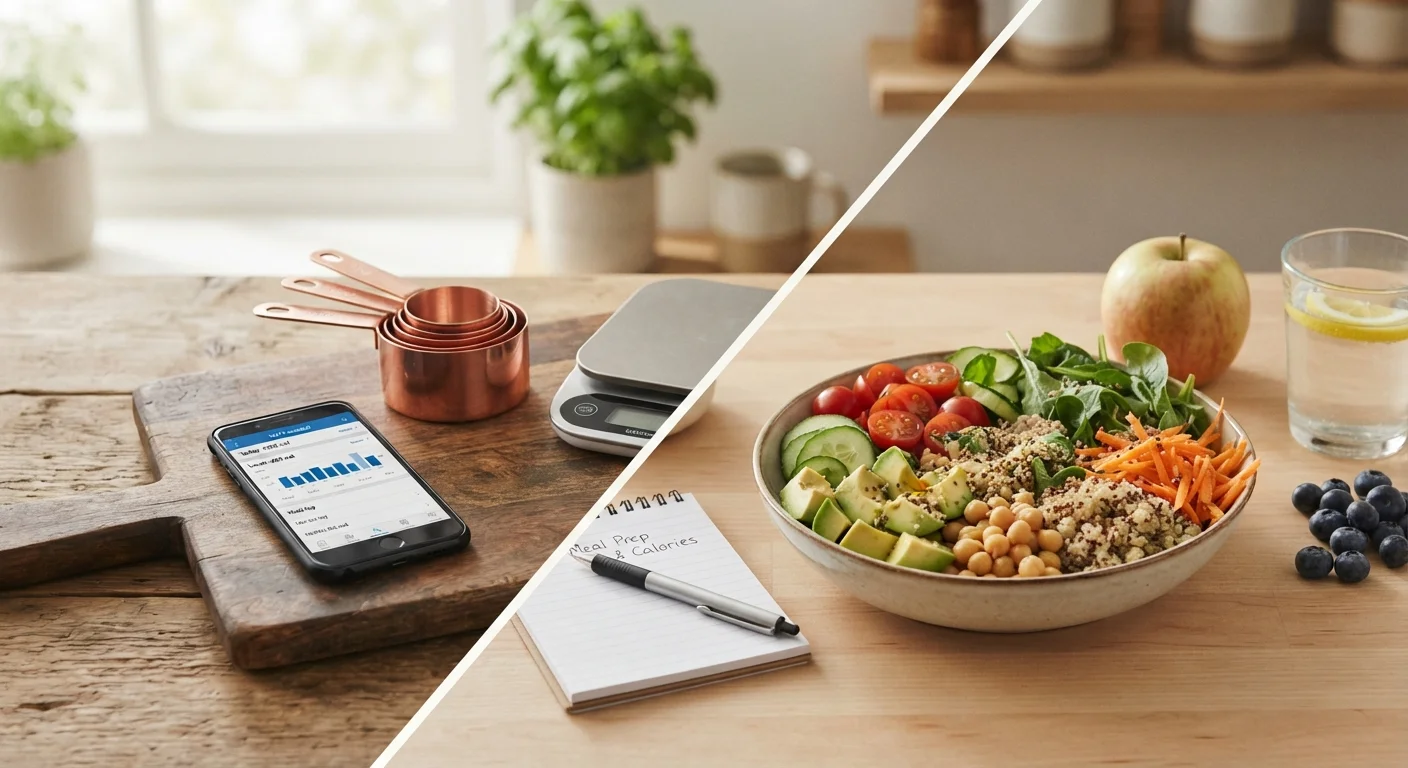
Photo: YetaWellness.com | Explore Trending Blogs editorial
Key Takeaways
- Calorie counting offers measurable structure but can sometimes increase stress around food.
- Intuitive eating is a research-backed framework focused on internal hunger and fullness cues, not restriction.
- Neither approach is universally superior - suitability depends on individual psychology, history, and goals.
- Both methods work best when they support long-term, sustainable habits rather than short-term fixes.
- A qualified healthcare or nutrition professional can help determine which approach fits your specific needs.
What Each Approach Actually Involves
Calorie counting is the practice of tracking the energy content of food and beverages consumed each day, typically against a target range. It relies on external tools - apps, food scales, nutrition labels - to create quantifiable data about intake. The underlying premise is that managing energy balance through measurable input provides a lever for influencing body weight or composition.
Intuitive eating, by contrast, is a structured framework developed by registered dietitians Evelyn Tribole and Elyse Resch in the 1990s, built around ten evidence-informed principles. These include honoring hunger, making peace with food, rejecting the diet mentality, and respecting fullness. It is not a passive "eat whatever you want" philosophy - it is a deliberate practice of developing internal attunement. For a deeper look at how it compares to a related approach, see mindful eating vs. intuitive eating.
| Criterion | Calorie Counting | Intuitive Eating |
|---|---|---|
| Core mechanism | External tracking of energy intake | Internal hunger and fullness attunement |
| Tools required | App, food scale, labels | No tools needed |
| Learning curve | Quick to start, tedious to sustain | Gradual; requires patience and practice |
| Psychological impact | Can increase food anxiety in some | Associated with improved body image |
| Evidence base | Strong for short-term energy awareness | Growing; strong for wellbeing outcomes |
| Flexibility | Rigid; dependent on accurate logging | Flexible; adapts across life circumstances |
| Best use context | Short-term, clinically supported goals | Long-term relationship with food |
What the Evidence Says
Research on calorie counting shows it can be effective for short-term energy awareness, especially when individuals have lost touch with what portions look like. However, studies also document a consistent psychological cost for some people: increased food-related anxiety, all-or-nothing thinking, and in predisposed individuals, risk factors associated with disordered eating patterns. Accuracy is also a practical limitation - research has shown that even trained individuals can significantly underestimate intake when logging.
Intuitive eating has been studied more extensively in recent years. A 2021 review published in Nutrients found associations between intuitive eating and improved psychological wellbeing, lower rates of disordered eating behaviors, and better body image - though it noted the evidence base for weight-related outcomes is still developing. Importantly, intuitive eating does not promise or target weight loss; its primary outcomes are relational and behavioral. Understanding how hunger and fullness signals work is foundational here - how internal hunger cues function can help contextualize why this matters.
53%
Calorie underestimation in self-reporting
Research suggests people regularly underestimate their caloric intake by up to 53%, even when actively tracking, according to studies on dietary self-reporting accuracy.
10
Core principles in Intuitive Eating framework
The original Intuitive Eating framework, developed by Tribole and Resch, is built on ten structured principles covering hunger, satisfaction, emotion, and body respect.
97%
Diet failure rate over 5 years
Decades of research suggest that the vast majority of intentional weight-loss diets are not maintained long-term, underscoring the need for sustainable behavioral approaches.
Trade-offs, Fit, and What to Consider
Calorie counting works best as a time-limited tool rather than a permanent practice. It can generate useful awareness but risks becoming a source of stress or rigidity. People with a history of eating disorders or obsessive thought patterns around food should approach tracking with caution and ideally with professional support.
Intuitive eating requires patience - it takes time to rebuild attunement with body signals that years of dieting or busy modern life may have dulled. It is not the easiest starting point for someone who has never examined their eating habits, though it pairs well with broader nutritional literacy. For practical guidance on thinking about food quality without obsessing over numbers, building a balanced plate and building a micronutrient-rich eating pattern offer grounded, tool-free frameworks.
Neither philosophy is inherently superior. The best approach is the one that is sustainable, psychologically safe, and aligned with your actual life. A registered dietitian can help determine which framework - or combination - makes sense for you as an individual.
This article is for general informational and educational purposes only and does not constitute medical or nutritional advice. Consult a qualified healthcare or nutrition professional before making significant changes to your eating patterns.
The content on this site is for informational purposes only and is not a substitute for professional advice. Always consult a qualified professional for guidance specific to your situation.