
Why Most Weight Lost on Crash Diets Comes Back

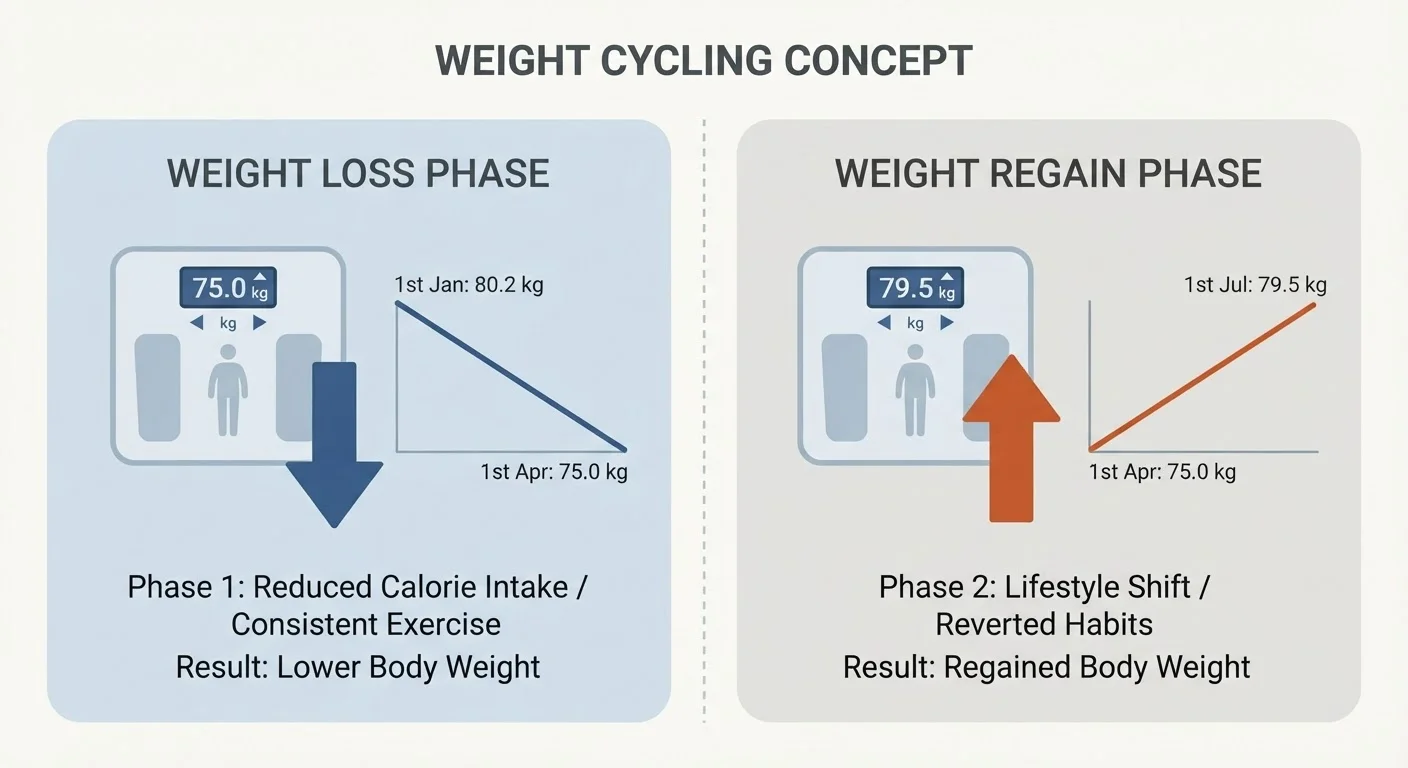
Photo: YetaWellness.com | Explore Trending Blogs editorial
Key Takeaways
- Severe calorie restriction triggers the body's survival mechanisms, making sustained weight loss harder, not easier.
- Metabolic rate can slow significantly during crash dieting, meaning the body burns fewer calories at rest.
- Hormonal changes during restriction increase hunger and drive food-seeking behavior after the diet ends.
- Weight regained after crash diets often consists of more fat and less muscle than the original composition.
- Gradual, consistent dietary changes are supported by evidence as a more effective long-term approach.
- Consulting a healthcare provider before making major changes to eating patterns is strongly recommended.
The Biology of Rapid Weight Loss
When the body is placed under severe calorie restriction, it does not simply burn stored fat at an accelerated rate and stop there. Instead, it initiates a cascade of adaptive responses designed to protect survival. Early weight loss on a crash diet often includes a significant proportion of water weight and lean muscle mass - not just fat - which can make the initial drop on the scale misleading.
As restriction continues, the body downregulates its basal metabolic rate (BMR) - the number of calories burned at rest to keep organs and systems functioning. This is sometimes called metabolic adaptation or "adaptive thermogenesis." The result is that the body becomes increasingly efficient at running on fewer calories. For more on the physiology behind this process, see why crash diets can slow metabolic rate over time.
This adaptation is not a flaw - it is the body doing exactly what evolution designed it to do in times of food scarcity. The problem arises when this survival response conflicts with a person's intentional weight goals.
Hormonal Changes That Drive Regain
Beyond metabolism, hormones play a central and often underappreciated role in why weight returns after crash dieting. Two key players are leptin and ghrelin.
Leptin is produced by fat cells and signals satiety to the brain. When calorie intake drops steeply and fat stores shrink, leptin levels fall - sometimes dramatically. A lower leptin signal means the brain receives weaker "I'm full" feedback, making it harder to feel satisfied after eating.
Ghrelin, often called the "hunger hormone," works in the opposite direction. Ghrelin levels tend to rise during and after restriction, increasing appetite and food-seeking behavior. Studies tracking individuals after significant calorie restriction have found that these hormonal changes can persist well beyond the active dieting period, creating a biological environment that strongly promotes eating more.
“The body is remarkably good at defending its fat stores. Severe restriction doesn't outsmart that system - it triggers it. Understanding that response is fundamental to helping people find approaches that actually last.”
— Registered Dietitian Nutritionist, Obesity Medicine Specialist, Clinician and researcher specializing in metabolic health and weight management
This hormonal push toward regain is one reason that weight cycling - repeatedly losing and regaining - is so common and so hard to interrupt without addressing the underlying dietary approach. For context on how eliminating entire food categories fits into this picture, see why cutting out entire food groups usually backfires.
Why Regained Weight Often Returns as Fat
One of the more consequential consequences of crash dieting is the composition of regained weight. When severe restriction causes the body to break down muscle tissue for energy - a process called catabolism - that muscle mass is not automatically restored when normal eating resumes.
During refeeding, the body prioritizes restoring fat stores, partly because fat is energy-dense and easier to replenish rapidly. This means that even if the number on the scale returns to where it started, the ratio of fat to lean mass may be less favorable than before the diet. A higher proportion of body fat relative to muscle can, in turn, further reduce resting metabolic rate, since muscle tissue is more metabolically active than fat tissue.
This cycle - losing muscle, regaining fat, lowering metabolism, gaining more fat - explains why repeated crash dieting can make weight management increasingly difficult over time. It also illustrates why the number on a scale is only one dimension of a complex physiological picture.
What the Evidence Suggests Instead
A substantial body of research consistently finds that modest, sustainable changes to eating patterns are associated with better long-term weight outcomes than severe restriction. These approaches work with, rather than against, the body's regulatory systems.
Adequate protein intake, for example, supports muscle preservation during any calorie reduction and promotes satiety. Regular physical activity - particularly resistance training - can help maintain lean mass and support metabolic rate. Consistent sleep and stress management also influence the hormonal environment around appetite and fat storage, though these are areas where research is still deepening.
Small dietary shifts often outperform strict diets precisely because they don't trigger the same degree of metabolic and hormonal defense responses. Similarly, building durable food patterns - rather than following rules that feel unsustainable - is a key theme explored in building eating habits that support a stable weight for years.
Anyone considering significant changes to their diet, particularly those with existing health conditions, should consult a registered dietitian or physician before making changes. Weight and metabolism are highly individual, and general information cannot substitute for personalized professional guidance.
This article is for general informational and educational purposes only and does not constitute medical advice. Always consult a qualified healthcare professional for guidance specific to your individual health needs.
Frequently Asked Questions
The content on this site is for informational purposes only and is not a substitute for professional advice. Always consult a qualified professional for guidance specific to your situation.