
Nutrition and Brain Health: What the Evidence Supports

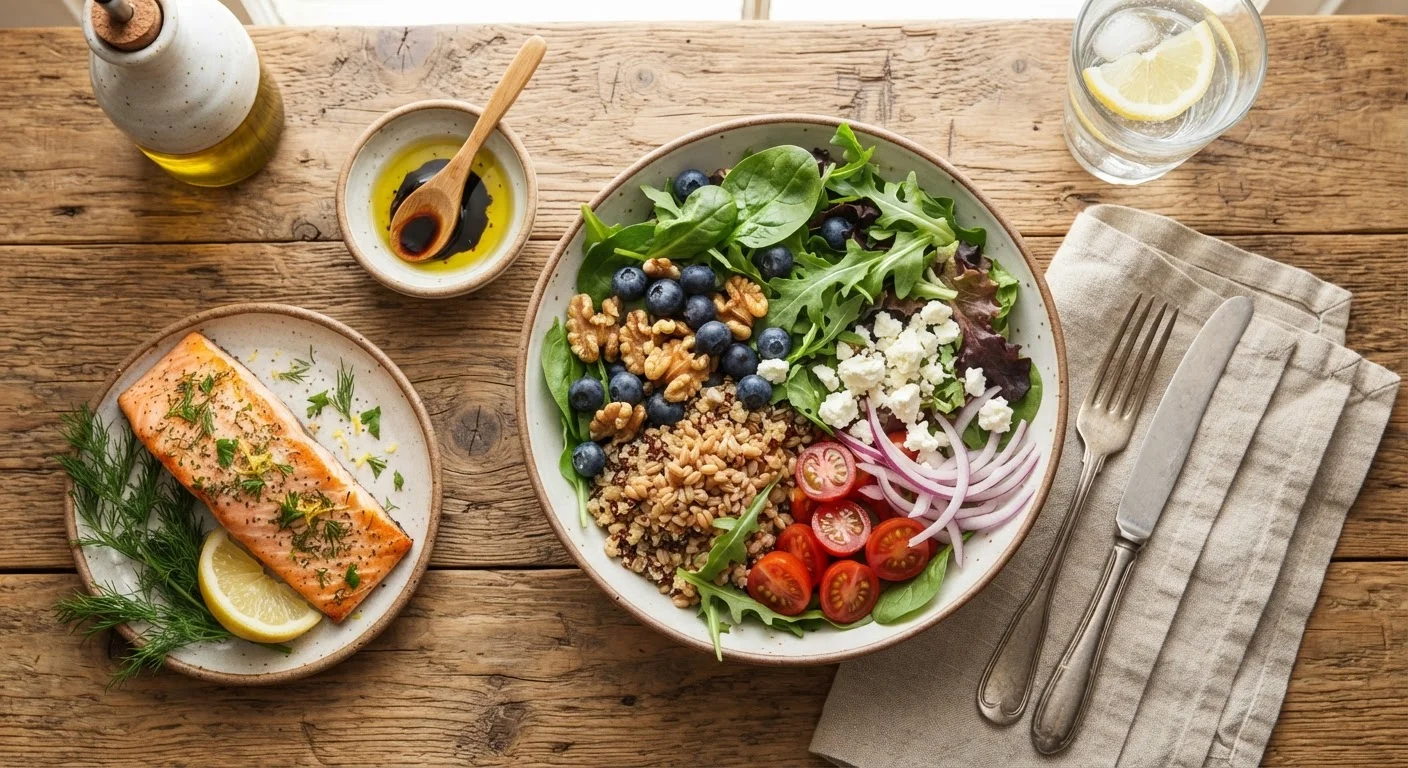
Photo: YetaWellness.com | Explore Trending Blogs editorial
What Science Says About Diet and the Aging Brain
The relationship between what we eat and how our brains age is one of the most active areas in nutritional neuroscience. While no single food prevents cognitive decline, a growing body of research supports the idea that overall dietary patterns — rather than isolated nutrients — matter most for long-term brain health.
| Most-studied dietary pattern for cognition | Mediterranean diet (Consistent finding across multiple observational cohort studies) |
| MIND diet focus | 10 brain-healthy food groups; 5 to limit (Morris et al., Alzheimer's & Dementia, 2015) |
| Study design limitation | Most evidence is observational, not causal (National Institute on Aging research guidance) |
| Omega-3 primary food source | Fatty fish (salmon, mackerel, sardines) |
| Ultra-processed food risk | Associated with faster cognitive decline in cohort studies (Multiple prospective studies, including ELSA-Brasil, 2022) |
| Supplement evidence vs. food evidence | Food sources generally outperform isolated supplements in trials (Cochrane reviews on omega-3 and vitamin E supplementation) |
Two eating frameworks have received the strongest research attention: the Mediterranean diet and the MIND diet (Mediterranean-DASH Intervention for Neurodegenerative Delay). Both emphasize vegetables, legumes, fish, whole grains, and olive oil while limiting red meat, processed foods, and added sugars. Observational studies, including research published in peer-reviewed journals such as Neurology and Alzheimer's & Dementia, associate closer adherence to these patterns with slower rates of cognitive decline in older adults.
It is important to note that most landmark studies in this area are observational — meaning they identify associations, not causes. Randomized controlled trials on dietary patterns and cognition are methodologically challenging and remain limited. The evidence is promising but not definitive.
This article is for general informational purposes and does not constitute medical or dietary advice. Consult a qualified healthcare professional for personalized guidance.
Key Nutrients With Credible Research Backing
While whole dietary patterns are preferred over single-nutrient thinking, certain nutrients consistently appear in the cognitive aging literature:
- Omega-3 fatty acids (particularly DHA and EPA, found in fatty fish): Associated with reduced neuroinflammation and maintenance of neuronal membrane integrity. The strongest evidence comes from observational data; large randomized trials have shown mixed results for supplementation.
- Flavonoids (found in berries, cocoa, and leafy vegetables): Laboratory and epidemiological research links these plant compounds to improved cerebral blood flow and reduced oxidative stress, both relevant to brain aging.
- B vitamins (especially B6, B12, and folate): Essential for homocysteine metabolism. Elevated homocysteine is associated with increased dementia risk, though whether B-vitamin supplementation reduces that risk remains under investigation.
- Vitamin E: Found in nuts and seeds; some population studies link dietary vitamin E intake (not supplementation) to slower cognitive decline.
Across all these nutrients, a key distinction holds: the evidence is generally stronger for food sources than for isolated supplements. Lifestyle habits that support cognitive health extend well beyond diet and are worth exploring alongside nutritional strategies.
Mediterranean diet
An eating pattern emphasizing fruits, vegetables, whole grains, legumes, fish, and olive oil, with limited red meat and processed foods. Originally observed among populations in southern Europe and associated with various health benefits in research.
MIND diet
A hybrid of the Mediterranean and DASH diets, specifically designed to target brain health. It highlights ten food groups associated with cognitive benefit and five associated with harm, including red meat and butter.
Neuroinflammation
Inflammation occurring within the brain or spinal cord. Chronic low-grade neuroinflammation is thought to contribute to age-related cognitive decline and neurodegenerative disease.
Homocysteine
An amino acid in the blood. Elevated homocysteine levels have been associated with increased risk of cardiovascular disease and cognitive decline, and are influenced by B-vitamin intake.
Observational study
A type of research that tracks participants without intervening. It can identify associations between variables — such as diet and cognition — but cannot prove that one causes the other.
Gut-brain axis
The complex bidirectional communication network linking the gastrointestinal tract and the central nervous system. Emerging research suggests gut microbiome composition may influence brain function and mood.
What to Be Cautious About
The supplement market aggressively targets older adults concerned about memory and cognition. Many products claim benefits that the current clinical evidence does not support. The U.S. Food and Drug Administration does not evaluate most dietary supplements for efficacy before they reach shelves, and claims on packaging can be misleading.
For context, several large clinical trials — including those examining omega-3 and vitamin E supplements specifically for dementia prevention — have not consistently replicated the protective associations seen in dietary studies. This suggests the food matrix and overall eating pattern may be more important than any extracted compound.
Similarly, ultra-processed foods — high in added sugar, refined carbohydrates, and trans fats — appear repeatedly in epidemiological research as associated with poorer cognitive outcomes over time. Limiting these is a practical, evidence-aligned step most adults can take. For a broader look at how dietary patterns compare, see how different eating patterns compare for long-term health.
There is also growing scientific interest in the gut-brain axis — the bidirectional communication between the digestive system and the central nervous system. Research suggests gut microbiome composition may influence neuroinflammation and mood. For more, see how digestion influences how you feel.
Nutrition is one piece of a larger picture. Physical activity and cognitive health share a strong evidence base, and both domains interact with sleep, stress management, and social engagement.
The content on this site is for informational purposes only and is not a substitute for professional advice. Always consult a qualified professional for guidance specific to your situation.