
What the Research Actually Says About Mindfulness and Anxiety

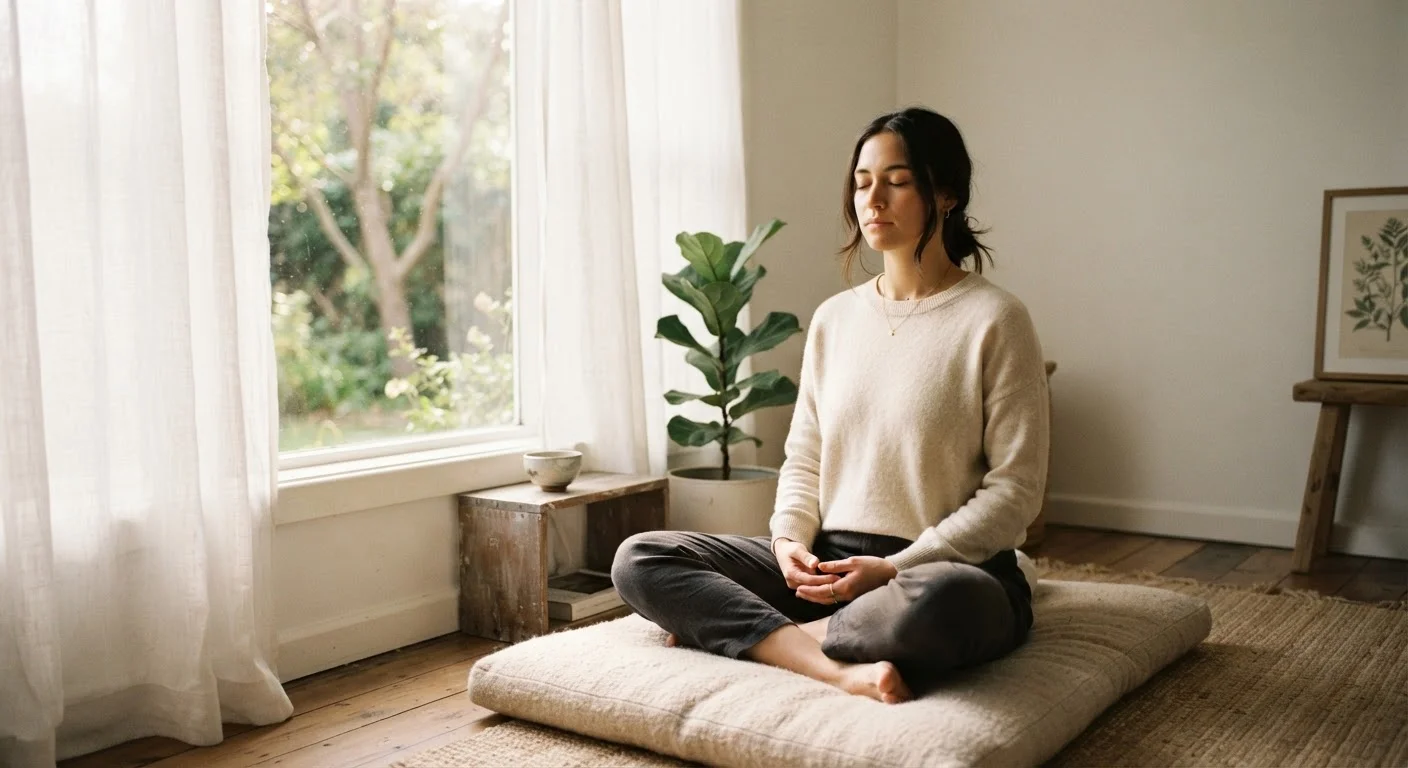
Photo: YetaWellness.com | Explore Trending Blogs editorial
Key Takeaways
- Mindfulness-based interventions show meaningful benefit for anxiety, but they are not a cure-all.
- Research supports mindfulness as a complement to therapy, not a replacement for clinical treatment.
- Even brief, consistent practice — a few minutes daily — can produce measurable stress reductions.
- Mindfulness works differently for different people; some individuals may need tailored or professional guidance.
- The quality of mindfulness research has improved significantly, though gaps in long-term data remain.
Why the Mindfulness-Anxiety Conversation Needs More Precision
Mindfulness has gone from a clinical tool to a cultural catchphrase in a remarkably short time. Scrolling through wellness content, you might get the impression that a few minutes of focused breathing will dissolve anxiety entirely — or, on the opposite extreme, that mindfulness is just a commercialized trend with no real substance. Neither picture is accurate, and both can mislead people who genuinely need help.
The honest picture sits in the middle: mindfulness-based interventions have a meaningful and growing evidence base, but that evidence comes with important caveats about who benefits most, under what conditions, and how much. For a fuller picture of how anxiety differs from everyday stress in the first place, see our article on understanding the difference between anxiety and stress.
Below, we address five of the most common myths about mindfulness and anxiety — and what the research actually shows.
Five Myths — and What the Evidence Really Shows
Myth
Mindfulness eliminates anxiety if you practice it correctly.
Fact
Mindfulness reduces anxiety symptoms for many people, but research does not support the idea that it eliminates anxiety entirely or that poor outcomes reflect incorrect practice.
A widely cited 2014 meta-analysis published in JAMA Internal Medicine found that mindfulness meditation programs produced moderate reductions in anxiety, depression, and pain — but the authors were clear that the effect sizes were modest, not transformative. Anxiety often has biological, psychological, and social contributors that no single practice can fully address. Framing mindfulness as a complete solution can discourage people from seeking additional help when they need it.
Myth
You need to meditate for 30–45 minutes a day to get any benefit.
Fact
Research suggests shorter, consistent sessions — even 10 minutes daily — can produce meaningful reductions in perceived stress and anxiety.
Studies examining brief mindfulness interventions have found that frequency and consistency matter more than session length, especially for beginners. A 2018 study in Mindfulness journal found that participants who practiced short daily sessions showed improvements in stress reactivity comparable to longer-format programs. Starting small lowers the barrier to entry and makes it more likely people will stick with the practice over time.
Myth
Mindfulness is just relaxation — it has no real scientific backing.
Fact
Mindfulness-based programs, particularly Mindfulness-Based Stress Reduction (MBSR) and Mindfulness-Based Cognitive Therapy (MBCT), have been studied in hundreds of clinical trials with measurable, replicable outcomes.
MBCT is now recommended in clinical guidelines in several countries as a maintenance treatment for recurrent depression, and MBSR has demonstrated consistent benefits for anxiety and stress. These are structured, evidence-based programs — not loosely defined relaxation techniques. That said, not all products and apps marketed as "mindfulness" meet the same rigorous standard; the label doesn't automatically equal the research-backed protocol.
If you want to understand the foundations of the practice itself, our plain-language explainer on what mindfulness actually is separates the science from the buzzwords.
Myth
Mindfulness works the same way for everyone with anxiety.
Fact
Individual responses vary considerably; factors like anxiety type, trauma history, and personal temperament all influence how well mindfulness works for a given person.
Research increasingly recognizes that mindfulness is not a one-size-fits-all intervention. People with generalized anxiety disorder may respond differently than those with social anxiety or panic disorder. A 2020 review in Perspectives on Psychological Science highlighted that while group-level effects are positive, individual variability is substantial. This is one reason therapists often integrate mindfulness into broader treatment plans rather than prescribing it as a standalone fix. Pairing mindfulness with grounding techniques for anxious moments may also support a more rounded approach.
Myth
Mindfulness and stress relief are the same thing.
Fact
Mindfulness specifically trains attention and present-moment awareness; stress relief describes a broad range of outcomes that can come from many sources, including exercise, sleep, and social connection.
Conflating the two leads to confusion about what mindfulness is actually doing in the brain and body. It's worth noting that anxiety and stress are also distinct experiences — and the mechanisms by which mindfulness helps with each may differ. Meanwhile, physical activity has its own evidence base for stress relief and can be complementary rather than competing with mindfulness practice.
Understanding these distinctions matters especially if you're also curious about how sustained stress affects long-term health. Our related piece on chronic stress and disease risk gives context on why managing anxiety isn't just about feeling better day-to-day.
Making Mindfulness Work for You
Mindfulness Is Not a Medical Treatment
If you decide to explore mindfulness, the evidence suggests a few principles worth holding onto. Start with a structured, research-backed program like MBSR if possible, rather than an unguided app with no clinical foundation. Consistency matters more than duration — short, daily practice tends to outperform occasional long sessions. And if you find the practice stirring up difficult emotions, that's worth discussing with a mental health professional rather than pushing through alone.
Mindfulness Can Sometimes Increase Distress
Mindfulness is best understood as one tool among several. The complete overview of mindfulness and rest can help you see where it fits within a broader approach to mental wellness.
This article is for informational and educational purposes only and does not constitute medical or mental health advice. If you are experiencing anxiety or any other mental health concern, please consult a qualified healthcare professional.
The content on this site is for informational purposes only and is not a substitute for professional advice. Always consult a qualified professional for guidance specific to your situation.