
Building a Plate: The Practical Logic Behind Portion Proportions

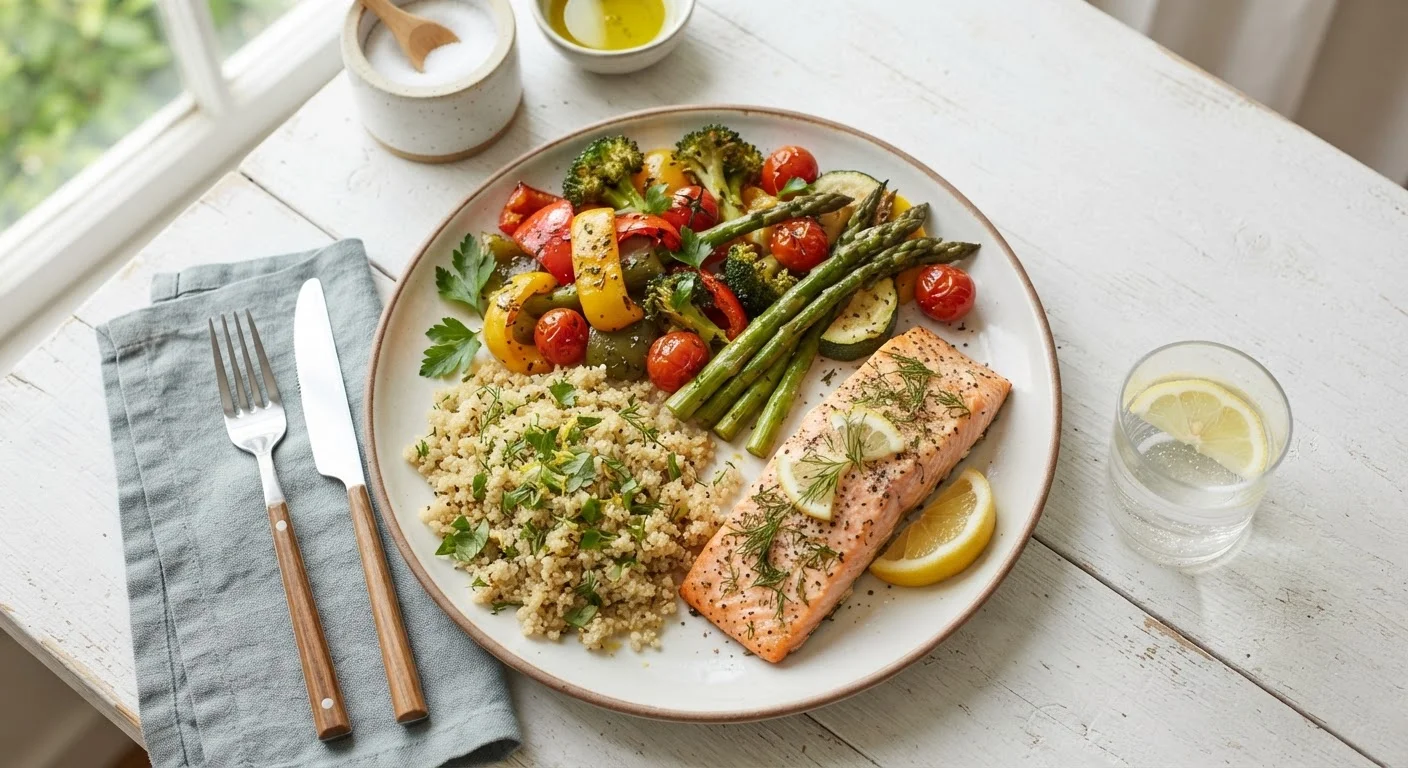
Photo: YetaWellness.com | Explore Trending Blogs editorial
Key Takeaways
- Half your plate filled with vegetables and fruit provides fiber, vitamins, and volume without excess calories.
- A quarter of the plate devoted to lean protein supports muscle maintenance and prolonged satiety.
- Whole grains in the remaining quarter deliver sustained energy through complex carbohydrates.
- Visual hand-based cues eliminate the need for a food scale or calorie-counting app.
- Consistency across meals matters more than perfection at any single sitting.
Why Plate Proportions Matter More Than Calorie Math
Counting every calorie is technically accurate but practically unsustainable for most people. Research on eating behavior consistently shows that visual meal structure — how food is physically arranged on a plate — shapes portion decisions more reliably than numerical targets alone. The federally developed MyPlate framework reflects this reality, organizing meals around food-group proportions rather than gram-level tracking.
The underlying logic is straightforward: different food groups deliver different nutrients, and the ratio between them determines whether a meal is balanced or lopsided. A plate dominated by refined starch lacks the fiber, protein, and micronutrients needed for stable energy and satiety. Correcting that imbalance through proportion — rather than subtraction — tends to feel less restrictive and more sustainable.
For a deeper look at how macronutrient ratios play out across different eating styles, see practical approaches to macronutrient balance. The plate method covered here is one entry point into that broader framework.
What You Need Before You Start
No special equipment is required, but a few basics will make this process easier and more consistent from meal to meal.
What you will need
Once these are in place, the steps below can be applied at breakfast, lunch, or dinner — and adapted for restaurant meals as well.
Step-by-Step: Structuring Your Plate
Follow these steps each time you assemble a meal. With practice, the proportions become intuitive rather than deliberate.
Fill half your plate with non-starchy vegetables and fruit
Start by covering half the plate surface with vegetables — leafy greens, broccoli, peppers, cucumbers, tomatoes, carrots, or any combination you enjoy. Fruit can occupy part of this half, particularly at breakfast. This section delivers fiber, water content, and a dense array of vitamins and minerals while adding volume that promotes fullness without excess energy density.
Reserve one quarter for lean or plant-based protein
Allocate roughly one quarter of the plate to a protein source. Options include poultry, fish, eggs, legumes (beans, lentils, edamame), tofu, tempeh, or low-fat dairy. A practical visual: a palm-sized serving for most adults. Protein slows digestion, supports muscle tissue, and is the macronutrient most strongly associated with sustained satiety between meals.
Fill the remaining quarter with whole grains or starchy vegetables
The last quarter goes to complex carbohydrates: brown rice, quinoa, whole-wheat bread or pasta, oats, sweet potato, or corn. Whole grains retain their fiber and bran layers, which slow glucose absorption compared with refined alternatives. A fist-sized portion is a reasonable visual estimate for most adults. If your meal already contains a starchy vegetable in the vegetable half (such as peas or squash), you may reduce this section accordingly.
Add a small amount of healthy fat
Fat is not assigned a plate section under the standard visual model, but it plays an essential role in nutrient absorption and flavor. A thumb-sized portion of olive oil for cooking, a small handful of nuts, half an avocado, or a drizzle of dressing integrates healthy unsaturated fat without crowding out other food groups. This step is an addition, not a replacement.
Choose a beverage that doesn't undermine the meal
Beverages are often overlooked in meal planning but contribute meaningfully to overall energy and nutrient intake. Water is the default recommendation. Unsweetened coffee, tea, and low-fat milk are reasonable complements. Sugar-sweetened beverages — sodas, sweetened juices, and specialty coffee drinks — add significant sugar and energy without contributing satiety. For a meal designed around balance, the drink choice is part of the equation.
Over time, this structure becomes second nature. You'll begin to notice imbalances instinctively — a plate that's all grain, or one that's missing color — and correct them without effort.
Use Your Hand as a Portable Measuring Tool
Adapting the Method Across Meals and Situations
The plate method is designed to flex. Mixed dishes like stir-fries, grain bowls, or soups don't arrive in neat sections, but the same proportional thinking applies: mentally estimate whether vegetables represent roughly half the volume, protein a quarter, and starch the remainder. For meals eaten out, this estimation skill is especially valuable.
Breakfast is often the hardest meal to fit the model because traditional American breakfasts skew heavily toward refined carbohydrates. A practical adjustment: prioritize a protein source (eggs, Greek yogurt, cottage cheese) and add fruit or vegetables before reaching for bread or cereal. This alone shifts the ratio meaningfully.
Keep in mind that individual needs vary based on age, activity level, and health conditions. Pregnant individuals, children, older adults, and those managing chronic conditions should consult a registered dietitian before making significant changes to their eating pattern. The plate method offers a general framework — personalized guidance accounts for factors a visual tool cannot.
For a broader strategy on covering nutrient gaps without obsessive tracking, explore building a micronutrient-rich eating pattern. And if you're thinking about how today's habits compound over years, the long game on eating habits offers a research-grounded perspective.
This article is for general informational and educational purposes only and is not a substitute for personalized medical or nutritional advice. Consult a qualified healthcare professional or registered dietitian for guidance tailored to your individual health needs.
The content on this site is for informational purposes only and is not a substitute for professional advice. Always consult a qualified professional for guidance specific to your situation.