
Hidden Sources of Added Sugar in Everyday American Foods

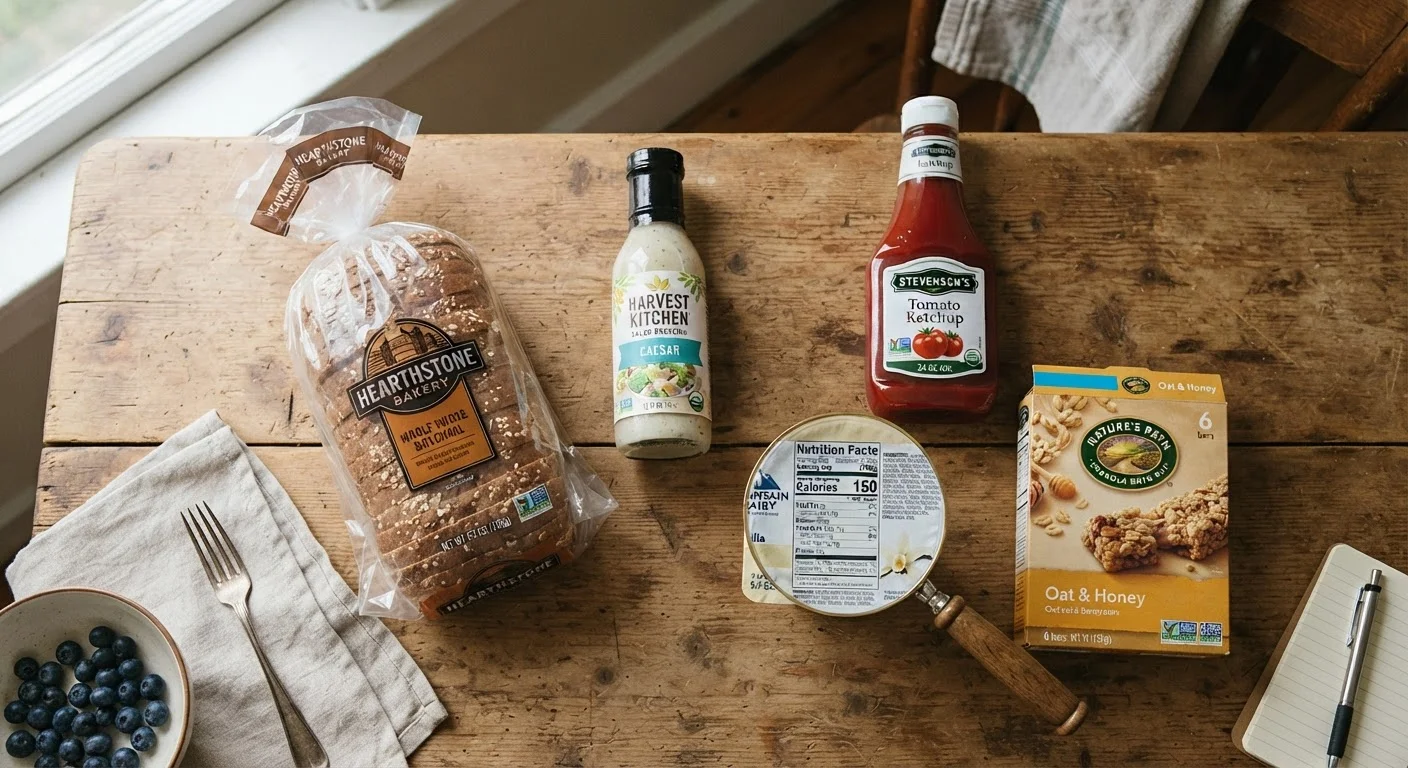
Photo: YetaWellness.com | Explore Trending Blogs editorial
Why Added Sugar Hides in Plain Sight
Most people expect sugar in candy, soda, and desserts. What surprises many shoppers is how often it turns up in foods marketed as wholesome or savory — bread, pasta sauce, salad dressing, and flavored yogurt among them. The FDA's updated Nutrition Facts label now requires manufacturers to list added sugars separately from naturally occurring sugars, which helps — but reading that label confidently still takes practice.
Added sugars are caloric sweeteners introduced during processing or preparation. They differ from the natural sugars found in whole fruit or plain milk, which come packaged with fiber, vitamins, and protein that affect how the body absorbs them. The 2020–2025 Dietary Guidelines for Americans recommend limiting added sugar to less than 10% of total daily calories. For a typical 2,000-calorie diet, that is roughly 50 grams — an amount many Americans exceed before dinner.
Added sugars
Sugars and syrups introduced to a food or beverage during processing or preparation, as opposed to sugars that occur naturally in ingredients like fruit or milk.
High-fructose corn syrup
A liquid sweetener derived from corn starch, commonly used in processed foods and beverages. It is one of many names for added sugar that may appear on an ingredients list.
Nutrition Facts label
The standardized panel required on most packaged foods in the U.S. that lists serving size, calories, and nutrient amounts, including a dedicated line for added sugars since the FDA's 2016 label update.
Natural sugars
Sugars found inherently in whole, unprocessed foods — such as fructose in fruit or lactose in milk — which are not counted as added sugars on the Nutrition Facts label.
Common Foods Where Added Sugar Accumulates
The categories below account for a large share of added-sugar intake across American diets, according to data from the National Cancer Institute and USDA dietary surveys.
Condiments and Sauces
Ketchup, barbecue sauce, teriyaki sauce, and many bottled salad dressings rely on sugar for flavor balance. A single two-tablespoon serving of some ketchup brands contains 4 grams of added sugar — and portions at the table are often larger. Low-fat dressings frequently compensate for removed fat with added sugar to maintain palatability.
Bread and Baked Goods
Commercial sandwich bread, hamburger buns, and English muffins often list sugar or high-fructose corn syrup within the first five ingredients. Even "whole wheat" breads are not automatically low in added sugar; always check the added sugars line on the Nutrition Facts panel.
Flavored Dairy and Plant-Based Alternatives
Vanilla- or fruit-flavored yogurts, flavored kefir, and many plant-based milk alternatives (oat, almond, soy) in flavored varieties can contain 10–20 grams of added sugar per serving. Plain versions of the same products typically contain zero added sugar.
Breakfast Foods
Granola, instant oatmeal packets, breakfast bars, and many cold cereals are among the highest-density sources per serving. A single packet of flavored instant oatmeal can contain 10–12 grams of added sugar. See how these items slot into daily snacking patterns in our piece on snacking in America.
Canned and Packaged Savory Foods
Canned baked beans, pasta sauce, soups, and even some canned vegetables are commonly sweetened. Manufacturers add sugar to balance acidity and extend shelf appeal. Comparing labels across brands in the same category often reveals wide variation — sometimes 8+ grams difference per serving.
How to Spot Added Sugar on an Ingredients List
Food manufacturers use dozens of names for added sugar. Knowing the most common aliases helps you identify it regardless of where it appears on the label.
| Common aliases for added sugar | Cane syrup, dextrose, evaporated cane juice, fruit juice concentrate, maltose, molasses, sucrose (FDA Guidance on Nutrition Labeling) |
| Number of names for added sugar | Over 60 recognized terms (UCSF SugarScience research) |
| Daily added sugar limit (general guideline) | Less than 10% of total daily calories (2020–2025 Dietary Guidelines for Americans) |
| Top food category source of added sugar in U.S. diet | Sweetened beverages (sodas, energy drinks, sweetened coffees) (National Cancer Institute dietary data) |
| Label location for added sugar | Listed as a sub-item under "Total Sugars" on the Nutrition Facts panel (FDA Nutrition Facts Label Requirements) |
Ingredients are listed in descending order by weight. If any form of sugar appears in the first three ingredients, the product is likely high in added sugar. Finding multiple sugar aliases spread throughout the list — each in smaller amounts — is another common formulation strategy that results in a meaningfully sweetened product overall.
The most practical habit: use the Added Sugars line on the Nutrition Facts label as your primary check, then glance at the ingredients list to understand what form that sugar takes. Neither step alone gives the full picture.
This article is for general informational purposes only and does not constitute medical or dietary advice. Speak with a registered dietitian or qualified healthcare provider for guidance tailored to your individual health needs.
The content on this site is for informational purposes only and is not a substitute for professional advice. Always consult a qualified professional for guidance specific to your situation.