
Why Americans Eat the Way They Do — and What the Research Says About Changing It

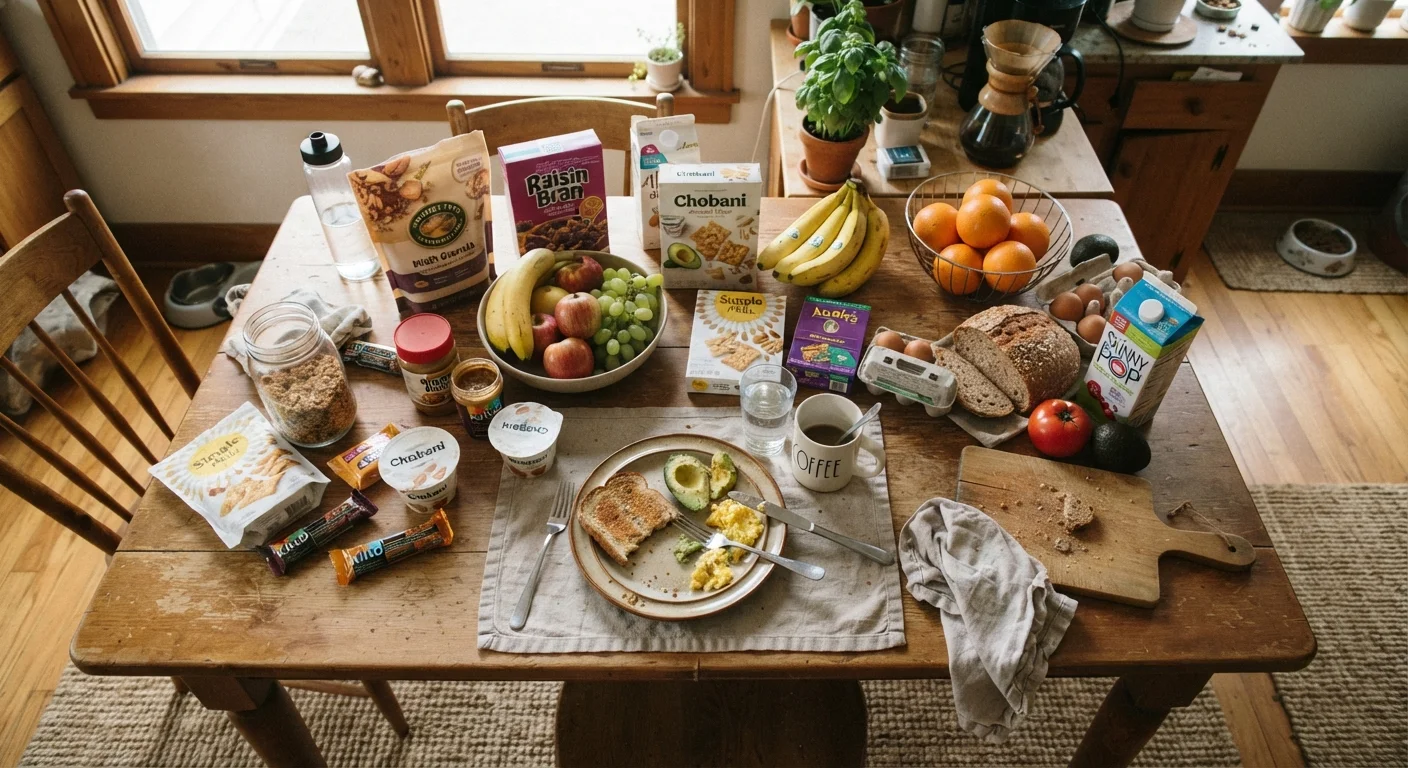
Photo: YetaWellness.com | Explore Trending Blogs editorial
Key Takeaways
- Food environments — not just willpower — are a primary driver of what Americans eat daily.
- Habit loops formed over years can override nutritional knowledge in real-time eating decisions.
- Cultural norms and social settings meaningfully influence portion sizes and food choices.
- Small, environment-level changes tend to produce more durable results than strict diet rules.
- Understanding why you eat the way you do is a practical first step toward gradual improvement.
The Invisible Architecture of American Eating
Most people frame their eating as a series of personal choices. In reality, behavioral nutrition research paints a different picture: the physical and social environment around food does much of the deciding for us. Where food is placed in a store, how large a portion looks on a plate, whether a vending machine is within eyesight at 3 p.m. — these structural details reliably shift what people reach for, often without any conscious deliberation.
Researchers use the term food environment to describe everything from grocery store layouts and restaurant menu design to neighborhood food access and workplace snack availability. Studies examining these environments consistently show that when calorie-dense, convenient options are prominently available, consumption of them rises — regardless of stated dietary goals. This isn't a character flaw. It's a predictable response to environmental design.
Understanding this reframes the question. Rather than asking "why can't I stick to healthy eating?" a more useful question becomes: "what does my current environment make easy?" That shift in framing opens up practical solutions. See also: how snacking fits into the American food environment.
Habit Loops and the Autopilot Problem
A significant portion of daily eating happens on autopilot. Habit researchers describe a three-part loop: a cue (a time of day, a place, an emotion), a routine (the eating behavior itself), and a reward (the physical or emotional payoff). Once this loop is encoded through repetition, the brain executes it efficiently — often before the conscious mind has weighed in.
This is why people reach for a snack at the same time every afternoon, or associate certain foods with watching television, regardless of hunger. The behavior has become automatic, tied to a cue rather than to physiological need. Internal hunger and fullness signals can become secondary to these habitual cues over time.
Reshape Your Environment Before Your Diet
To shift a habit loop, researchers generally recommend targeting the cue or the routine — not the reward itself. Swapping an automatic snack for a brief walk, for example, addresses the same mid-afternoon cue without requiring willpower to suppress the reward altogether.
Culture, Social Context, and the Portion Problem
American food culture carries specific norms — large portions, fast eating, frequent snacking, eating in front of screens — that have become so embedded they feel like personal preferences rather than learned behaviors. Cross-cultural research makes visible what feels invisible from the inside: portion expectations, meal pacing, and the social role of food differ substantially across cultures, and those differences correlate with measurable differences in eating outcomes.
Social context amplifies this. Studies consistently show that people consume more food when eating with others than when eating alone, and that they calibrate portion size partly by watching what those around them choose. These are not failures of discipline — they are normal social behaviors that happen to interact poorly with an environment of abundant, calorie-dense food.
~57%
Of U.S. calories from ultra-processed foods
A study published in BMJ Open estimated that ultra-processed foods account for roughly 57% of total energy intake in American adults.
2–3x
More food eaten in social vs. solo settings
Research in appetite and eating behavior has found that people can eat two to three times more when dining in groups compared to eating alone, a phenomenon called social facilitation of eating.
40–45%
Of daily behaviors that are habitual
Habit researchers, including work published by Wendy Wood at USC, estimate that roughly 40–45% of everyday actions — including eating — are performed out of habit rather than conscious decision-making.
What the Research Says About Changing It
The good news embedded in all of this is that environment-driven behavior can be shifted by changing the environment. Research on dietary change interventions consistently finds that reducing friction around healthier choices — keeping fruit visible on the counter, pre-portioning snacks, making water the default drink at meals — produces meaningful behavior change without demanding sustained willpower.
Strict, rule-heavy diets tend to underperform over time partly because they rely on constant conscious override of ingrained cues. Small, incremental dietary shifts that align with existing routines are less effortful to maintain and more likely to compound into lasting patterns. For a deeper look at the food behaviors most consistently linked to positive long-term outcomes, see what nutrition research consistently supports.
Building sustainable patterns also connects directly to long-term weight wellness. The food patterns linked to stable weight over years share a common thread: consistency over perfection, and habits embedded into daily life rather than imposed on top of it.
This article is for general informational purposes only and does not constitute medical or nutritional advice. Consult a qualified healthcare professional or registered dietitian for guidance specific to your health needs.
Frequently Asked Questions
The content on this site is for informational purposes only and is not a substitute for professional advice. Always consult a qualified professional for guidance specific to your situation.