
The Science Behind Habit Formation and Why It Matters for Your Health

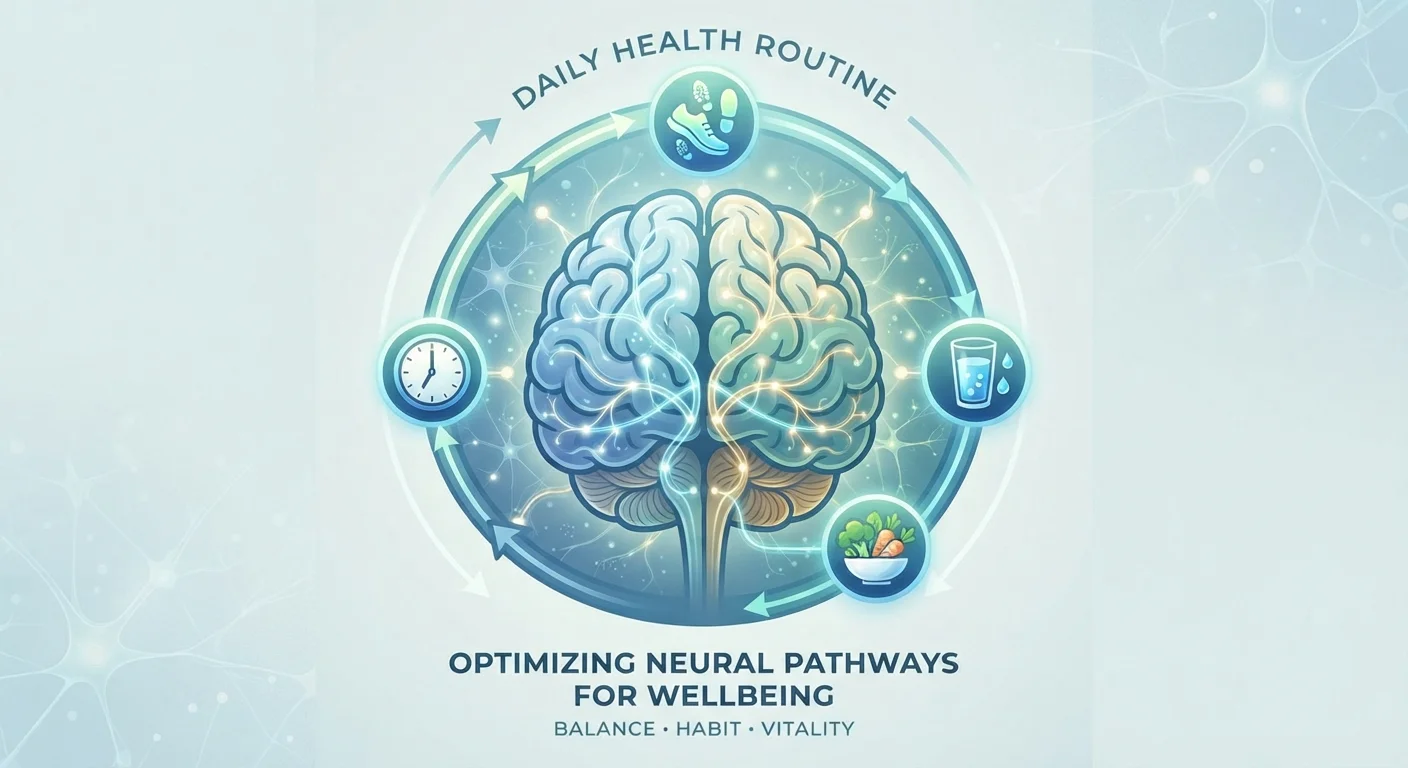
Photo: YetaWellness.com | Explore Trending Blogs editorial
Key Takeaways
- Habits are built through a repeating cue–routine–reward loop in the brain.
- The basal ganglia, not the prefrontal cortex, stores automatic habitual behaviors.
- Existing habits are easier to modify than to erase entirely.
- Consistency of context — same time, same place — accelerates habit formation.
- Most health-protective behaviors, from handwashing to exercise, can become genuinely automatic.
- Small, specific implementation intentions significantly improve the odds a habit will stick.
The Habit Loop: How the Brain Automates Behavior
Every habit, whether helpful or harmful, runs on the same three-part circuit: a cue, a routine, and a reward. The cue is any trigger — a time of day, an emotion, a location — that initiates the behavior. The routine is the behavior itself. The reward is the signal that tells the brain this sequence is worth remembering.
With enough repetition, this loop moves from the prefrontal cortex — the seat of deliberate decision-making — into the basal ganglia, a deeper brain structure associated with procedural memory and automation. Once stored there, the behavior requires far less conscious effort. This is why an experienced runner can lace up their shoes and head out the door without debating whether to go.
Understanding this loop is immediately practical. To build a new health habit, you need to identify a reliable cue, define the routine precisely, and attach an immediate reward. To change an existing one, you keep the cue and reward in place but substitute a different routine — a strategy supported by behavioral research on habit modification.
Start With the Smallest Useful Version
Why Context Is the Hidden Driver of Healthy Habits
One of the most consistent findings in habit research is that environmental context — the physical and temporal setting where a behavior occurs — plays an outsized role in triggering and sustaining habits. When you always exercise at the same time and place, those contextual cues begin to automatically prompt the behavior, reducing the need for willpower.
This is why life transitions — moving to a new city, starting a new job, recovering from illness — are simultaneously the hardest and best moments to reshape habits. Familiar environmental cues that reinforce old patterns are disrupted, opening a window for intentional redesign. Public health researchers have studied this phenomenon, sometimes called the "habit discontinuity effect."
Practically, this means your home environment is a powerful lever. Placing a water bottle on your desk, keeping a fruit bowl visible, or laying out workout clothes the night before are not trivial gestures — they are deliberate cue engineering. Explore how building sustainable eating patterns can benefit from exactly this kind of environmental design.
66 days
Average time to form a new habit
A study published in the European Journal of Social Psychology (Lally et al., 2010) found the average habit formation period was 66 days, with wide individual variation.
91%
Improvement in goal achievement with implementation intentions
Meta-analyses by Peter Gollwitzer and colleagues found implementation intentions nearly doubled the likelihood of following through on intended behaviors compared to simple goal setting.
40%
Share of daily actions that are habitual
Research by Wendy Wood and colleagues at Duke University estimated that roughly 40% of everyday behaviors are performed out of habit rather than conscious deliberation.
Implementation Intentions: The Specific Plan That Makes Habits Stick
Intending to exercise more is far less effective than deciding: "When I finish my morning coffee on weekdays, I will put on my walking shoes and walk for 20 minutes before checking email." This type of precise plan — called an implementation intention — specifies the when, where, and how of a behavior in advance.
Psychologist Peter Gollwitzer's research has repeatedly shown that implementation intentions significantly increase follow-through on health behaviors compared to simple goal-setting alone. The mechanism is straightforward: by pre-deciding responses to specific situational cues, you reduce the in-the-moment decision cost that often leads to procrastination or avoidance.
This principle applies across a wide range of health behaviors. If you're working on building a consistent sleep habit, an implementation intention might look like: "When the 10 p.m. alarm sounds, I will dim all lights and put my phone in the kitchen." Specificity is not rigidity — it is preparation.
Why Health Habits Are Worth the Effort
Automatic health behaviors protect you most when resources are scarce — when you're stressed, tired, or overwhelmed. A habit does not depend on motivation, which fluctuates. It activates on cue. This is why habituated behaviors form the backbone of effective preventive health: they work even when your willpower doesn't.
The health behaviors most consistently linked to reduced chronic disease risk — regular physical activity, adequate sleep, balanced nutrition, not smoking — are all learnable habits, not fixed personality traits. Evidence-informed morning routines illustrate how stacking several small automated behaviors can compound into meaningful health benefits over time.
Even brain-supporting habits like regular social engagement and adequate sleep operate through similar mechanisms — consistency over intensity, context over willpower. And understanding what causes habits to collapse is equally important: see why everyday prevention habits fall apart for a closer look at the most common pitfalls.
This article provides general health information for educational purposes and is not a substitute for personalized medical advice. Consult a qualified healthcare professional regarding any health concerns or before making significant changes to your health routine.
Frequently Asked Questions
The content on this site is for informational purposes only and is not a substitute for professional advice. Always consult a qualified professional for guidance specific to your situation.