
The Architecture of a Night's Sleep: Cycles, Stages, and What They Do

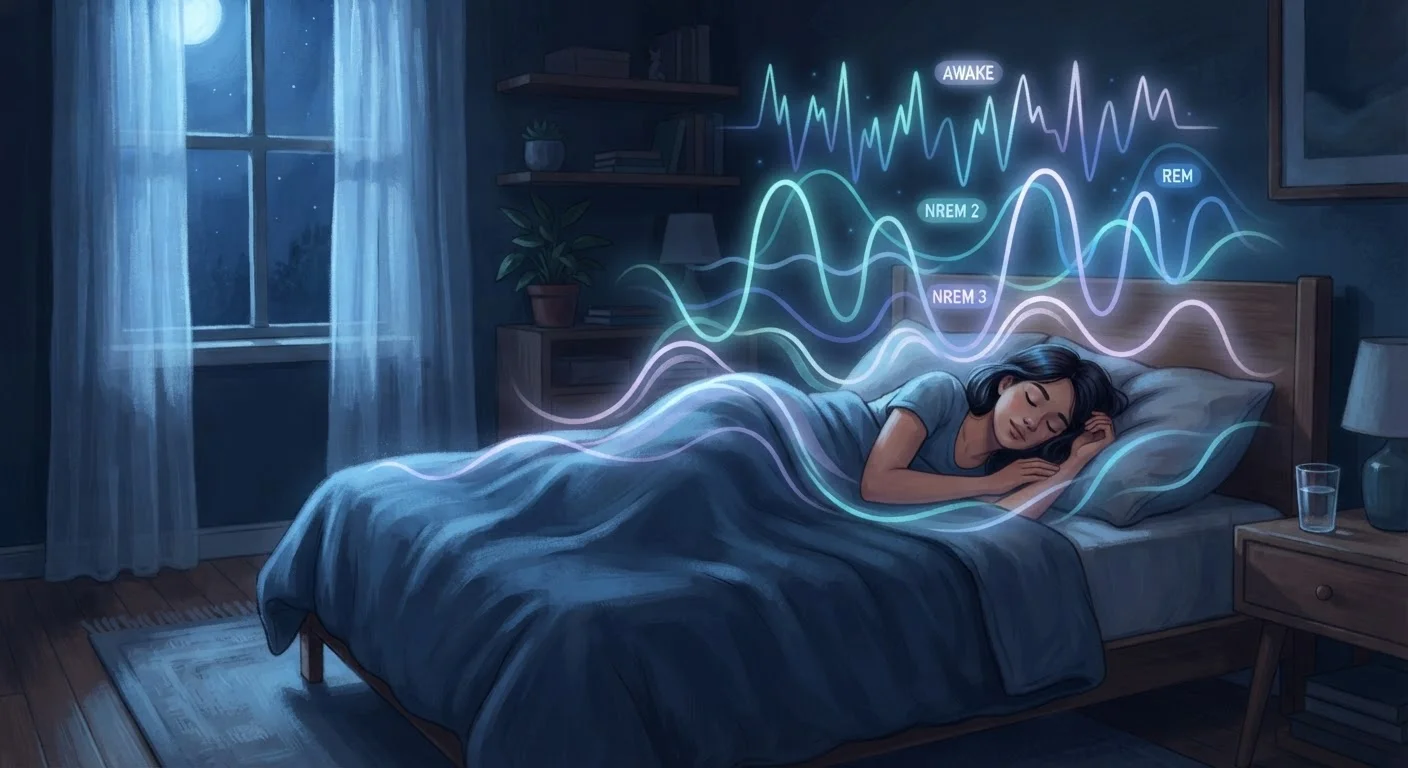
Photo: YetaWellness.com | Explore Trending Blogs editorial
Key Takeaways
- Sleep is organized into repeating 90-minute cycles, not a single continuous state.
- Each cycle contains distinct NREM and REM stages that serve different biological roles.
- Deep NREM sleep dominates early in the night; REM sleep increases toward morning.
- Disrupting sleep architecture — even without waking fully — can impair memory, immunity, and mood.
- Consistent sleep timing is one of the most effective ways to protect healthy sleep cycling.
Sleep Is Not One Thing
Most people think of sleep as a simple on/off switch — you're either asleep or you're not. In reality, a night's sleep is a carefully orchestrated sequence of brain states, each with its own biological agenda. Understanding this structure, what researchers call sleep architecture, helps explain why eight hours can feel restorative one night and hollow the next.
Your brain doesn't slip into sleep and stay there. Instead, it cycles through a progression of stages, transitioning from lighter to deeper NREM sleep, then briefly surfacing into REM before the pattern repeats. The quality of those cycles matters just as much as the total hours logged.
90 min
Average length of one sleep cycle
According to the American Academy of Sleep Medicine, most adults cycle through NREM and REM stages in roughly 90-minute intervals.
20–25%
Portion of sleep spent in REM for healthy adults
Sleep researchers consistently find that REM sleep accounts for approximately one-fifth of total sleep time in healthy adults under age 60.
4–6
Cycles completed in a full night's sleep
A 7–9 hour sleep period allows most adults to complete four to six full cycles, each containing all major sleep stages.
The Four Stages of a Sleep Cycle
Modern sleep science recognizes four distinct stages, grouped under two broad categories: Non-REM (NREM) sleep and REM sleep.
Stage 1 — Light NREM Sleep
This is the transition zone between wakefulness and sleep. It lasts only a few minutes, during which muscle activity slows and the brain produces slower theta waves. You can be easily roused here, and you may experience brief muscle twitches called hypnic jerks.
Stage 2 — Consolidated NREM Sleep
Stage 2 accounts for the largest share of total sleep time in adults — roughly 45–55% per night. Brain activity slows further, body temperature drops, and heart rate decreases. Two characteristic EEG features appear here: sleep spindles (brief bursts of neural activity) and K-complexes (large, isolated waveforms). Research suggests both are involved in memory consolidation and protecting sleep from external disturbances.
Stage 3 — Deep NREM Sleep (Slow-Wave Sleep)
Also called slow-wave sleep, Stage 3 is the most physically restorative phase. The brain produces slow, high-amplitude delta waves, growth hormone is released, tissue repair occurs, and the immune system is actively supported. This stage is hardest to wake from — being roused here produces the familiar grogginess known as sleep inertia. For a deeper look at what's happening at the neural level, see what happens in your brain during sleep.
Stage 4 — REM Sleep
REM sleep is defined by rapid eye movements, near-complete muscle paralysis, and brain activity that closely resembles wakefulness. This is the stage most associated with vivid dreaming. It plays a central role in emotional processing, learning, and long-term memory formation. REM periods grow longer in each successive cycle, which is why most dreaming happens in the hours before you wake up.
How Cycles Shift Across the Night
A key insight from sleep research is that sleep stages are not evenly distributed. The first half of the night is weighted toward deep NREM sleep, while the second half shifts toward longer and more intense REM periods. Cutting sleep short — even by an hour or two — disproportionately strips away REM sleep, since most of it occurs later in the night.
This is one reason that both the timing and duration of sleep matter. Going to bed consistently at the same time supports natural circadian alignment, which helps your brain enter each stage at the right point in the night. Irregular sleep schedules can compress or fragment the later cycles where REM dominates.
To understand how these two stages compare in their specific biological functions, our article on REM sleep vs. deep sleep covers the distinction in detail.
Why Sleep Architecture Matters for Your Health
When sleep architecture is disrupted — by noise, stress, sleep disorders, or inconsistent schedules — the consequences ripple across multiple systems. Fragmented deep sleep is associated with reduced immune function, slower physical recovery, and impaired glucose regulation. Fragmented REM sleep is linked to mood dysregulation, difficulty learning new information, and reduced resilience to stress.
Conditions like sleep apnea, restless legs syndrome, and insomnia are often defined in part by how severely they disrupt normal cycling. If you find yourself consistently fatigued despite adequate time in bed, your sleep architecture may be worth discussing with a healthcare provider. Explore more about common conditions at our sleep disorders hub.
Practical habits that support healthy architecture include maintaining consistent wake times, limiting alcohol before bed, managing light exposure in the evening, and keeping the bedroom environment conducive to uninterrupted sleep. More behavioral strategies are covered in our sleep habits hub.
This article is for general informational purposes only and does not constitute medical advice. If you have concerns about your sleep quality or patterns, consult a qualified healthcare professional.
Frequently Asked Questions
The content on this site is for informational purposes only and is not a substitute for professional advice. Always consult a qualified professional for guidance specific to your situation.