
What Your Circadian Rhythm Is Actually Doing While You Live Your Life

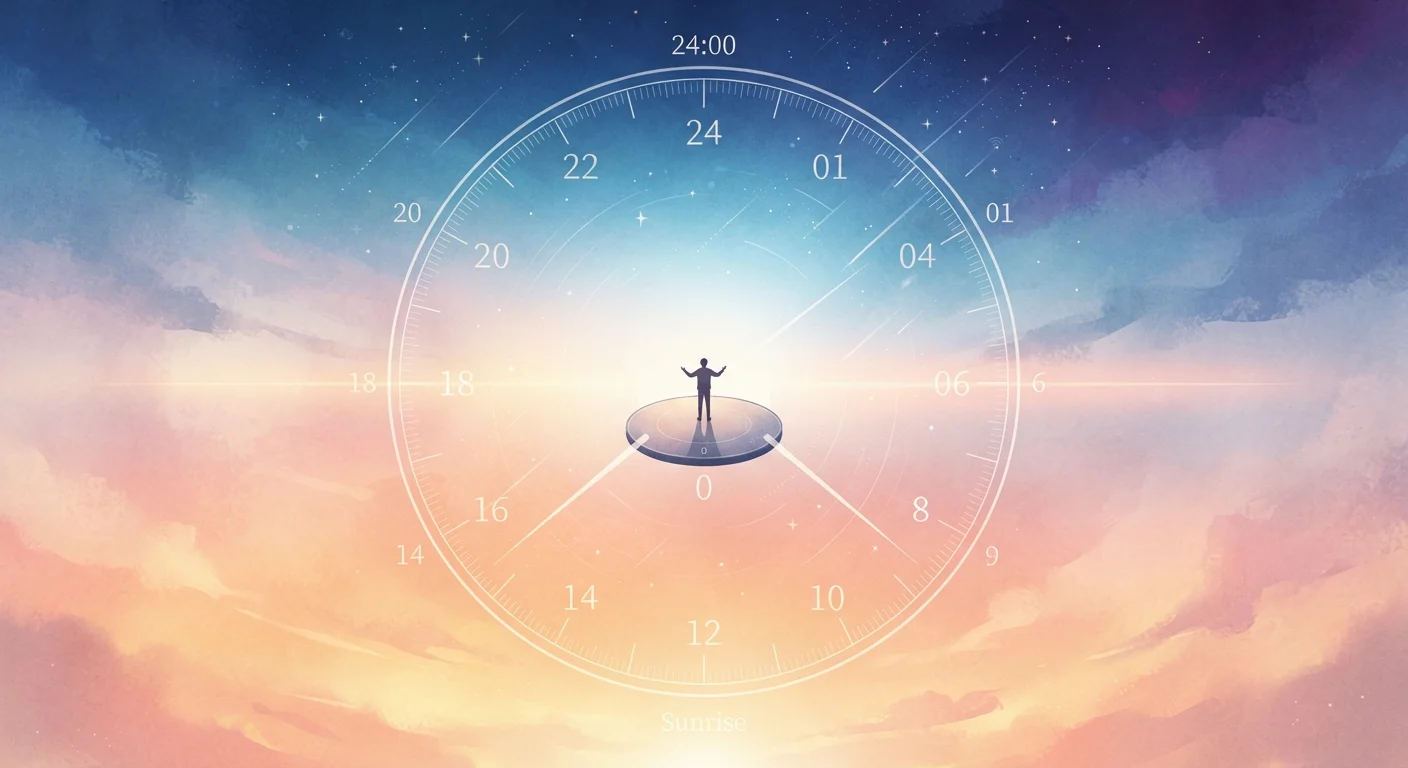
Photo: YetaWellness.com | Explore Trending Blogs editorial
Key Takeaways
- Your circadian rhythm is a 24-hour biological clock that governs far more than just sleep and wakefulness.
- Light is the most powerful external signal that resets and anchors your internal clock each day.
- Disrupting your circadian rhythm — even mildly — affects hormones, metabolism, immunity, and mood.
- Consistent daily timing of light exposure, meals, and activity helps keep your clock well-calibrated.
- Individual chronotypes (morning vs. evening preferences) are largely biological, not simply habit.
The Master Clock and Its Lieutenants
Deep inside your brain sits a tiny structure called the suprachiasmatic nucleus (SCN) — your body's master clock. It receives direct input from specialized light-sensitive cells in the retina called intrinsically photosensitive retinal ganglion cells (ipRGCs), which respond primarily to short-wavelength (blue) light. When morning light hits those cells, the SCN resets its daily timing, effectively telling every organ in your body what time it is.
But the SCN doesn't work alone. Nearly every tissue in your body — your liver, heart, lungs, skin — contains its own peripheral clock driven by the same core set of clock genes (CLOCK, BMAL1, PER, CRY). The master clock coordinates these peripheral clocks through hormonal signals, body temperature fluctuations, and the autonomic nervous system. When all clocks agree on the time, your physiology runs smoothly. When they disagree — say, because you stayed up past midnight under bright screens — the mismatch has measurable downstream effects.
What Your Body Is Actually Doing at Each Phase
Your circadian rhythm is not simply an on/off sleep switch. It orchestrates a precise daily sequence of biological events:
- Early morning: Cortisol surges in what researchers call the cortisol awakening response, priming alertness and immune readiness. Core body temperature begins rising.
- Late morning: Cognitive performance — particularly working memory and executive function — tends to peak for most people.
- Early afternoon: A mild dip in alertness is common, linked to a circadian trough rather than lunch alone.
- Early evening: Core body temperature peaks, and physical reaction time and cardiovascular efficiency are near their daily high — one reason athletic performance often peaks in late afternoon.
- Late evening: The pineal gland begins secreting melatonin roughly two hours before habitual sleep time, signaling the body to prepare for rest. Gastrointestinal motility slows. Blood pressure drops.
- Deep night: Growth hormone is released in concentrated pulses during slow-wave sleep. Cellular repair processes accelerate.
These are not arbitrary events — they represent coordinated timing evolved over millennia. Disrupting the schedule doesn't eliminate these processes; it displaces them to the wrong time, creating physiological friction. Understanding this helps explain why mood fluctuates predictably throughout the day.
~24.2 hrs
Average human circadian period without light cues
Research using isolation studies has found the intrinsic human clock period averages slightly longer than 24 hours; daily light exposure entrains it to precisely match the solar day.
~20,000
Neurons in the suprachiasmatic nucleus
Despite its small size, the SCN coordinates circadian timing across virtually all tissues in the body through hormonal and neural signaling.
1–1.5 hrs/day
Rate of circadian re-entrainment after time zone shift
Circadian researchers estimate the SCN adjusts at roughly one to one-and-a-half hours per day, explaining the multi-day recovery needed after transmeridian travel.
How Modern Life Pulls Against Your Clock
Artificial light after dark is the single most common circadian disruptor in modern life. Evening light — particularly from screens — suppresses melatonin and delays the SCN's sleep signal. Social schedules that push sleep later on weekends create what chronobiologists call social jetlag: a recurring mismatch between biological and social time that accumulates week after week. Research consistently links social jetlag to metabolic risk markers and poorer cognitive outcomes, independent of total sleep duration.
Shift work presents a more extreme version of the same problem, and even modest schedule irregularity carries measurable costs. Long-haul travel across multiple time zones forces the SCN to re-entrain at a rate of roughly one to one-and-a-half hours per day — which is why jet lag from a five-hour time zone difference typically resolves over three to five days.
Practical Leverage Points for a Well-Timed Clock
While you cannot override your biology, you can use the clock's own mechanisms to your advantage. These are the evidence-informed levers most consistently supported in sleep science:
- Morning light exposure: Getting outdoor light within an hour of waking — even on cloudy days — delivers a strong anchoring signal to your SCN. Indoor lighting rarely provides sufficient intensity.
- Consistent wake time: A fixed wake time is the most reliable anchor for the entire circadian cycle, more so than a fixed bedtime.
- Meal timing: Keeping meals within a consistent window, and avoiding large meals close to sleep, helps synchronize peripheral clocks in metabolic organs.
- Evening light reduction: Dimming indoor lights and reducing screen brightness in the two hours before bed reduces melatonin suppression.
- Temperature: A cool sleeping environment supports the core body temperature drop that facilitates sleep onset.
For a comprehensive framework connecting circadian biology to daily sleep habits, see our end-to-end sleep habit guide.
This article is for general informational purposes only and does not constitute medical advice. If you have concerns about sleep, circadian disruption, or a related health condition, please consult a qualified healthcare professional.
Frequently Asked Questions
The content on this site is for informational purposes only and is not a substitute for professional advice. Always consult a qualified professional for guidance specific to your situation.