
Body Composition for Beginners: A No-Jargon Starting Point

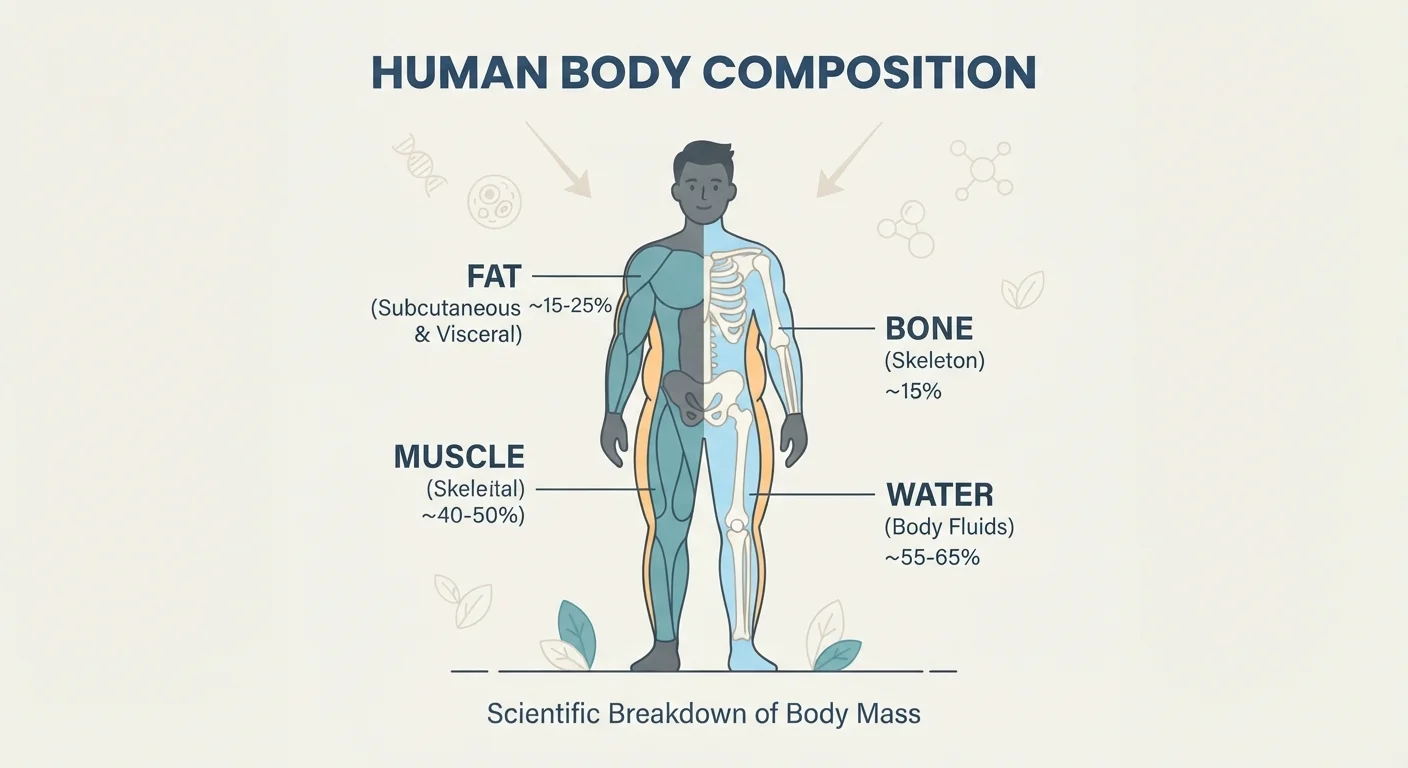
Photo: YetaWellness.com | Explore Trending Blogs editorial
Key Takeaways
- Body composition describes the proportions of fat, muscle, bone, and fluid in your body - not just total weight.
- Fat tissue serves essential biological functions; the concern is proportion and distribution, not its mere existence.
- Muscle mass supports metabolism, mobility, and long-term physical function across all ages.
- No single measurement method is perfectly accurate; context and trends matter more than one-time readings.
- Genetics, age, sex, and lifestyle all shape body composition in ways that vary widely between individuals.
What Body Composition Actually Means
Body composition is the scientific term for what your body is made of - specifically, the relative proportions of fat tissue, muscle, bone, and fluid. It's a more detailed picture than what a bathroom scale can offer, because the scale only captures total mass, not its makeup.
Understanding body composition starts with recognizing that two people can share the same body weight and look, feel, and function very differently. What differs between them isn't the number - it's the proportion of tissues contributing to it.
This concept sits at the intersection of several health fields. To understand why body composition responds to exercise the way it does, it helps to explore foundational exercise principles. And because composition is closely tied to how your body uses energy, understanding metabolism provides essential background.
Fat mass
The total amount of adipose (fat) tissue in the body, including both essential fat needed for biological function and stored fat used as an energy reserve.
Lean body mass
Everything in the body that isn't fat - including muscle, bone, water, and organs. Sometimes used interchangeably with 'fat-free mass,' though definitions can vary slightly.
Sarcopenia
The gradual loss of skeletal muscle mass and strength that tends to occur with aging. It can begin as early as the thirties and accelerates without regular resistance-based activity.
BMI (Body Mass Index)
A number calculated from height and weight, used as a population-level screening tool. It does not measure body composition directly and has well-documented limitations when applied to individuals.
Bioelectrical impedance
A measurement technique that estimates body composition by passing a mild electrical current through the body and measuring how different tissues resist that current.
Essential fat
The minimum amount of fat the body requires to function - it supports hormone production, nerve health, organ protection, and other critical biological processes.
The Four Main Components
Most introductory models of body composition divide the body into four primary compartments:
- Fat mass: All adipose (fat) tissue in the body. This includes essential fat - required for hormone production, nerve insulation, and organ protection - and storage fat, which the body accumulates as an energy reserve.
- Skeletal muscle mass: The muscle attached to bones that enables movement. Muscle is metabolically active, meaning it burns energy even at rest. Preserving it through activity is a key factor in long-term metabolic health.
- Bone mass: The mineral content and density of your skeleton. Bone is living tissue that responds to load-bearing activity. Bone density is often overlooked in body composition discussions, but it significantly shapes total weight and physical resilience.
- Body water: Fluid makes up roughly 50-70% of body weight in most adults. It's distributed inside cells, between cells, and in blood plasma - and it fluctuates daily based on diet, activity, and hydration.
Some models also account for organ mass separately, but for general health literacy purposes, these four compartments cover the essential framework.
Why Body Weight Alone Tells an Incomplete Story
The scale is a blunt instrument. It measures gravitational pull on your entire body - water, bone, muscle, fat, and the contents of your digestive system all included. It cannot distinguish between tissue types or tell you whether a change reflects something meaningful about health.
Consider a practical example: a person who starts a consistent resistance training program may see little movement on the scale over several months, yet their muscle mass increases and fat mass decreases simultaneously. The composition has improved; the number hasn't moved much.
This is also why weight-based metrics like BMI (Body Mass Index) have recognized limitations. BMI calculates a ratio of weight to height, but it cannot account for the proportion of muscle, fat, or bone contributing to that weight. Medical and public health organizations continue to debate its usefulness as a standalone clinical measure for individuals.
None of this means body weight is irrelevant - it remains a simple, accessible data point. The key is interpreting it in context rather than as the primary measure of health or physical fitness.
How Body Composition Is Measured
Several methods exist for assessing body composition, each with different accuracy levels, accessibility, and cost:
- Dual-energy X-ray absorptiometry (DEXA): Considered a gold-standard method in clinical and research settings. It uses low-dose X-ray beams to differentiate bone, fat, and lean tissue with high precision.
- Hydrostatic (underwater) weighing: Based on the principle that fat floats and lean tissue sinks. Once a research staple, it's now less common in routine health assessments.
- Air displacement plethysmography (Bod Pod): Uses air displacement to calculate body volume and derive composition estimates. Accurate but not widely available outside research or sports performance facilities.
- Bioelectrical impedance analysis (BIA): Sends a low electrical current through the body; fat and lean tissue conduct electricity differently. Found in consumer scales and handheld devices. Results are estimates and sensitive to hydration.
- Skinfold calipers: A trained practitioner pinches skin at specific sites to estimate subcutaneous fat. Accuracy depends heavily on technique and the equation used.
For most people, the choice of method is driven by availability rather than preference. If you're working with a healthcare provider to track body composition over time, consistency in method matters more than which method you use.
What Influences Your Body Composition
Body composition isn't static - it changes across the lifespan and in response to a wide range of factors. Understanding what shapes it helps set realistic expectations.
- Genetics: Research consistently shows that individuals vary considerably in how their bodies store fat and build muscle, partly due to inherited traits. This isn't deterministic, but it is real.
- Age: Adults tend to lose muscle mass gradually after their thirties - a process called sarcopenia - while fat distribution shifts, often moving from the limbs toward the trunk. These changes are influenced but not prevented entirely by lifestyle.
- Biological sex: On average, females carry a higher proportion of essential fat due to reproductive physiology. Males typically have higher skeletal muscle mass relative to body weight. These are population-level patterns with significant individual variation.
- Physical activity: Resistance exercise promotes muscle retention and growth; aerobic activity supports cardiovascular health and overall energy balance. Both play roles in body composition over time.
- Nutrition: Protein intake, in particular, is closely tied to muscle maintenance. A broader understanding of how macronutrients function is useful background - see this introduction to macronutrients for a grounded starting point.
- Sleep and stress: Emerging research links chronic sleep disruption and elevated cortisol to changes in fat distribution and muscle recovery, though this remains an active area of study.
Trends Matter More Than Single Readings
This article is for informational purposes only and is not a substitute for professional medical advice. Consult a qualified healthcare provider before making changes to your diet, exercise routine, or health management plan.
Frequently Asked Questions
The content on this site is for informational purposes only and is not a substitute for professional advice. Always consult a qualified professional for guidance specific to your situation.