
The Everyday Eater's Introduction to Macronutrients

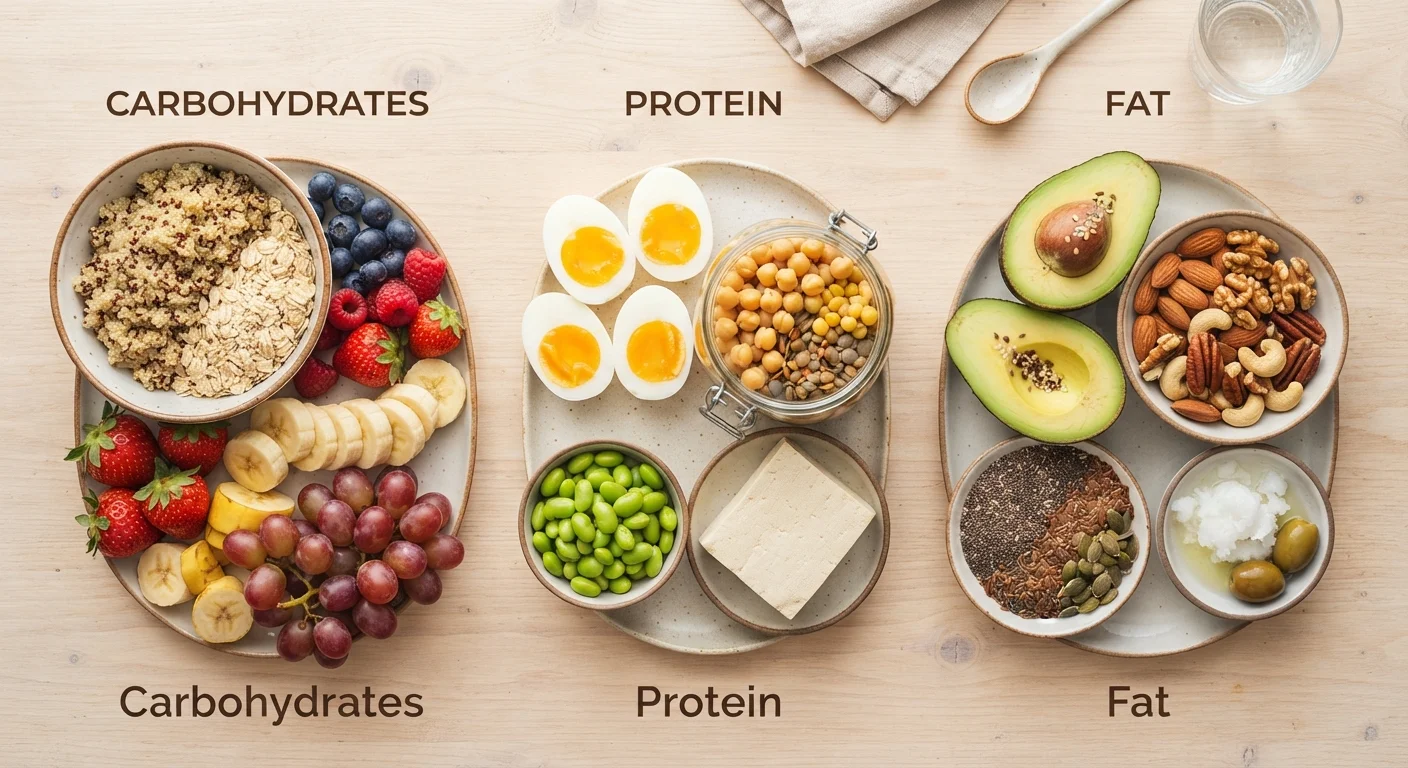
Photo: YetaWellness.com | Explore Trending Blogs editorial
Key Takeaways
- Macronutrients — carbs, protein, and fat — are the three main nutrients your body needs in large amounts.
- Each macronutrient provides energy and serves specific functions that the others cannot fully replace.
- No single macronutrient is inherently harmful; food quality and overall balance matter most.
- Most Americans can improve their diet by focusing on whole-food sources of all three macros.
- Understanding macros is a useful foundation, but it is not a requirement for eating well.
What Is a Macronutrient?
The word macronutrient simply means a nutrient the body needs in relatively large amounts — as opposed to micronutrients like vitamins and minerals, which are required in smaller quantities. (For a plain-language look at those, see our guide to micronutrients for beginners.)
There are three macronutrients:
- Carbohydrates — 4 calories per gram
- Protein — 4 calories per gram
- Fat — 9 calories per gram
Every food you eat is some combination of these three, plus water, fiber, and micronutrients. Understanding macros does not require counting grams or using a tracking app — it simply means knowing what your food is made of and roughly what it does for you.
Macronutrient
A nutrient the body requires in large amounts to produce energy and support core functions. The three macronutrients are carbohydrates, protein, and fat.
Glucose
A simple sugar that is the body's primary immediate energy currency, derived mainly from the digestion of carbohydrates.
Amino acids
The molecular building blocks of protein. Nine are called 'essential' because the body cannot manufacture them — they must come from food.
Glycogen
The stored form of glucose, held primarily in the liver and muscles and used as an energy reserve between meals or during exercise.
Saturated fat
A type of dietary fat that is solid at room temperature and found in animal products like butter and red meat. Most guidelines recommend consuming it in moderation.
Dietary fiber
A type of carbohydrate the body cannot fully digest. It slows digestion, supports gut health, and is found in whole grains, vegetables, legumes, and fruit.
Carbohydrates: Your Body's First Choice for Fuel
Carbohydrates are the body's preferred energy source, particularly for the brain and during physical activity. When you eat carbs, your digestive system breaks them down into glucose — a simple sugar the body can use immediately or store in muscles and the liver as glycogen.
Not all carbohydrates behave the same way. A useful distinction:
- Whole-food carbs — oats, brown rice, beans, fruit, and vegetables — come packaged with fiber, vitamins, and minerals. Fiber slows digestion, helping you feel full longer and supporting gut health.
- Refined carbs — white bread, sugary drinks, many packaged snacks — are processed in ways that strip out much of the fiber and nutrients, leaving a product that digests quickly.
Most dietary guidelines, including those from the U.S. Department of Agriculture, recommend that carbohydrates make up roughly 45–65% of total daily calories, with an emphasis on whole-grain and fiber-rich sources. This is a general population guideline — individual needs vary.
Protein: The Builder and Maintainer
Protein is made of smaller units called amino acids. Your body uses amino acids to build and repair muscle, produce enzymes and hormones, support immune function, and carry oxygen in the blood. Unlike carbohydrates and fat, the body has no dedicated storage depot for protein, so a steady daily intake matters.
Foods rich in protein include eggs, poultry, fish, dairy, legumes, tofu, and tempeh. Animal-based proteins are considered complete — they supply all nine essential amino acids the body cannot make on its own. Many plant proteins are incomplete on their own, but eating a varied diet across the day covers all essential amino acids without requiring precise combining at each meal.
Protein also tends to be more satiating than carbs or fat gram-for-gram, which can help with appetite management. For a deeper look at how protein functions inside the body, see what carbs, proteins, and fats actually do in your body.
Fat: More Essential Than You May Think
Dietary fat spent decades with an undeservedly bad reputation. In practice, fat is essential for absorbing fat-soluble vitamins (A, D, E, and K), producing hormones, insulating nerves, and maintaining healthy cell membranes. It also makes food taste satisfying and helps you feel full.
The main types of dietary fat:
- Unsaturated fats (found in olive oil, avocados, nuts, and fatty fish) are generally considered beneficial as part of a balanced diet.
- Saturated fats (found in butter, red meat, and full-fat dairy) are recommended in moderation by most major health organizations.
- Trans fats (produced industrially by partially hydrogenating oils) are largely phased out of the U.S. food supply and should be limited where they remain.
A Simple Way to Think About Fat Portions
Because fat provides more than twice the calories per gram of carbs or protein, portion awareness matters — though there is no reason to eliminate fat from a healthy diet.
How the Three Macros Work Together
In real meals, macronutrients never act in isolation. A bowl of lentil soup, for example, delivers carbohydrates from the lentils and broth, protein from the legumes, and fat from olive oil used in cooking — plus fiber and a range of micronutrients. This is why whole-food, varied eating tends to hit nutritional targets more naturally than any single-focus strategy.
Balance also affects how you feel after eating. Meals heavy in refined carbs but low in protein and fat tend to digest quickly, sometimes leading to energy swings. Meals that combine all three macros digest more gradually, supporting steadier energy. Understanding this interaction is a good foundation if you later want to read your own eating habits through a macronutrient lens.
It is also worth noting that total calorie intake, food quality, sleep, stress, and physical activity all influence how your body uses macronutrients. For context on the energy side of the equation, metabolism basics is a helpful companion topic.
Practical Next Steps for Everyday Eaters
You do not need to overhaul your diet or download a tracking app to put this knowledge to work. A few low-effort shifts can meaningfully improve your macro balance:
- Add a protein source to every meal. Eggs at breakfast, beans at lunch, or fish at dinner each anchor a meal nutritionally.
- Swap refined grains for whole grains where it feels natural. Whole-wheat bread, oats, or brown rice provide fiber alongside their carbohydrates.
- Include a healthy fat. A drizzle of olive oil, a handful of nuts, or half an avocado adds satiety and supports nutrient absorption.
- Look at your plate, not a screen. Roughly half vegetables, one quarter protein, and one quarter whole grains is a simple visual cue used in many dietary guidelines.
When you are ready to go further, food sources ranked by macronutrient density is a practical lookup reference for the everyday grocery run.
This article is for general informational and educational purposes only and is not a substitute for professional medical or dietary advice. If you have specific health concerns or conditions, please consult a qualified healthcare provider or registered dietitian.
Frequently Asked Questions
The content on this site is for informational purposes only and is not a substitute for professional advice. Always consult a qualified professional for guidance specific to your situation.