
Food Sources Ranked by Macronutrient Density: A Quick Reference for Everyday Eating

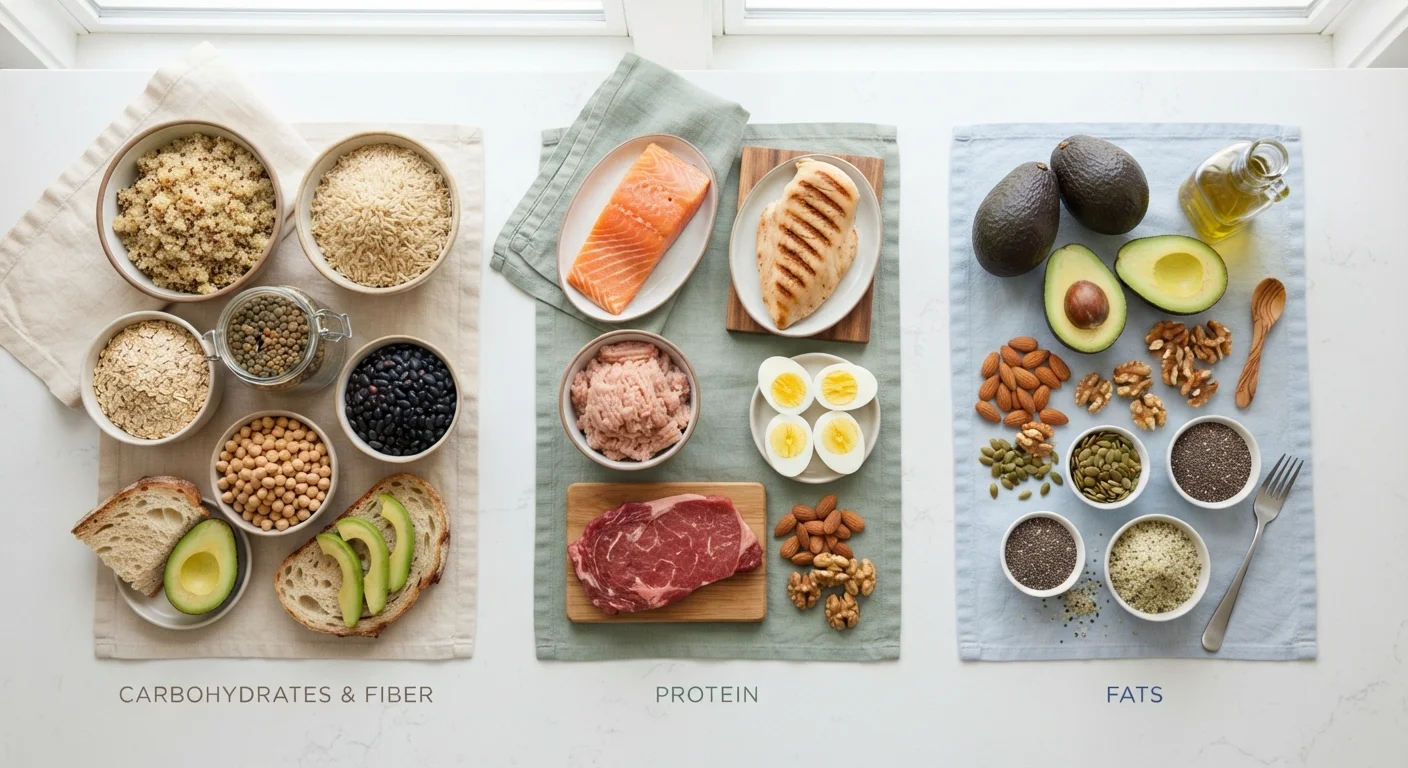
Photo: YetaWellness.com | Explore Trending Blogs editorial
What Macronutrient Density Actually Means
Every food you eat delivers a mix of carbohydrates, protein, and fat — the three macronutrients your body needs in meaningful amounts every day. But foods aren't created equal: some are overwhelmingly dominated by one macronutrient, while others deliver a mix. Macronutrient density refers to how much of a given macronutrient a food provides relative to its total calorie content.
This distinction matters because it helps you make intentional choices. If you know a food is a high-density carbohydrate source, you can pair it with a protein-rich or fat-rich food to create a more balanced meal — without tracking every gram. For a deeper look at what each macronutrient does inside your body, see our plain-language macronutrient explainer.
Macronutrient
A nutrient required by the body in large amounts for energy and essential functions. The three macronutrients are carbohydrates, protein, and fat.
Macronutrient Density
The proportion of a food's calories that come from a specific macronutrient. A food is 'dense' in protein, for example, if the majority of its calories come from protein.
Complete Protein
A protein source that contains all nine essential amino acids in adequate proportions. Most animal-based foods are complete proteins; most single plant proteins are not.
Essential Amino Acids
Nine amino acids the body cannot synthesize on its own and must obtain through food. They are found across a variety of protein-containing foods.
Soluble Fiber
A type of dietary fiber that dissolves in water to form a gel-like substance, which can help slow digestion and support healthy blood cholesterol levels. Oats and legumes are good sources.
Monounsaturated Fat
A type of dietary fat with one double bond in its fatty acid chain. Olive oil and avocados are primary sources. Generally associated with heart-health benefits when substituted for saturated fat.
High-Carbohydrate Foods: Your Primary Energy Sources
Carbohydrates are the body's preferred fuel. Foods that are carbohydrate-dense derive the majority of their calories from starches, sugars, or fiber. The table below lists common high-carb foods and their approximate carbohydrate content per standard serving, based on USDA food composition data.
| Food | Serving Size | Approx. Carbs (g) | Notable Quality |
|---|---|---|---|
| Cooked white rice | 1 cup | 45 | Low fiber, rapid digestion |
| Cooked oatmeal | 1 cup | 27 | High soluble fiber (beta-glucan) |
| Whole wheat bread | 1 slice | 12–15 | More fiber than white bread |
| Cooked lentils | 1 cup | 40 | Also a protein source; high fiber |
| Banana (medium) | 1 fruit | 27 | Natural sugars; potassium-rich |
| Sweet potato (baked) | 1 medium | 26 | Fiber, vitamin A precursor |
Notice that quality varies considerably among carbohydrate sources. Fiber content, glycemic response, and micronutrient density all differ. Fiber specifically — covered in detail in our fiber guide — is a carbohydrate that most Americans fall short on.
High-Protein Foods: Building and Repair Materials
Protein supplies the amino acids your body uses to build muscle tissue, enzymes, hormones, and immune proteins. High-protein foods derive most of their calories from protein rather than fat or carbohydrates.
| Calories per gram — Carbohydrate | 4 kcal/g (USDA Dietary Reference Intakes) |
| Calories per gram — Protein | 4 kcal/g (USDA Dietary Reference Intakes) |
| Calories per gram — Fat | 9 kcal/g (USDA Dietary Reference Intakes) |
| Recommended protein distribution | 10–35% of total calories (Dietary Guidelines for Americans, 2020–2025) |
| Recommended carbohydrate distribution | 45–65% of total calories (Dietary Guidelines for Americans, 2020–2025) |
| Recommended fat distribution | 20–35% of total calories (Dietary Guidelines for Americans, 2020–2025) |
| Food | Serving Size | Approx. Protein (g) | Notable Quality |
|---|---|---|---|
| Chicken breast (cooked) | 3 oz | 26 | Very lean; complete protein |
| Canned tuna (in water) | 3 oz | 22 | Low fat; omega-3s present |
| Eggs (large) | 2 eggs | 12 | Complete protein; fat also present |
| Greek yogurt (plain, low-fat) | 6 oz | 17 | Probiotics; some carbs from lactose |
| Firm tofu | 3 oz | 9 | Complete plant protein; low fat |
| Black beans (cooked) | 1 cup | 15 | Also high carb; excellent fiber |
| Cottage cheese (low-fat) | ½ cup | 14 | High in casein; low in fat |
Animal proteins are generally considered complete proteins — they contain all nine essential amino acids. Many plant proteins are incomplete individually but can complement each other across the day. You don't need to combine them at a single meal to meet your needs.
High-Fat Foods: Concentrated Energy and Essential Functions
Fat provides more than twice the calories per gram compared to carbohydrates or protein (9 kcal/g vs. 4 kcal/g), which is why even small servings of fat-dense foods are calorically significant. Fat type matters as much as fat amount. For a detailed breakdown of saturated, unsaturated, and trans fats, see our dietary fat guide.
| Food | Serving Size | Approx. Fat (g) | Dominant Fat Type |
|---|---|---|---|
| Avocado | ½ fruit | 15 | Monounsaturated |
| Mixed nuts | 1 oz | 14–18 | Poly- and monounsaturated |
| Olive oil | 1 tbsp | 14 | Monounsaturated |
| Salmon (cooked) | 3 oz | 11 | Omega-3 polyunsaturated |
| Cheddar cheese | 1 oz | 9 | Saturated |
| Ground beef (80/20, cooked) | 3 oz | 15 | Saturated and monounsaturated |
Foods like salmon and nuts rank high in fat density but also provide meaningful protein or micronutrients, illustrating that most real foods span more than one macronutrient category.
Putting It Together at the Table
Recognizing macronutrient density is a practical skill, not a counting exercise. When you look at your plate and see mostly carbohydrates (a large bowl of pasta, for example), you know to add a protein-rich element (beans, chicken, or cheese) and perhaps a fat source (olive oil or a handful of nuts) to produce a more complete meal.
This balanced plate approach doesn't require a food scale or an app — just a working mental map of which foods lead with which macronutrient. You can also use our macronutrient habit checklist to take stock of current patterns without tracking obsessively.
Finally, macronutrients are only part of the nutrition picture. Vitamins, minerals, and phytonutrients ride along in these same foods and matter just as much for long-term health. Our vitamins and minerals hub and the micronutrient reference guide offer a complementary lookup for those details.
This article is for general informational and educational purposes only and is not a substitute for personalized medical or dietary advice. Consult a registered dietitian or qualified healthcare professional for guidance specific to your health needs.
The content on this site is for informational purposes only and is not a substitute for professional advice. Always consult a qualified professional for guidance specific to your situation.