
Active Commuting: What It Involves and Whether It Works

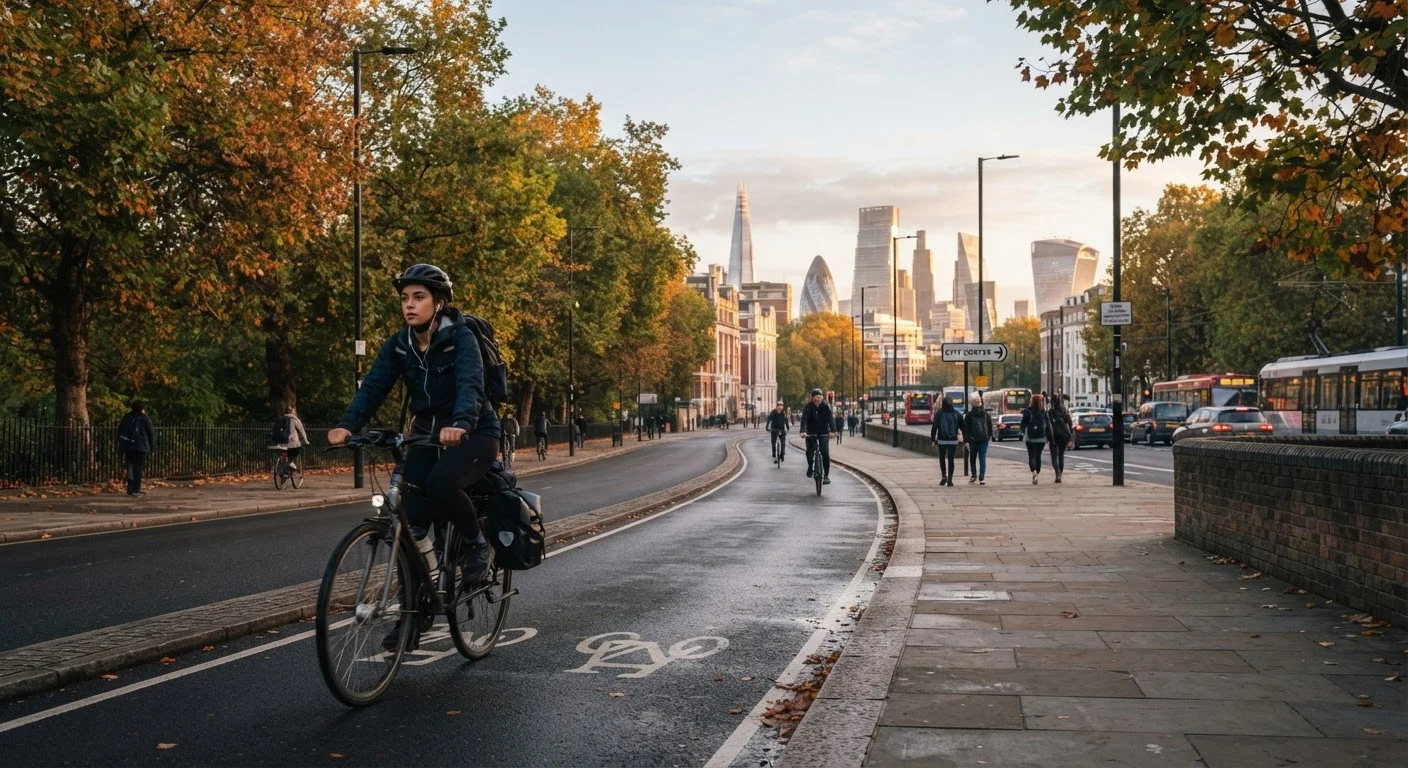
Photo: YetaWellness.com | Explore Trending Blogs editorial
Key Takeaways
- Active commuting - walking, cycling, or a hybrid - counts toward your weekly physical activity goals.
- Research links regular active commuting to lower cardiovascular risk and improved mental well-being.
- Practical barriers like distance, weather, and safety infrastructure significantly affect who can use it.
- A hybrid approach (e.g., cycling part of the route, riding transit for the rest) makes it more accessible.
- Active commuting works best as a complement to, not a full replacement for, varied movement habits.
Turns a fixed obligation into built-in exercise
Because the commute already happens, active travel removes the scheduling barrier that derails many gym intentions. Movement becomes non-negotiable rather than optional.
Linked to lower cardiovascular disease risk
Multiple large cohort studies associate regular cycling commutes with significantly reduced risk of cardiovascular events and all-cause mortality compared with car commuting.
Supports mental well-being and stress reduction
Active commuters frequently report lower stress and better mood. Moderate aerobic activity is well-established as a contributor to reduced anxiety and improved emotional regulation.
No gym membership or extra time slot required
Physical activity accumulates during time you were already spending on travel, making it time-efficient and cost-free beyond any initial equipment outlay.
Scalable through hybrid approaches
Combining active segments (walking to a transit stop, cycling part of the route) with public transit lets people in spread-out metros participate without covering the full distance.
Long average commute distances limit feasibility
With U.S. average one-way commutes exceeding 27 miles, purely human-powered commuting is impractical for a large portion of the workforce without e-bike assistance.
Weather and seasonality create reliability gaps
Rain, extreme heat, and winter conditions reduce active commuting frequency, making it an inconsistent activity source in many U.S. climates without careful contingency planning.
Safety infrastructure is uneven across cities
Protected bike lanes and dedicated pedestrian paths are far more common in certain cities. Commuting on high-speed roads without infrastructure increases injury risk meaningfully.
Workplace logistics can be a barrier
Lack of shower facilities, secure bicycle parking, or clothing storage at the workplace discourages active commuting, particularly for longer or more intense routes.
Doesn't replace strength or high-intensity training
Walking and cycling commutes primarily deliver moderate-intensity cardiovascular activity; resistance training and higher-intensity work need to be addressed through separate activity.
What Active Commuting Actually Means
Active commuting refers to using human-powered travel - primarily walking or cycling - to get to and from work, school, or other regular destinations. Some commuters combine modes: cycling to a train station, for example, or walking the last mile from a bus stop. This hybrid model is often the most realistic option in sprawling American metros where pure active commuting isn't feasible.
The key distinction from recreational exercise is that the movement is purposeful and built into a fixed daily obligation. You're not finding extra time - you're replacing a sedentary car or transit ride with a physically active one. For people struggling to maintain a structured workout routine, that framing matters. See your weekly active lifestyle audit to identify whether a commuting swap could close a real gap in your activity levels.
The Case For It: Real Benefits With Research Behind Them
The health literature on active commuting is broadly positive. Studies published in journals including the British Medical Journal and Preventive Medicine have linked regular cycling commutes to meaningfully lower risks of cardiovascular disease, certain cancers, and all-cause mortality, compared with passive commuting. Walking commuters also show benefits, though the effect sizes tend to track with the intensity and duration of the walk.
Turns a fixed obligation into built-in exercise
Because the commute already happens, active travel removes the scheduling barrier that derails many gym intentions. Movement becomes non-negotiable rather than optional.
Linked to lower cardiovascular disease risk
Multiple large cohort studies associate regular cycling commutes with significantly reduced risk of cardiovascular events and all-cause mortality compared with car commuting.
Supports mental well-being and stress reduction
Active commuters frequently report lower stress and better mood. Moderate aerobic activity is well-established as a contributor to reduced anxiety and improved emotional regulation.
No gym membership or extra time slot required
Physical activity accumulates during time you were already spending on travel, making it time-efficient and cost-free beyond any initial equipment outlay.
Scalable through hybrid approaches
Combining active segments (walking to a transit stop, cycling part of the route) with public transit lets people in spread-out metros participate without covering the full distance.
Beyond the physical, active commuters often report lower perceived stress and better mood on days they commute actively - consistent with general evidence that moderate aerobic activity supports mental well-being. And unlike a gym session, the commute has a built-in deadline: you have to show up at work regardless, which removes the decision-fatigue that sidelines many exercise intentions.
If you're comparing active commuting with other non-gym movement strategies, movement approaches that don't require a gym explores several complementary options.
The Real-World Trade-Offs
Active commuting has genuine constraints that vary significantly by location, job type, and life circumstances. Distance is the most obvious: the average American one-way commute is over 27 miles, making unassisted cycling impractical for many. E-bikes extend that range but add cost and vary in legality across infrastructure.
Long average commute distances limit feasibility
With U.S. average one-way commutes exceeding 27 miles, purely human-powered commuting is impractical for a large portion of the workforce without e-bike assistance.
Weather and seasonality create reliability gaps
Rain, extreme heat, and winter conditions reduce active commuting frequency, making it an inconsistent activity source in many U.S. climates without careful contingency planning.
Safety infrastructure is uneven across cities
Protected bike lanes and dedicated pedestrian paths are far more common in certain cities. Commuting on high-speed roads without infrastructure increases injury risk meaningfully.
Workplace logistics can be a barrier
Lack of shower facilities, secure bicycle parking, or clothing storage at the workplace discourages active commuting, particularly for longer or more intense routes.
Doesn't replace strength or high-intensity training
Walking and cycling commutes primarily deliver moderate-intensity cardiovascular activity; resistance training and higher-intensity work need to be addressed through separate activity.
E-Bikes and Active Commuting
Weather and safety infrastructure also limit uptake. Cities with protected bike lanes and pedestrian paths show far higher rates of active commuting than those relying on shared roads. Arriving sweaty without shower facilities at work is a persistent practical barrier, particularly in warmer months or for longer routes.
Active commuting is not a complete fitness solution on its own - it typically delivers moderate-intensity cardiovascular movement but less resistance or high-intensity training. home workouts vs. gym training can help round out what active commuting doesn't cover.
Making It Work Practically
The most sustainable approach is usually a gradual one. Start by actively commuting one or two days per week - ideally on days with favorable weather or lighter schedules. Identify your route in advance, check for bike lanes or pedestrian paths, and troubleshoot logistics (clothing storage, shower access, secure bike parking) before committing fully.
Walking commuters have fewer logistical hurdles, making walking a strong starting point for those new to active travel. how walking compares to running is worth reading if you're deciding between modes or thinking about intensity. For those returning to activity after a sedentary period, starting an active lifestyle after a long sedentary period offers a realistic, step-by-step framework.
This article is for general informational and educational purposes only and does not constitute medical advice. Consult a qualified healthcare professional before making changes to your physical activity routine, especially if you have any existing health conditions.
~41%
Lower cardiovascular mortality risk in cycling commuters
A large study published in the British Medical Journal found cyclists had significantly lower cardiovascular disease mortality than passive commuters.
27+ miles
Average U.S. one-way commute distance
U.S. Census Bureau data indicates that the average American one-way commute is over 27 miles, a key barrier to fully active travel.
The content on this site is for informational purposes only and is not a substitute for professional advice. Always consult a qualified professional for guidance specific to your situation.