
Movement Practices Worth Knowing: Yoga, Pilates, and Tai Chi Compared

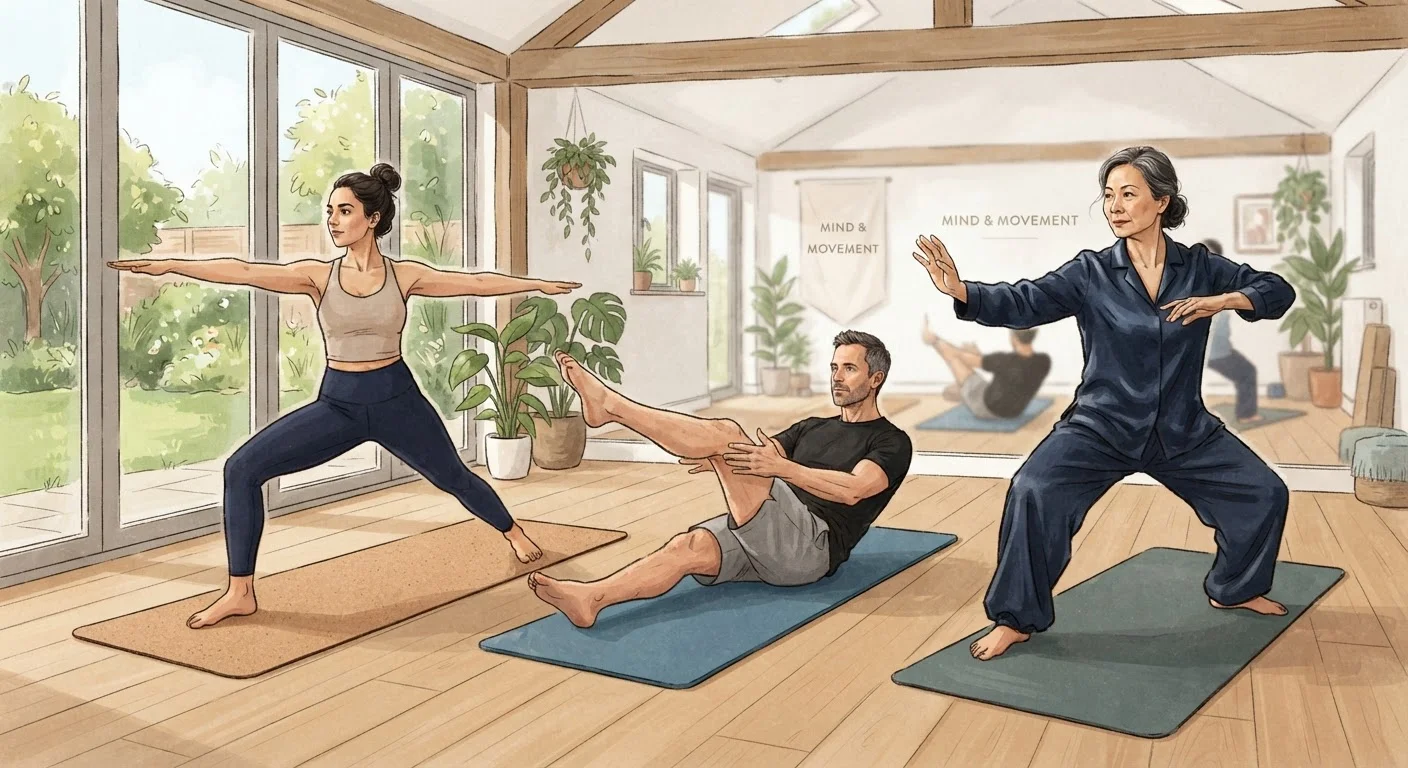
Photo: YetaWellness.com | Explore Trending Blogs editorial
Key Takeaways
- Yoga, Pilates, and Tai Chi all support flexibility and body awareness but through meaningfully different methods.
- Pilates emphasizes core stability and controlled muscular engagement; yoga prioritizes flexibility and breath-linked movement.
- Tai Chi's slow, flowing sequences make it especially accessible for balance and fall-prevention goals.
- All three practices can be adapted for beginners and modified for various fitness levels or physical limitations.
- Consulting a healthcare professional before starting any new movement practice is advisable, especially for those managing chronic conditions.
What These Three Practices Actually Are
Yoga, Pilates, and Tai Chi are often grouped together under the banner of "mind-body movement," but each has a distinct origin, structure, and physical emphasis. Understanding those differences helps you choose the right fit — or know when to mix-and-match.
Yoga is a centuries-old Indian practice that links breath to physical postures (called asanas). Modern yoga styles range from gentle restorative classes to physically demanding forms like Ashtanga. Its core aims are flexibility, body awareness, and mental focus.
Pilates was developed in the early 20th century by Joseph Pilates as a rehabilitation-influenced movement system. It centers on building deep core stability — engaging the muscles of the abdomen, back, and pelvis — through precise, controlled movements performed on a mat or specialized equipment.
Tai Chi originated in China as a martial art and evolved into a slow, meditative movement practice. Its sequences (called forms) flow continuously from one posture to the next, training balance, coordination, and lower-body stability with very low impact on joints.
For context on how any of these practices fits into broader movement health, see functional movement patterns every adult should understand.
How They Compare Across Key Criteria
The table below breaks down how each practice performs across criteria that matter most to everyday adults building a sustainable movement habit.
| Yoga | Pilates | Tai Chi | |
|---|---|---|---|
| Primary focus | Flexibility and breath-linked movement | Core stability and postural control | Balance, coordination, and flow |
| Impact level | Low (style-dependent) | Low to moderate | Very low |
| Beginner accessibility | High with gentle formats | Moderate; form guidance essential | High; slow pace aids learning |
| Equipment needed | Mat, optional props | Mat or specialized equipment | None beyond open space |
| Balance training | Moderate | Moderate | Strong emphasis |
| Stress and mindfulness benefits | Strong emphasis | Moderate | Moderate to strong |
| Strength development | Moderate (bodyweight-based) | Moderate to strong (core-focused) | Mild to moderate |
One important nuance: entry-level accessibility varies by instructor and class format as much as by practice type. A beginner-friendly Pilates class and a physically demanding yoga flow are not equivalent starting points — always look for beginner or foundational designations when you're starting out.
Which Goals Each Practice Serves Best
Yoga consistently shows benefits for flexibility, stress reduction, and sleep quality in research settings. It also addresses breath regulation, which carries downstream benefits for the nervous system. If your primary goal is improving range of motion while managing everyday stress, yoga offers a well-rounded toolkit. As noted in why flexibility and mobility work gets overlooked, these qualities matter far more than most people realize for long-term functional health.
Pilates targets the stabilizing muscles that support posture and protect the spine — muscles that are often undertrained in people who sit for long periods. It also develops what practitioners call "body awareness": knowing where your limbs are in space and how your trunk supports your movement. These qualities translate directly into reduced injury risk during everyday tasks.
Tai Chi has been extensively studied for its effects on balance and fall prevention, particularly in older adults. The practice's slow, weight-shifting movements train the body's proprioceptive system — the internal sensors that keep you upright. It is low-impact enough to be appropriate for many people managing joint conditions, though individual suitability should always be discussed with a healthcare provider.
For adults thinking about how movement needs shift across the lifespan, all three practices have meaningful roles to play at different life stages.
Practical Considerations Before You Start
All three practices are available in in-person studio, community center, and digital formats, making them broadly accessible. A few practical points worth knowing:
- Equipment: Yoga and Tai Chi require little beyond comfortable clothing and a non-slip surface. Pilates mat work is similarly minimal, though studio Pilates uses specialized equipment (reformers, cadillacs) that require class access.
- Instruction quality matters: Particularly for Pilates and Tai Chi, learning foundational form from a qualified instructor early on reduces the risk of practicing with poor alignment.
- Modifications exist: Chair-based yoga and Tai Chi versions are available for people with limited mobility. Pilates can be adapted for rehabilitation contexts under appropriate guidance.
- Consistency beats intensity: Short, regular sessions build more durable results than occasional intensive ones across all three practices.
If you're exploring ways to weave more intentional movement into daily life, building a daily movement practice without a gym membership offers practical strategies that complement any of these three approaches.
This article is for general informational purposes only and is not a substitute for professional medical advice. Consult a qualified healthcare professional before beginning any new movement practice, particularly if you have existing health conditions or physical limitations.
The content on this site is for informational purposes only and is not a substitute for professional advice. Always consult a qualified professional for guidance specific to your situation.