
The Joints That Stiffen First—And What That Means for Daily Movement

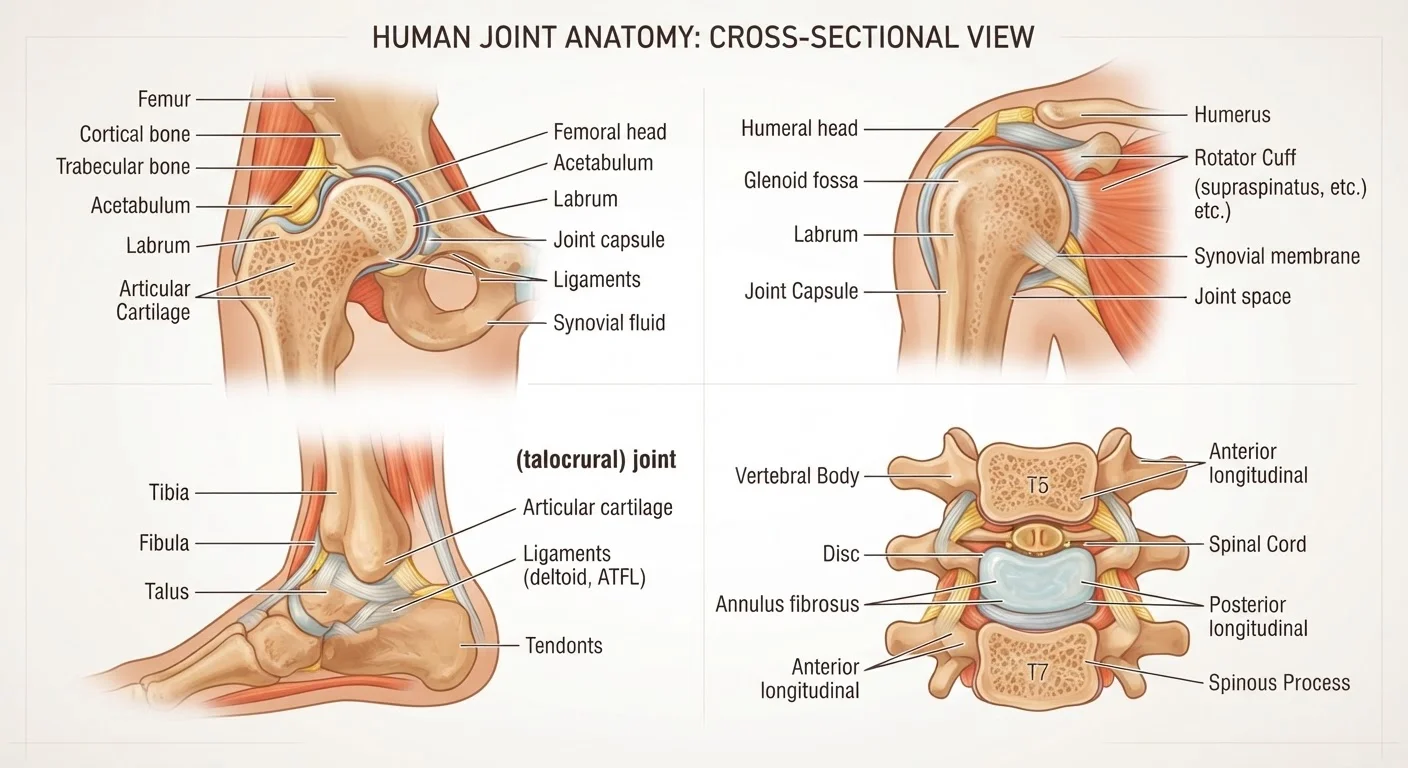
Photo: YetaWellness.com | Explore Trending Blogs editorial
Not All Joints Lose Mobility at the Same Rate
Joint stiffness isn't a uniform process. Some joints become restricted much earlier in life — often quietly, without obvious pain — while others tend to stay functional for decades longer. Understanding this pattern helps you direct mobility work where it matters most, rather than stretching everything equally and hoping for results.
Exercise scientists and physical therapists often use a framework called the joint-by-joint approach, which describes how mobility and stability needs alternate up the body. In general, joints that require a wide range of motion — such as the hips, ankles, and thoracic spine — tend to stiffen sooner, especially in people with sedentary habits. When these joints lose range, neighboring joints often compensate, which is one reason knee or lower back discomfort frequently traces back to hip or ankle restrictions.
This isn't inevitable, but it is predictable. And predictability is useful — it tells you where to focus before problems develop.
The Joints Most Likely to Stiffen Early
Several joints are consistently identified in movement research as early candidates for reduced range of motion:
- Hips: The hip joint depends on regular movement through its full range to maintain capsular flexibility and lubrication. Prolonged sitting shortens hip flexors and compresses the anterior capsule, limiting extension and internal rotation. Hip stiffness is one of the most common contributors to lower back pain and altered gait. See our guide to undoing hours of sitting for targeted strategies.
- Ankles: Dorsiflexion — the ability to bring your toes toward your shin — often declines early, particularly in people who primarily wear shoes with a raised heel or who sit most of the day. Reduced ankle mobility places excess stress on the knees and alters squat mechanics and walking patterns.
- Thoracic spine: The mid-back is built for rotation, but forward-head posture and desk-based work compress it into chronic flexion. Once thoracic mobility is lost, the lumbar spine or neck compensates, increasing injury risk.
- Shoulders: Specifically, internal rotation and overhead reach can diminish with age and inactivity, often driven by tightness in the posterior capsule and reduced use of full-range arm movements.
For a broader picture of how joints shift across the lifespan, joint health changes through the decades offers a grounded, research-informed look.
Why Early Stiffness Matters for Daily Function
Loss of mobility in these joints doesn't usually announce itself dramatically. Instead, it shows up as small compensations: a slight lean when squatting, reduced stride length, rounding in the upper back when reaching overhead. Over time, these adaptations accumulate into movement patterns that increase wear on cartilage and connective tissue.
Daily activities — getting out of a chair, climbing stairs, loading overhead — all draw on the joints most prone to early restriction. When those joints can't do their job, surrounding structures pick up the slack. That's why targeted mobility work is worth prioritizing before stiffness becomes symptomatic.
Dorsiflexion
The movement of flexing the foot upward toward the shin. Adequate dorsiflexion is essential for walking, squatting, and stair climbing without compensating at the knee or hip.
Joint capsule
The fibrous sleeve of connective tissue surrounding a joint. When chronically shortened or compressed, the capsule restricts range of motion even if muscles are adequately flexible.
Thoracic spine
The middle section of the spine, from the base of the neck to the bottom of the rib cage. It is designed for rotation and extension, but often stiffens due to postural habits.
Compensatory movement
A movement pattern where one body part takes on the role of a restricted joint. While protective short-term, compensations can increase stress on surrounding structures over time.
Mobility
The ability to move a joint actively through its full range of motion with control. Distinct from passive flexibility, mobility requires strength and coordination through the range.
If you've been working on mobility but still feel restricted, it's worth checking whether your approach is actually addressing the right joints and patterns. Signs your mobility routine isn't working outlines common reasons efforts stall.
You can also take a structured inventory of your own range of motion using this head-to-toe mobility self-assessment.
This article is for general informational and educational purposes only. It is not a substitute for professional medical advice, diagnosis, or treatment. Always consult a qualified healthcare provider before beginning any new exercise program, especially if you have existing joint conditions or pain.
The content on this site is for informational purposes only and is not a substitute for professional advice. Always consult a qualified professional for guidance specific to your situation.