
Desk Job Stiffness: A Practical Guide to Undoing Hours of Sitting

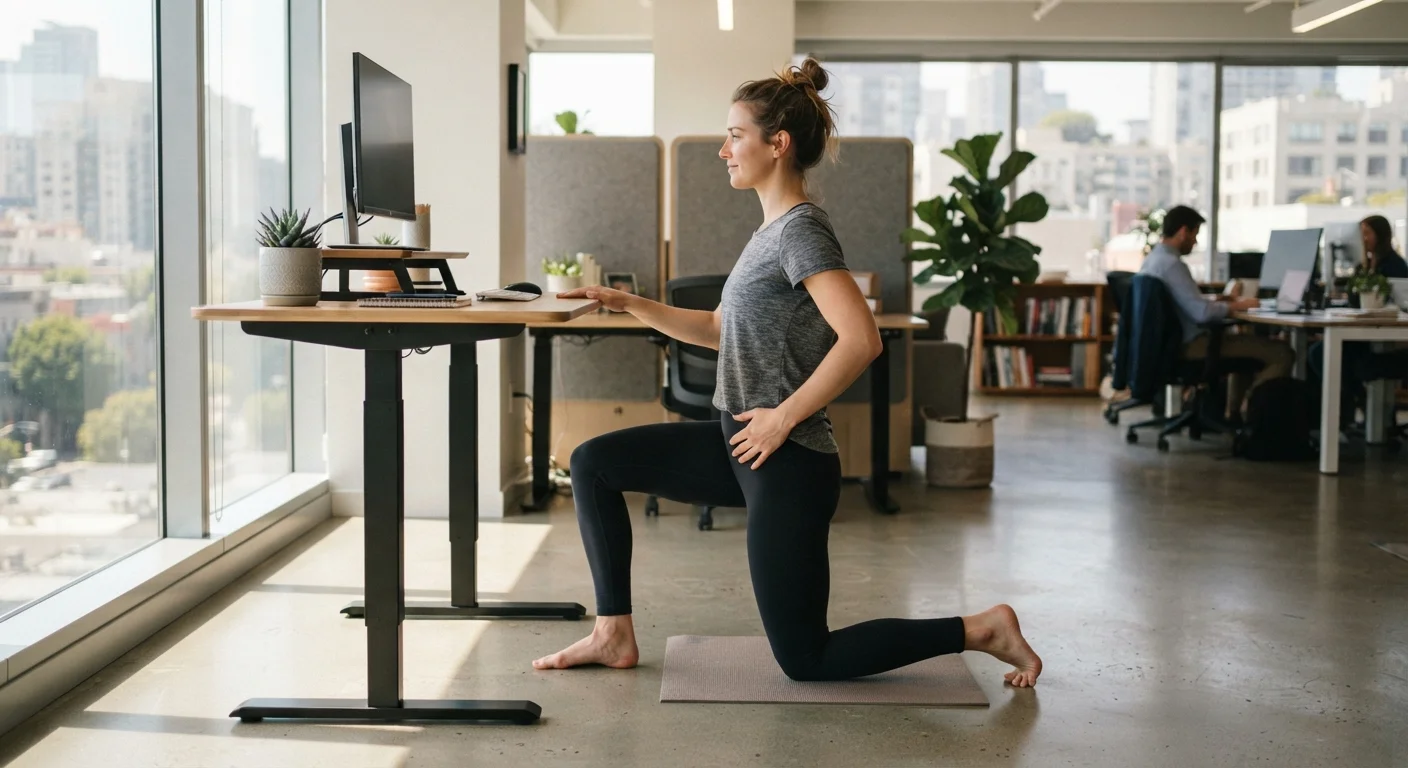
Photo: YetaWellness.com | Explore Trending Blogs editorial
Key Takeaways
- Prolonged sitting shortens hip flexors, rounds the upper back, and compresses spinal discs over time.
- Targeted mobility work - done consistently - can counteract the postural effects of a desk-based workday.
- Short movement breaks every 60-90 minutes are more effective than one long stretch session at day's end.
- This routine requires no equipment and can be performed in a standard office or home workspace.
- Consult a healthcare professional if you experience persistent pain or have a pre-existing spinal condition.
Why Sitting Reshapes Your Body Over Time
Sitting for extended periods is not simply a matter of being still - it actively loads your body in one fixed position, gradually altering the length-tension relationships of muscles and the mobility of key joints. The hip flexors shorten as the hips remain flexed for hours. The thoracic spine (the mid-back) rounds and stiffens. The deep stabilizers of the core switch off, transferring load to passive structures like spinal ligaments and intervertebral discs.
Research consistently links prolonged sedentary time with reduced lumbar mobility, increased musculoskeletal discomfort, and altered movement patterns that persist even after someone stands up. As our companion piece on sedentary behavior versus physical inactivity explains, sitting all day and not exercising are related but distinct risks - understanding both shapes smarter prevention habits.
The good news: the body is highly adaptable. Consistent, targeted mobility work can restore range of motion, reactivate underused muscles, and reduce cumulative strain. The routine below targets the structures most commonly affected by desk work.
What You Will Need
This routine is designed to be accessible anywhere - no gym, no specialized equipment required. Review the list below before you begin.
What you will need
Yoga mat or exercise mat
Provides cushioning and grip for floor-based stretches targeting the hips and spine.
Sturdy chair or desk edge
Used as a balance support during standing hip and thoracic mobility movements.
Foam roller
Can be used to add thoracic spine mobilization, though all movements are achievable without one.
The Desk-Job Mobility Routine
Perform the steps below in order. The sequence is intentional: it moves from gentle spinal decompression through hip opening to thoracic mobility, finishing with activation of the glutes - the muscles most suppressed by sitting. Aim to complete this routine at least once per workday, ideally during a mid-day break or immediately after your final work session.
For broader strategies on weaving movement into your workday, see our guide on turning a sedentary workday into a moving one.
Cat-Cow Spinal Waves (90 seconds)
Start on hands and knees with wrists under shoulders and knees under hips. On an inhale, drop the belly, lift the chest and tailbone - this is the cow position. On an exhale, round the spine toward the ceiling, tucking chin and pelvis - this is the cat position. Move slowly between the two, allowing each vertebra to participate. Complete 8-10 full cycles.
This movement gently restores segmental spinal mobility and rehydrates intervertebral discs that have been compressed during sitting.
Kneeling Hip Flexor Stretch (60 seconds each side)
From a kneeling position, step one foot forward so the front knee is directly over the ankle. Lower the back knee to the floor. Keeping the torso upright, gently shift your weight forward until you feel a stretch along the front of the rear hip. Hold for 30-60 seconds, then switch sides.
The iliopsoas - the primary hip flexor - is the muscle most consistently shortened by sitting. This stretch directly targets that structure.
Thoracic Rotation in Seated or Kneeling Position (60 seconds each side)
Sit in a chair with feet flat on the floor, or kneel on a mat. Place one hand behind your head and rotate the elbow toward the ceiling, opening the chest. Your gaze follows the movement. The lower body stays square. Return to center and repeat 8-10 times per side.
The thoracic spine is one of the first regions to lose rotational range of motion with sedentary habits. Restoring rotation here reduces compensatory strain on the neck and lower back.
Glute Bridges (12-15 repetitions)
Lie on your back with knees bent and feet flat on the floor, hip-width apart. Press through the heels and lift the hips toward the ceiling until your body forms a straight line from knees to shoulders. Squeeze the glutes at the top, hold for two seconds, then lower with control. Complete 12-15 repetitions.
Prolonged sitting inhibits glute activation - a phenomenon sometimes called gluteal amnesia in exercise science literature. Glute bridges reactivate this crucial muscle group, which supports the pelvis and protects the lower back during movement.
Doorway or Wall Chest Opener (45-60 seconds)
Stand in a doorway and place both forearms on the door frame at roughly shoulder height, elbows at 90 degrees. Step one foot forward and gently lean into the doorway until you feel a stretch across the chest and front of the shoulders. Alternatively, clasp hands behind the back and lift the arms slightly while drawing the shoulder blades together. Hold the position for 45-60 seconds.
Rounded shoulders and a forward head position are direct consequences of sustained keyboard and screen use. This movement restores length to the pectoral muscles and encourages the shoulder blades to sit in a more neutral position.
Making the Habit Stick
The most effective mobility work is the kind you actually do. Evidence suggests that breaking up sedentary time with short movement intervals - rather than compensating at the end of the day - produces better outcomes for musculoskeletal comfort and metabolic markers. Setting a recurring 60-90 minute reminder is a low-effort way to build this habit without disrupting workflow.
If you notice that certain joints feel particularly restricted - hips, ankles, or the thoracic spine - our article on the joints that stiffen first can help you understand why and how to prioritize your mobility work accordingly. Consistency over intensity is the governing principle: ten minutes done daily outperforms an hour-long session on Fridays.
This article is for general informational and educational purposes only and does not constitute medical advice. If you experience persistent pain, numbness, or tingling, or if you have a known spinal or musculoskeletal condition, consult a qualified healthcare professional before beginning any new movement routine.
The content on this site is for informational purposes only and is not a substitute for professional advice. Always consult a qualified professional for guidance specific to your situation.