
Sitting Less, Moving More: The Science Behind Breaking Up Sedentary Time

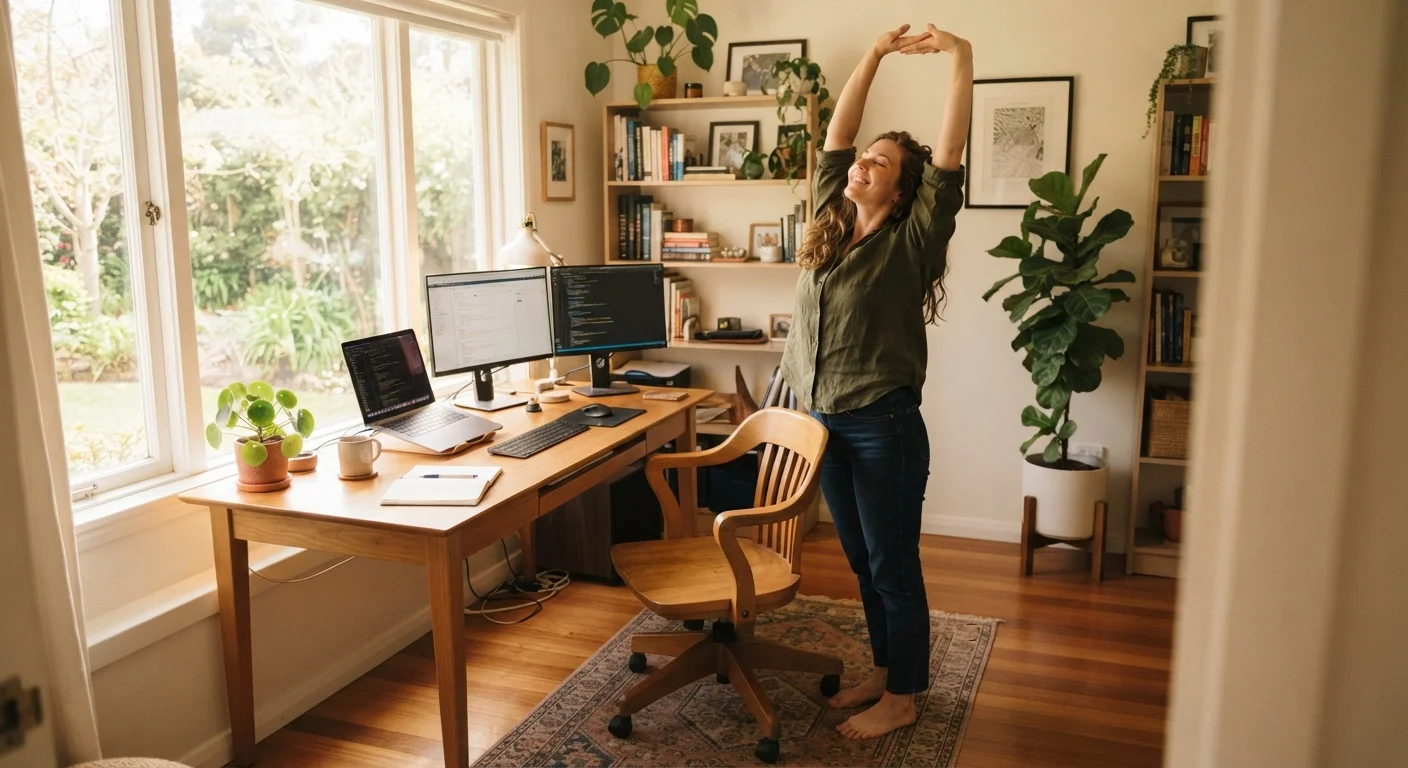
Photo: YetaWellness.com | Explore Trending Blogs editorial
Key Takeaways
- Prolonged sitting is associated with elevated risks for cardiovascular disease, metabolic dysfunction, and early mortality.
- Regular exercise does not fully cancel out the risks linked to spending many consecutive hours seated.
- Short movement breaks — even two to five minutes of light walking — can measurably improve blood sugar and circulation.
- The frequency of breaks may matter as much as their duration; spreading movement across the day appears beneficial.
- Simple behavioral strategies, such as standing during phone calls or setting hourly reminders, are practical starting points.
Why Sitting So Long Is Its Own Health Problem
Most conversations about physical health focus on adding exercise. But a growing body of research highlights a separate, underappreciated risk: what happens during all those hours when people are simply not moving at all.
Epidemiological studies have linked prolonged, uninterrupted sitting to higher rates of type 2 diabetes, cardiovascular disease, and all-cause mortality — even among adults who exercise regularly. This finding challenged a long-held assumption that meeting weekly exercise targets was enough. It turned out that how long a person sits in a single stretch, not just how little they exercise overall, carries its own physiological consequences.
To understand why, it helps to know what happens at the cellular level during extended stillness. When large muscle groups — particularly those in the legs and core — remain inactive for long periods, the body's ability to regulate blood glucose and triglycerides becomes less efficient. Blood flow slows. Insulin sensitivity can decline. These are not catastrophic events in a single session, but repeated daily over months and years, the cumulative effect is significant.
For a deeper look at how sedentary behavior differs from general physical inactivity as a health risk, see Sedentary Behavior vs. Physical Inactivity: A Distinction Worth Understanding.
6–8 hrs
Average daily sitting time for U.S. adults
National Health and Nutrition Examination Survey data suggests many American adults spend the majority of their waking hours in sedentary behaviors.
~15%
Increased cardiovascular disease risk from prolonged sitting
A meta-analysis published in the Annals of Internal Medicine found significant associations between high volumes of sitting time and cardiovascular disease risk, independent of leisure-time activity.
2–5 min
Duration of break shown to improve blood glucose response
Research published in Diabetes Care demonstrated that brief light-intensity walking breaks every 30 minutes significantly reduced postprandial blood glucose and insulin levels in at-risk adults.
What the Research Says About Short Activity Breaks
The science on interrupting sitting time has become increasingly specific. Controlled laboratory studies have measured what happens to blood glucose and blood pressure when participants stand or walk for just two to five minutes every 30 minutes, compared to sitting continuously for several hours. The results are consistent: frequent brief interruptions produce meaningfully better metabolic responses than sitting unbroken for the same total time.
One widely cited framework emerging from this research is the idea of "movement snacks" — short, informal bursts of activity scattered across the day. These are distinct from a structured workout. A brisk two-minute walk to a colleague's office or standing while reviewing notes is enough to trigger a mild but real physiological shift. Movement Snacks: Small Bursts of Activity and What They Actually Do explores this evidence in greater detail.
Researchers are also examining the frequency of breaks, not just their length. Preliminary evidence suggests that spreading movement across the day — rather than concentrating it in one block — may offer distinct cardiovascular and metabolic advantages. This does not mean structured exercise becomes less important; rather, it suggests the two habits serve complementary roles.
“The evidence is becoming clear that sitting for long, uninterrupted periods is a behavior with its own health consequences — separate from whether a person exercises. We need to think about reducing sitting time as a distinct public health target.”
— Neville Owen, Professor and behavioral epidemiologist, Baker Heart and Diabetes Institute
Practical Ways to Move More Throughout the Day
Understanding the science is the first step; building the habit is the second. The good news is that effective movement breaks require no equipment, no gym membership, and very little time.
- Set a recurring reminder. A phone alarm or computer notification every 30 to 60 minutes prompts you to stand, stretch, or take a short walk before returning to your task.
- Attach movement to existing routines. Stand during phone calls, walk to a farther restroom, or take a brief loop around the room after each meeting ends.
- Use transitions as cues. Moving between tasks — finishing an email, completing a document — is a natural moment to stand before starting the next item.
- Adjust your environment. Placing a printer, water bottle, or commonly used item slightly out of reach builds incidental movement into the workday without requiring willpower.
People who work desk jobs often face particular challenges. Desk Job Stiffness: A Practical Guide to Undoing Hours of Sitting offers targeted movements specifically designed to address what prolonged sitting does to posture and muscle tension.
For those just beginning to reintroduce regular activity into a previously sedentary lifestyle, Starting an Active Lifestyle After a Long Sedentary Period provides a realistic, step-by-step approach. And for broader ideas on weaving movement into daily life, the Active Lifestyles hub is a useful resource.
This article is for general informational purposes only and does not constitute medical advice. Speak with a qualified healthcare professional before making significant changes to your activity level, especially if you have an existing health condition.
Frequently Asked Questions
The content on this site is for informational purposes only and is not a substitute for professional advice. Always consult a qualified professional for guidance specific to your situation.