
Physical Milestones of Aging: A Decade-by-Decade Reference

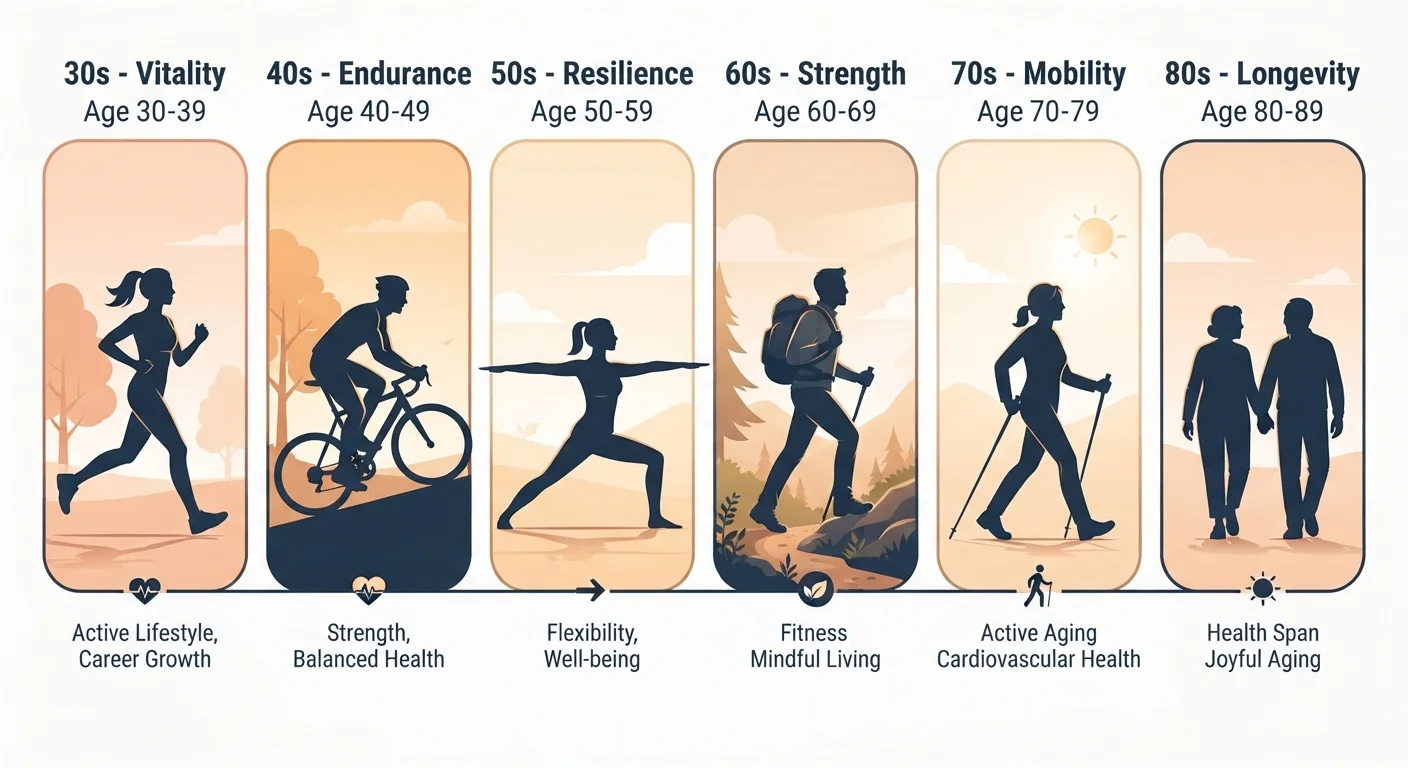
Photo: YetaWellness.com | Explore Trending Blogs editorial
How the Body Changes: The Big Picture
Aging is not a single event — it is a continuous biological process shaped by genetics, environment, and lifestyle. Most measurable physical changes begin earlier than people expect, often in the early 30s, and accumulate gradually over subsequent decades. Understanding the typical trajectory helps distinguish normal aging from conditions that warrant medical attention.
This reference guide covers the key physical milestones observed across research in gerontology and preventive medicine. It is intended as general health information, not medical advice. Always consult a qualified healthcare professional about your individual health status.
| Peak bone density age | Approximately 30 years old (National Institutes of Health, Osteoporosis and Related Bone Diseases) |
| Muscle mass loss rate per decade | 3–8% (accelerates after 60) (Baumgartner et al., Journal of Gerontology) |
| Typical menopause onset | Ages 45–55 (median: ~51) (North American Menopause Society) |
| Annual testosterone decline in men (after 30) | ~1% per year (American Urological Association guidance) |
| Falls: leading injury cause in older adults | Adults 65+ most affected (CDC, Older Adult Fall Prevention data) |
For a parallel look at how the brain changes over time, see cognitive health across the decades.
Decade-by-Decade Physical Milestones
Your 30s: The Subtle Shift
Bone density typically peaks around age 30, after which a slow net loss begins — approximately 0.5–1% per year in the absence of countermeasures. Muscle mass starts declining at roughly 3–8% per decade, a process called sarcopenia. Metabolism begins to slow, and skin collagen production decreases, reducing elasticity. Cardiovascular recovery time after exertion starts to extend slightly.
Your 40s: Hormonal and Structural Changes
Hormone levels shift meaningfully in this decade. Estrogen begins declining in women (with perimenopause often starting between 40 and 44), while testosterone levels in men typically decrease about 1% per year after 30, becoming more noticeable by the mid-40s. Near-vision clarity commonly declines — a condition called presbyopia — as the eye's lens loses flexibility. Joint cartilage shows early wear in many adults, and sleep architecture changes, with less time spent in deep slow-wave sleep. For a deeper look at decade-specific changes, see what happens to your body every decade after 30.
Your 50s: Accelerated Transition
Menopause typically occurs between ages 45 and 55 for most women, bringing more rapid bone loss, increased cardiovascular risk, and changes in body composition. Men may experience more pronounced andropause-related fatigue and reduced muscle recovery. Hearing loss (presbycusis) becomes increasingly common, affecting high-frequency sounds first. Blood vessel walls stiffen, contributing to rising systolic blood pressure readings in many adults.
Your 60s: Functional Thresholds
Grip strength, a reliable marker of overall musculoskeletal health, often declines noticeably in this decade. Kidney filtration efficiency decreases, affecting how the body processes medications and fluids. Lung capacity diminishes as chest wall compliance reduces. Balance becomes more challenging as proprioception (the body's sense of position in space) and inner-ear function decline. These changes increase fall risk — a leading cause of injury in older adults.
Your 70s and 80s: Adaptation and Resilience
Sarcopenia accelerates, with some estimates suggesting muscle loss of up to 15% per decade after 70. Skin becomes thinner and bruises more easily as subcutaneous fat diminishes. Immune response slows (immunosenescence), reducing vaccine efficacy and increasing infection vulnerability. However, research consistently shows that activity, nutrition, and social engagement substantially moderate these changes. For strategies supporting independence at this stage, see habits that support active aging.
What You Can Influence
While the timeline above reflects population-level patterns, individual variation is substantial. Lifestyle factors — particularly resistance exercise, adequate protein intake, quality sleep, and not smoking — consistently show associations with slower functional decline across multiple decades of research. Preventive screenings also shift in importance as you age; adult preventive care recommendations by decade can guide which checkups deserve priority at each stage.
Sarcopenia
The age-related loss of skeletal muscle mass and strength. It begins gradually in the 30s and accelerates after age 60–70, contributing to reduced mobility and increased fall risk.
Presbyopia
An age-related decline in near-vision clarity caused by the eye lens losing flexibility. It typically becomes noticeable in the early-to-mid 40s and is correctable with reading glasses or other lenses.
Presbycusis
Age-related hearing loss that progresses gradually, usually affecting the ability to hear high-frequency sounds first. It is among the most common sensory changes in adults over 50.
Immunosenescence
The gradual deterioration of immune system function that occurs with aging. It results in slower, less effective responses to infections and vaccines in older adults.
Proprioception
The body's internal sense of its own position, movement, and balance. Proprioceptive function declines with age and is a key contributor to increased fall risk in older adults.
If you are over 40 and looking for a practical starting point, preventive health habits for adults over 40 outlines the foundational steps most supported by evidence.
This article is for general informational and educational purposes only and does not constitute medical advice. Individual health trajectories vary significantly. Consult a qualified healthcare professional for guidance specific to your health needs.
The content on this site is for informational purposes only and is not a substitute for professional advice. Always consult a qualified professional for guidance specific to your situation.