
What Happens to Your Body Every Decade After 30

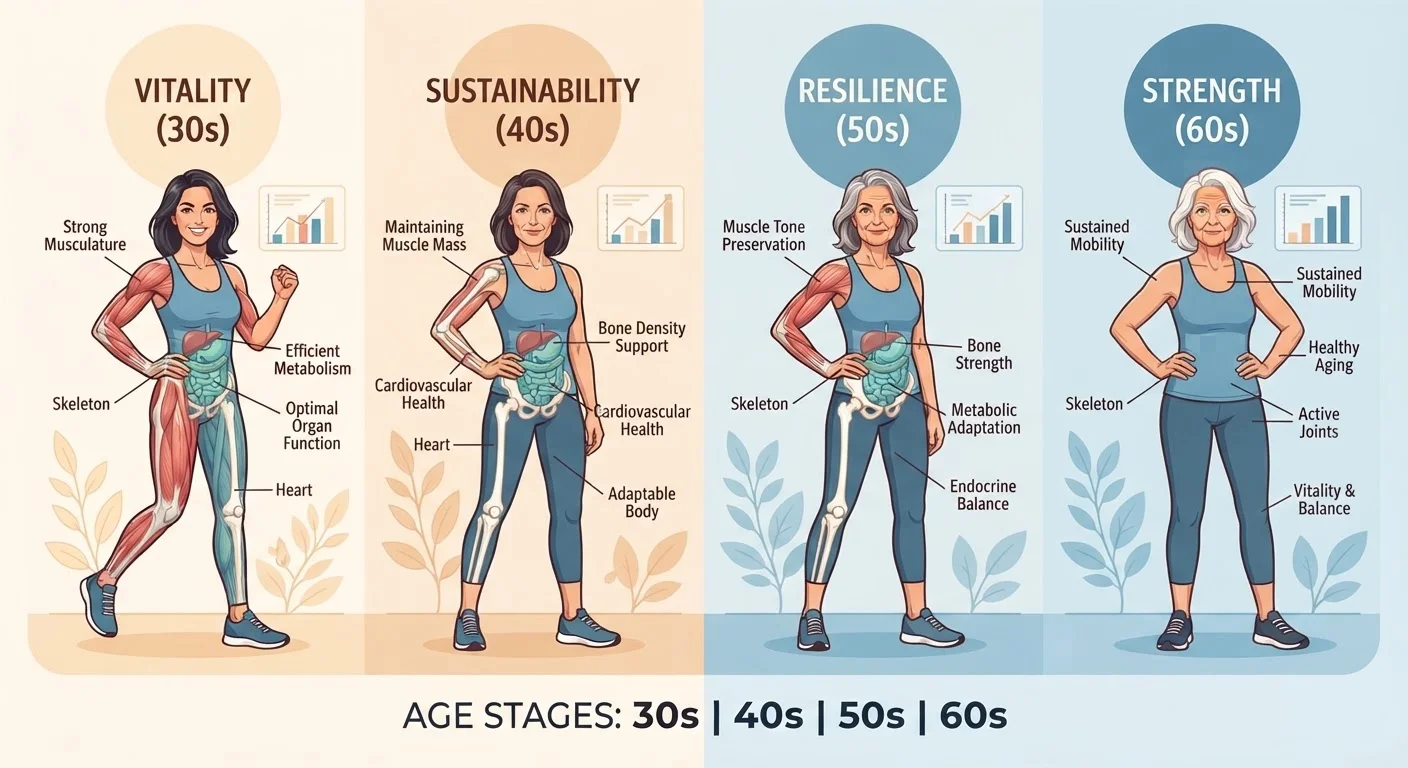
Photo: YetaWellness.com | Explore Trending Blogs editorial
Key Takeaways
- Muscle mass begins declining gradually in your 30s, accelerating without resistance training.
- Bone density peaks in early adulthood and progressively decreases, particularly after menopause.
- Hormonal shifts in the 40s and 50s affect metabolism, sleep, mood, and cardiovascular risk.
- Many age-related changes are modifiable through exercise, nutrition, sleep, and preventive care.
- Consult a healthcare provider to personalize screening and lifestyle strategies for your age and health history.
Why Decade-by-Decade Changes Matter
Aging is not a single event — it is a continuous biological process that unfolds at different rates across different systems of the body. Understanding what typically changes each decade helps you make informed decisions rather than react to surprises. For a deeper reference, see the decade-by-decade physical milestones guide.
Importantly, biology is not destiny. Research in gerontology consistently shows that lifestyle factors — physical activity, nutrition, sleep quality, and stress management — meaningfully influence how and when these changes manifest. This article outlines what the science says about age-related physical shifts from your 30s onward, and what that means practically.
This content is for general informational purposes only and is not a substitute for professional medical advice. Always consult a qualified healthcare provider about your personal health.
Your 30s: The Subtle Shift Begins
For most people, the 30s feel like peak health — and in many ways they are. But several significant biological processes quietly begin during this decade.
Muscle Mass and Strength
Sarcopenia — the age-related loss of muscle mass — begins as early as the mid-30s. Research suggests adults may lose roughly 3–8% of muscle mass per decade starting around this time, with that rate accelerating later in life if left unaddressed. Strength training is the most well-supported intervention to slow this process.
Bone Density
Bone density typically peaks in the late 20s to early 30s, then begins a gradual decline. This makes the 30s a critical window for building and maintaining skeletal reserves through weight-bearing activity and adequate calcium and vitamin D intake. Learn why bone density matters most in your 30s.
Metabolism
Resting metabolic rate — the number of calories the body burns at rest — begins a modest but measurable decline as lean muscle tissue decreases. Fat redistribution, particularly toward the abdomen, may also become more noticeable toward the late 30s, partly driven by early hormonal changes.
Start resistance training before you feel you need it. The muscle mass you build in your 30s and 40s acts as a biological reserve that pays dividends in your 60s and 70s.
Schedule a baseline bone density scan (DEXA) with your provider if you're a woman approaching menopause or have risk factors for osteoporosis — don't wait for symptoms.
Track your resting heart rate trends over time rather than fixating on single readings — a gradual upward drift can be an early signal worth discussing with your doctor.
Your 40s: Hormones, Metabolism, and Vision
The 40s tend to make age-related changes more apparent. Hormonal shifts that were subtle in the 30s begin to have broader effects on multiple body systems.
Hormonal Changes
For women, perimenopause — the transitional period before menopause — often begins in the mid-to-late 40s, bringing fluctuations in estrogen and progesterone that can affect sleep, mood, energy, and menstrual regularity. For men, testosterone levels decline gradually (roughly 1–2% per year after age 30), with effects on muscle maintenance, libido, and energy becoming more noticeable by the 40s.
Cardiovascular Function
The heart's maximum pumping capacity tends to decline with age, and arterial walls become slightly stiffer, increasing blood pressure risk. Regular aerobic exercise remains the strongest modifiable factor for maintaining cardiovascular health through midlife.
Vision
Presbyopia — difficulty focusing on close objects — typically emerges in the early-to-mid 40s as the eye's lens loses flexibility. This is a near-universal experience and is easily managed with corrective lenses. More consequential changes, like increased risk of glaucoma or macular degeneration, make regular eye exams increasingly important.
Skin Structure
Collagen production slows meaningfully in the 40s, contributing to reduced skin elasticity and the formation of deeper lines. Explore how skin structure differs between your 40s and 60s for a closer look at what's happening beneath the surface.
Your 50s: Bone, Heart, and Hormonal Transitions
The 50s bring some of the most significant physiological milestones, particularly for women navigating menopause and for both sexes managing cardiovascular and metabolic health.
Menopause and Its Systemic Effects
The average age of menopause in the United States is around 51. The drop in estrogen that accompanies menopause accelerates bone density loss, raises LDL cholesterol levels, and shifts body fat distribution toward the abdomen — all of which increase cardiometabolic risk. Working with a healthcare provider to monitor and manage these changes is especially important during this transition.
Cardiovascular Risk
Heart disease risk rises for both men and women in the 50s. Blood pressure screening, lipid panels, and blood glucose monitoring become standard preventive care priorities. The active aging habits hub outlines lifestyle strategies that support heart health through this decade and beyond.
Joints and Mobility
Cartilage wears gradually over decades of use, and joint inflammation becomes more common in the 50s. Maintaining a healthy body weight and staying physically active — including low-impact movement — supports joint function. See our guide to mobility across the decades for movement strategies tailored to midlife and beyond.
Your 60s and Beyond: Adapting to Deeper Changes
By the 60s, the cumulative effects of biological aging become more functionally significant, though the degree varies widely between individuals based on genetics and lifetime habits.
Muscle and Balance
Sarcopenia accelerates, and declines in fast-twitch muscle fibers — those responsible for quick, powerful movements — increase fall risk. Balance training and resistance exercise are strongly supported by evidence as ways to maintain functional independence.
Cognitive Changes
Normal aging involves some slowing of processing speed and changes in working memory, though significant cognitive decline is not inevitable. Understand what happens to the brain as we age for a detailed, science-backed overview.
Organ Function
Kidney filtration rate and lung capacity gradually decline with age. These changes are generally mild in healthy individuals but underscore the importance of avoiding nephrotoxic substances, staying hydrated, and maintaining cardiovascular fitness to support respiratory health.
3–8%
Muscle mass lost per decade after 30
According to research published in journals of gerontology and exercise science, this rate accelerates significantly without resistance training.
~51
Average age of menopause in U.S. women
According to the North American Menopause Society, the average age of natural menopause in the United States is approximately 51 years.
1–2%
Annual testosterone decline in men after 30
The American Urological Association notes that testosterone levels in men decline gradually at roughly 1–2% per year beginning around age 30.
What You Can Do at Every Stage
The evidence base for healthy aging consistently points to a core set of behaviors that support physical function across every decade. None of these require dramatic interventions — they work cumulatively over time.
- Resistance training: Preserves muscle mass, bone density, and metabolic rate. Even 2–3 sessions per week produce measurable benefits at any age.
- Adequate protein intake: Supports muscle protein synthesis, which becomes less efficient with age. Discuss appropriate intake with a registered dietitian or your healthcare provider.
- Regular aerobic activity: Supports cardiovascular health, metabolic function, mood, and sleep quality.
- Preventive screenings: Blood pressure, cholesterol, blood glucose, bone density (DEXA), and cancer screenings become more important with each decade. Follow your provider's recommendations.
- Sleep hygiene: Sleep architecture changes with age, with deeper sleep stages becoming shorter. Consistent sleep schedules and a low-stimulation sleep environment support restorative rest.
- Social and cognitive engagement: Evidence links social connection and mentally stimulating activity to better cognitive outcomes in later life.
Explore how body composition — the balance of muscle, fat, and bone — shapes overall health as these systems interact across the decades.
This article is for informational purposes only and does not constitute medical advice. Consult a qualified healthcare professional before making changes to your health routine, particularly if you have existing medical conditions.
The content on this site is for informational purposes only and is not a substitute for professional advice. Always consult a qualified professional for guidance specific to your situation.