
What Happens to the Brain as We Age

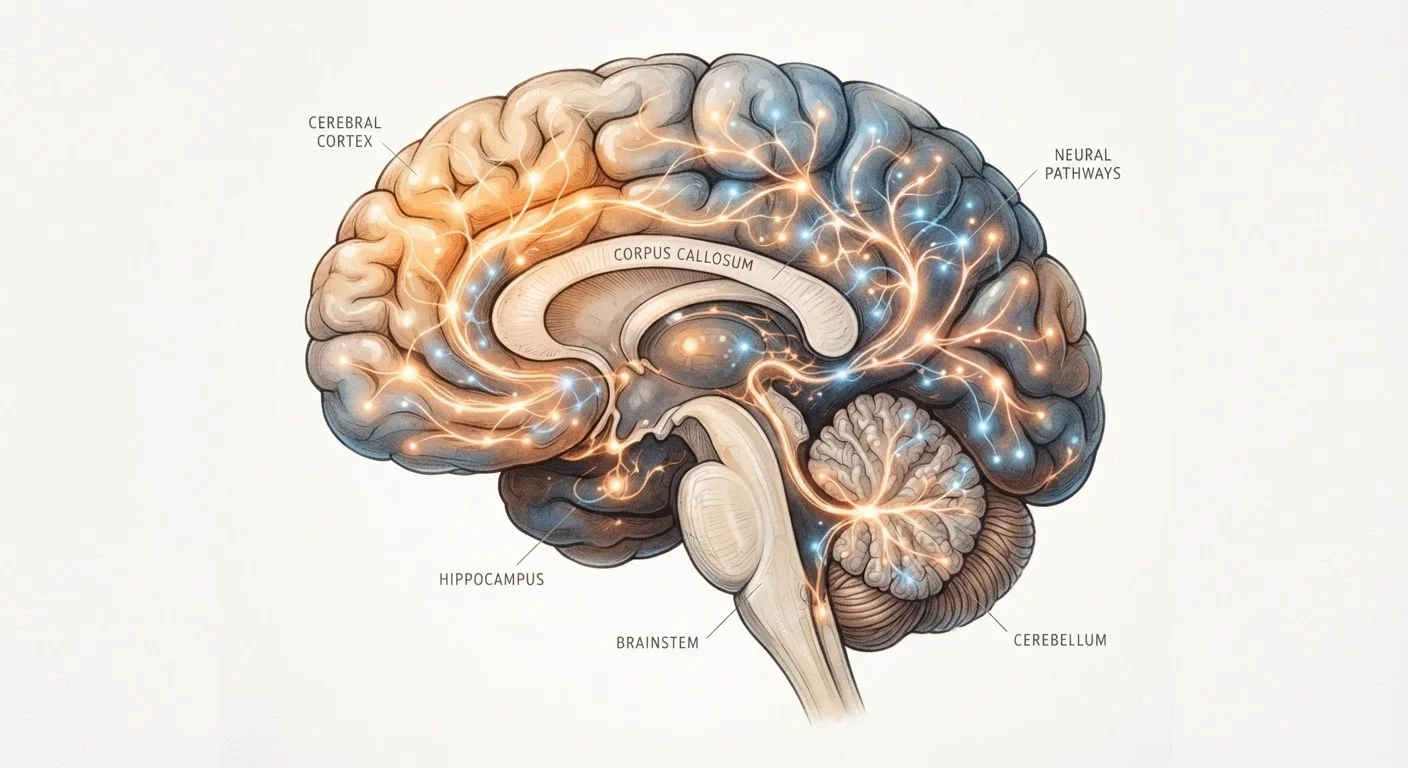
Photo: YetaWellness.com | Explore Trending Blogs editorial
Key Takeaways
- The brain begins subtle structural changes as early as the 40s, well before most people notice cognitive shifts.
- Processing speed and working memory are among the first cognitive functions to show age-related slowing.
- Many forms of knowledge and vocabulary tend to remain stable or even improve with age.
- Lifestyle factors — including physical activity, sleep, and social engagement — meaningfully influence how the brain ages.
- Not all cognitive change is decline; understanding what's typical helps distinguish normal aging from conditions needing medical attention.
How Brain Structure Changes Over Time
The aging brain undergoes measurable structural shifts that begin quietly, long before most people notice any cognitive difference. Overall brain volume gradually decreases with age, primarily due to reductions in the thickness of the cerebral cortex — the outer layer responsible for thinking, memory, and sensory processing. The prefrontal cortex, which governs planning, decision-making, and impulse control, is particularly susceptible to volume loss.
White matter — the network of nerve fibers that carries signals between brain regions — also changes in composition and integrity over time. These white matter shifts slow the speed at which information travels across the brain, contributing to the processing delays many older adults notice. The hippocampus, a structure central to forming new memories, shows modest volume reduction in typical aging, though dramatic shrinkage is more characteristic of pathological conditions like Alzheimer's disease.
Neurotransmitter systems are also affected. Dopamine production and receptor density decline with age, influencing motivation, motor control, and reward processing. These changes are gradual and part of normal biology, not inevitable markers of disease. For a broader look at how the whole body shifts across decades, see our overview of physical changes after 30.
Which Cognitive Functions Are Most Affected
Not all mental abilities age at the same rate. Cognitive scientists distinguish between two broad categories: fluid intelligence — the capacity to reason quickly, solve novel problems, and process new information — and crystallized intelligence — accumulated knowledge, vocabulary, and wisdom built over a lifetime.
Fluid intelligence shows the most consistent age-related decline, typically beginning in the 50s. Processing speed — how fast the brain takes in and responds to information — is one of the earliest and most reliably observed changes. Working memory, which holds information briefly while using it (like remembering a phone number while dialing), also becomes less efficient with age.
Crystallized intelligence, by contrast, tends to hold steady or even improve well into later life. Many older adults demonstrate richer vocabulary, broader general knowledge, and more nuanced judgment than their younger counterparts. This reflects the brain's remarkable capacity to accumulate and organize experience across decades.
~1–2%
Annual hippocampal volume loss in typical aging
Research published in neuroscience literature estimates the hippocampus shrinks at roughly 1–2% per year in healthy older adults, with accelerated loss seen in Alzheimer's disease.
60s–70s
Peak decade for crystallized intelligence
Studies on cognitive aging consistently show that vocabulary and accumulated knowledge often peak in the sixth and seventh decades of life before plateauing.
~13 years
Estimated cognitive reserve benefit from education
Research suggests individuals with more years of formal education show symptoms of cognitive decline an average of several years later than those with less education, even with similar brain pathology.
Understanding where typical aging ends and something more concerning begins is explored in detail in our article on cognitive shifts in healthy aging vs. early decline.
The Brain's Resilience: Neuroplasticity and Reserve
One of the most encouraging findings in modern neuroscience is that the aging brain retains a meaningful degree of plasticity — the ability to reorganize, form new connections, and adapt. This capacity, known as neuroplasticity, does not disappear with age; it simply operates more slowly and requires greater effort to activate.
Researchers have also identified the concept of cognitive reserve — the brain's resilience to damage or age-related change, built up over a lifetime through education, intellectually demanding work, and mentally stimulating leisure activities. People with higher cognitive reserve tend to show fewer functional symptoms even when structural brain changes are present.
“The brain is not simply declining with age — it is changing, and some of those changes represent genuine gains in areas like emotional regulation and integrative thinking.”
— Mara Mather, Professor of Gerontology, University of Southern California
These findings carry practical implications. Engaging in mentally challenging activities — learning a new skill, reading broadly, playing a musical instrument — may help maintain cognitive reserve across the lifespan. The active aging habits hub explores lifestyle strategies supported by current evidence.
Lifestyle Factors That Influence How the Brain Ages
While structural brain aging is universal, its pace and functional impact vary considerably between individuals — and lifestyle plays a meaningful role in that variation.
- Physical activity is among the most consistently supported factors. Aerobic exercise increases blood flow to the brain, promotes the release of growth factors that support neuron health, and is associated with larger hippocampal volume in older adults.
- Sleep quality matters significantly. During sleep, the brain's glymphatic system clears metabolic waste products, including proteins associated with neurodegenerative disease. Chronic poor sleep disrupts this process and is associated with faster cognitive decline.
- Social connection is linked to better cognitive outcomes. Social engagement appears to buffer against decline, possibly by reducing chronic stress and maintaining cognitive stimulation.
- Cardiovascular health directly influences brain health, since the brain depends on a robust blood supply. Conditions like hypertension and diabetes, if unmanaged, accelerate age-related brain changes. See our related piece on cardiovascular changes with age for context.
Sensory health also intersects with cognition. Uncorrected hearing loss, for example, is increasingly recognized as a risk factor for accelerated cognitive decline — an issue covered in our article on age-related vision and hearing changes.
This article is for general informational purposes only and does not constitute medical advice. Consult a qualified healthcare professional for concerns about your cognitive health or any symptoms you are experiencing.
Frequently Asked Questions
The content on this site is for informational purposes only and is not a substitute for professional advice. Always consult a qualified professional for guidance specific to your situation.