
Mobility Across the Decades: How Movement Needs Change as You Age

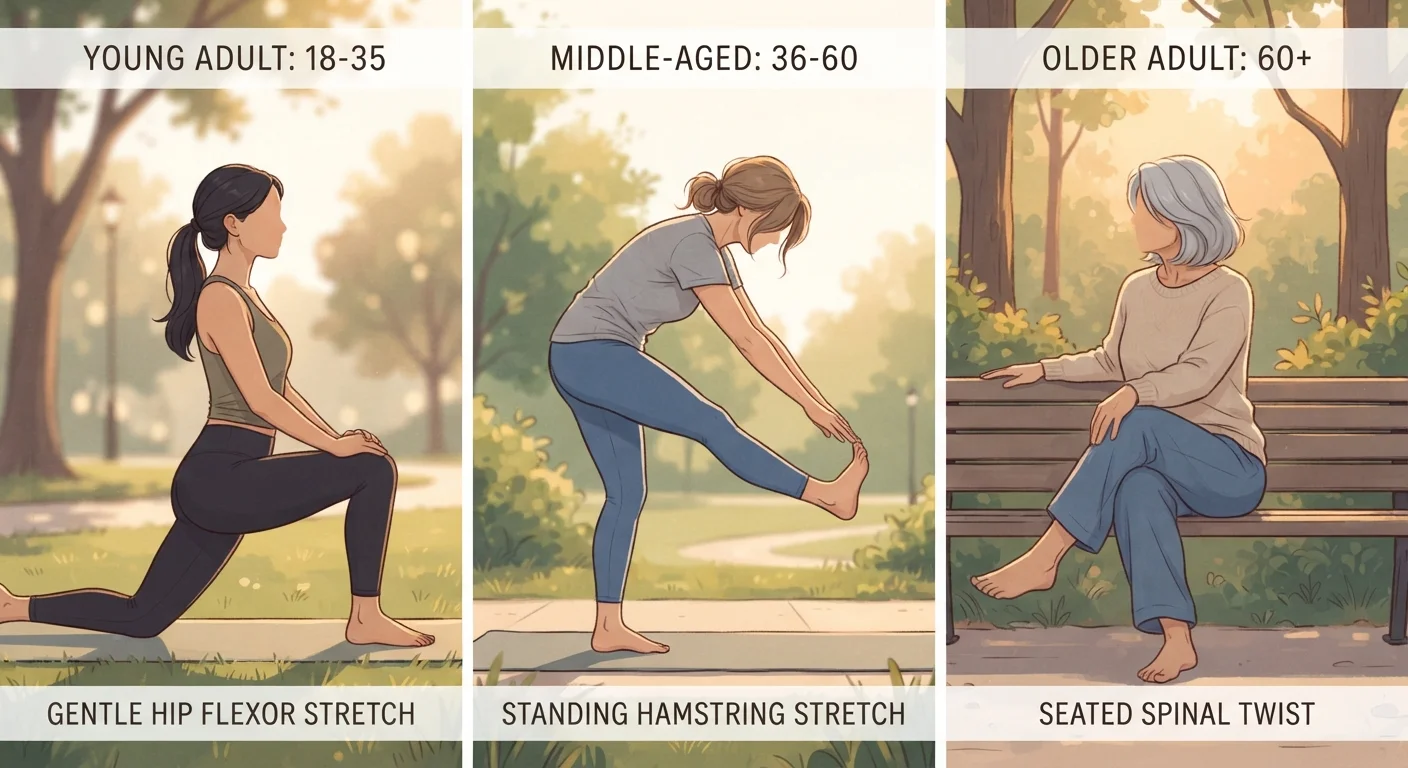
Photo: YetaWellness.com | Explore Trending Blogs editorial
Key Takeaways
- Mobility naturally declines with age, but consistent movement can meaningfully slow that process.
- Each life decade brings specific mobility priorities - from building range in your 30s to preserving independence in your 70s.
- Functional movement, not just flexibility, is the most practical measure of mobility at any age.
- Simple daily habits - not gym-level training - make the biggest long-term difference.
- Consult a healthcare provider before starting new exercise routines, especially with existing conditions.
Why Mobility Changes Are Normal - and Manageable
Mobility - the ability to move a joint actively through its full range of motion - is one of the first physical capacities to quietly shift as we age. Unlike an injury that announces itself, mobility loss tends to be gradual: a hip that no longer rotates as freely, shoulders that won't quite reach overhead, ankles that feel stiff getting out of bed. These shifts are biological, but they aren't inevitable to the degree most people assume.
Several factors drive age-related mobility changes. Connective tissues like tendons and ligaments lose some elasticity over time. Cartilage in joints gradually thins. Muscle mass declines - a process called sarcopenia - reducing the strength needed to control movement at end-range. Synovial fluid, which lubricates joints, decreases in volume and quality. Together, these changes tighten the envelope of easy, pain-free movement. For a deeper look at what's happening inside the joints specifically, see Joint Health Through the Decades.
The encouraging part: regular, targeted movement can counteract much of this decline. The key is matching the type of mobility work to where you are in life.
Mobility in Your 30s: Building the Foundation
The 30s are often when the first subtle signs appear - tight hip flexors from prolonged sitting, reduced thoracic spine rotation, or hamstrings that feel perpetually shortened. These aren't signs of aging so much as signs of modern sedentary patterns arriving ahead of schedule.
This decade is the ideal time to establish a mobility practice precisely because the body is still highly responsive. Range-of-motion improvements come quickly with consistent work. The priorities at this stage include:
- Hip flexor and hip rotation mobility - critical for pain-free walking, running, and sitting-to-standing transitions
- Thoracic spine extension and rotation - protects the lower back and shoulders from compensatory strain
- Ankle dorsiflexion - supports squatting mechanics and reduces knee stress
Even 10 minutes of daily mobility work targeting these areas can build a reserve that pays dividends later. Think of it as a long-term investment, not a quick fix. What Happens to Your Body Every Decade After 30 provides useful context on the biological backdrop.
In your 30s, prioritize active mobility over passive stretching: hold a position at end-range and gently contract the surrounding muscles for 5-10 seconds before releasing. This builds the neuromuscular ownership of new range that passive stretching alone can't provide.
Treat floor time as a daily mobility tool: spending 20-30 minutes on the floor each day - whether sitting cross-legged, in a side lunge, or prone - naturally loads hips, ankles, and the spine in ranges that chairs never access.
Mobility in Your 40s: Addressing Early Stiffness
By the 40s, mobility changes become more noticeable for most people. Hormonal shifts - including declining estrogen and testosterone - affect connective tissue elasticity and muscle recovery. Sedentary hours accumulate, and the body's tolerance for inactivity shortens. Morning stiffness that resolves within minutes in your 30s may linger longer now.
The strategic shift in this decade is moving from building range of motion to maintaining and reinforcing it under load. Passive stretching alone is less effective than active mobility work - movements where the muscles themselves control the range, rather than gravity or external force. This distinction between flexibility (passive) and mobility (active, functional) matters more with each passing decade. For a full breakdown of that difference, Why Flexibility and Mobility Work Gets Overlooked is worth reading.
Key focus areas in your 40s:
- Shoulder and rotator cuff mobility - desk posture and reduced activity can cause significant restriction here
- Spinal rotation - especially important for sports and reaching movements
- Deep hip mobility - floor-sitting exercises and controlled hip circles help maintain range
Mobility in Your 50s: Protecting Functional Range
Functional range of motion - how much movement you can access while doing everyday tasks - becomes the central concern in the 50s. This includes reaching into overhead cabinets, stepping over obstacles, rising from a low chair, and turning to reverse a car. These aren't athletic feats; they're the baseline requirements of independent daily life.
Research consistently shows that strength and mobility decline together in this decade, and that preserving one supports the other. Mobility work that integrates resistance - such as a slow, controlled squat that also stretches hip adductors - is especially efficient. Balance training becomes relevant here too, since proprioception (the body's sense of joint position) also begins to decline, increasing fall risk if unaddressed.
Priorities for the 50s include:
- Hip and knee stability through full range - not just flexibility, but strength within that range
- Balance and single-leg stability - standing on one leg, slow heel-to-toe walking
- Wrist and hand mobility - often overlooked, critical for gripping, lifting, and self-care tasks
For a structured way to assess where your current range of motion stands, try A Head-to-Toe Mobility Self-Assessment You Can Do at Home.
Mobility in Your 60s and Beyond: Preserving Independence
In the 60s, 70s, and beyond, the primary goal of mobility work shifts to preserving functional independence. The ability to get up from the floor, walk without assistance, and perform self-care tasks is deeply tied to joint range of motion and the muscle strength to control it. Falls are a major health concern for older adults, and mobility work that incorporates balance and controlled movement is among the most evidence-supported strategies for reducing that risk.
Intensity and novelty matter less at this stage than consistency and safety. Gentle, daily movement - even chair-based exercises or slow walks - outperforms occasional intense sessions. Water-based exercise is particularly well-suited for older adults managing joint discomfort, as buoyancy reduces compressive load while still allowing a meaningful range of movement.
For those managing chronic conditions or recovering from procedures, mobility priorities should be discussed with a physical therapist or physician. General guidance is helpful, but individualized plans are safer and more effective. See Daily Movement Habits That Support Joint Health Over the Long Term for practical everyday strategies beyond formal exercise.
This article is for general informational purposes only and does not constitute medical advice. Always consult a qualified healthcare professional before beginning or modifying any exercise program, particularly if you have existing health conditions or concerns.
What Stays the Same Across Every Decade
Despite the decade-specific differences, several principles hold true at every age. Movement is consistently more effective than rest when it comes to maintaining mobility - prolonged stillness stiffens tissues regardless of age. Frequency matters more than duration: short daily sessions consistently outperform long, infrequent ones. And breathing - slow, deliberate exhales during a stretch - helps the nervous system allow greater range, a mechanism that works from the 20s through the 80s.
Perhaps most importantly, mobility is trainable at any age. The specific goals shift, the exercises adapt, and the recovery time changes - but the capacity to improve never fully disappears. Active Lifestyles Across Every Age expands on this point across the full lifespan.
For a decade-by-decade reference covering the broader landscape of physical change - not just mobility - Physical Milestones of Aging: A Decade-by-Decade Reference offers a useful companion overview.
The content on this site is for informational purposes only and is not a substitute for professional advice. Always consult a qualified professional for guidance specific to your situation.