
Reading a Nutrition Label Without Getting Lost in the Numbers

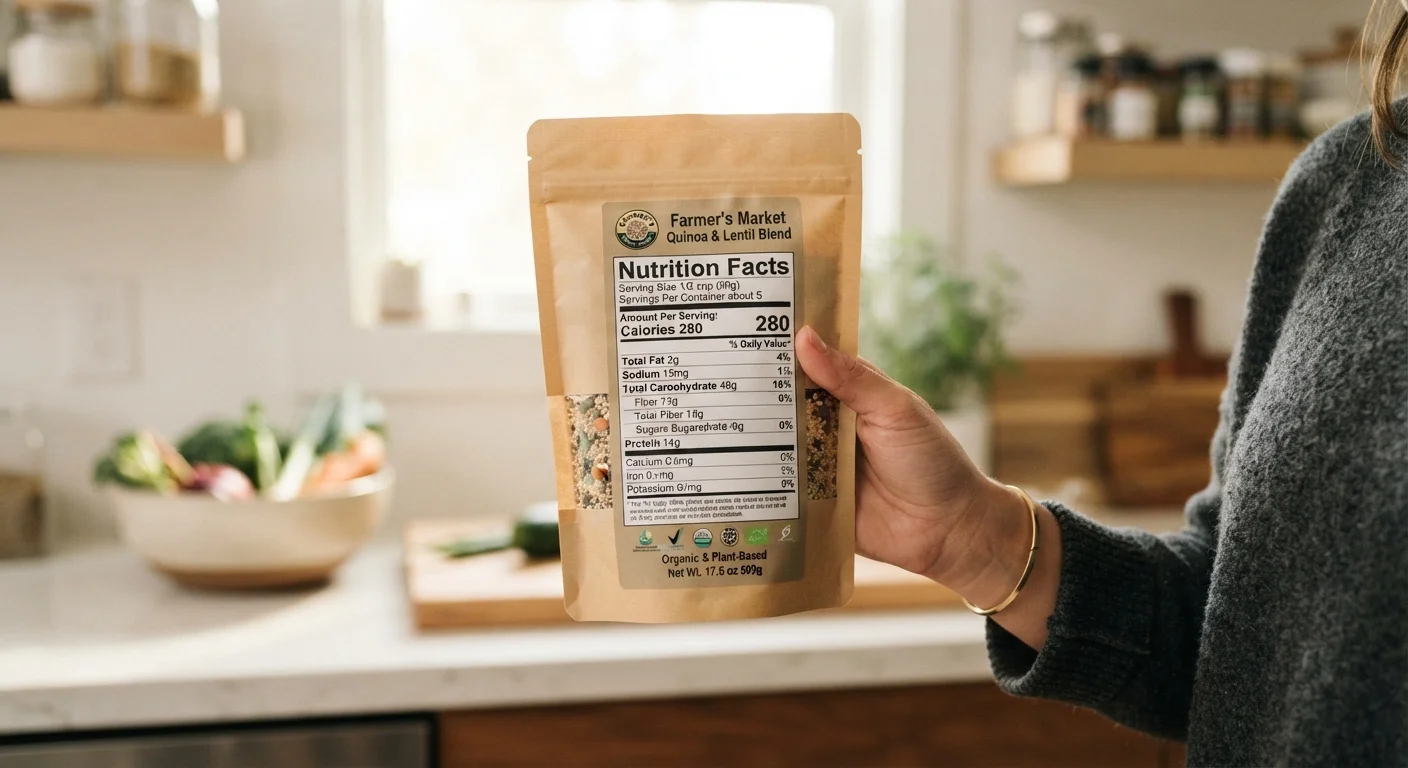
Photo: YetaWellness.com | Explore Trending Blogs editorial
Key Takeaways
- Serving size is the anchor for every other number on the label — check it first.
- The % Daily Value column uses a 2,000-calorie reference diet and helps you gauge whether a nutrient amount is high or low.
- Added sugars and saturated fat are the two numbers most Americans benefit from watching most closely.
- Nutrition labels show what's in a food, not whether a food is 'good' or 'bad' for you overall.
- Micronutrients like vitamin D, calcium, iron, and potassium are required on modern labels because many Americans fall short of them.
Why the Nutrition Facts Label Exists
The Nutrition Facts panel is a federally standardized information tool required on most packaged foods sold in the United States. The FDA mandates its format so that every label, regardless of brand, organizes information the same way. That consistency is the point: it lets you compare a box of cereal to a bag of granola using the same framework.
The current label design, updated in 2020, reflects shifts in nutrition science and public health priorities. Understanding its structure takes less than five minutes — and once it clicks, it works across virtually every package in the grocery store.
This article is general nutrition education, not personalized medical or dietary advice. Consult a registered dietitian or qualified healthcare professional for guidance tailored to your individual needs.
Start at the Top: Serving Size and Calories
The first thing to locate is the serving size, printed in larger, bolder type near the top of the panel. This number tells you the portion that every subsequent figure on the label is based on. It is not a recommended portion — it's a reference unit.
Directly below is the calorie count per serving. Calories measure the energy a food provides. If a package contains two servings and you eat the entire package, you've consumed twice the listed calories. This single arithmetic step trips up many label readers.
Check the Serving Size Before Anything Else
For context on how calories relate to the three main energy-providing nutrients, see our introduction to macronutrients — a useful starting point if these concepts are new to you.
Macronutrients: Fats, Carbohydrates, and Protein
The middle section of the label lists the three macronutrients — fat, carbohydrate, and protein — in grams. Each category breaks down further:
- Total Fat is subdivided into saturated fat and trans fat. Saturated fat is the figure most dietary guidelines suggest limiting; trans fat should be as close to zero as possible.
- Total Carbohydrate includes dietary fiber, total sugars, and — since the 2020 update — added sugars as a separate line. Fiber is generally beneficial; added sugars are what most health guidance recommends minimizing.
- Protein appears as a single total; no %DV is required unless the food makes a protein-related claim.
For a deeper look at how these ratios interact, our article on macronutrient ratios and what label numbers really mean walks through the math clearly.
Serving Size
The standardized reference amount used as the basis for all other numbers on a Nutrition Facts label. It reflects typical consumption amounts, not necessarily a recommended portion.
% Daily Value (%DV)
A percentage showing how much of a nutrient one serving contributes to a general daily intake, based on a 2,000-calorie reference diet set by the FDA.
Added Sugars
Sugars and syrups added to a food during processing or preparation, listed separately from naturally occurring sugars on the updated Nutrition Facts label.
Saturated Fat
A type of fat found primarily in animal products and some plant oils. Dietary guidelines generally recommend limiting saturated fat intake as part of a heart-healthy diet.
Dietary Fiber
The indigestible portion of plant-based foods that supports digestive health. Most Americans consume less than the recommended amount, making it a nutrient of public health focus.
Macronutrient
One of the three main nutrient categories — fat, carbohydrate, and protein — that provide energy (calories) to the body and appear prominently on every Nutrition Facts label.
Micronutrients and the % Daily Value Column
Running alongside most nutrient rows is the % Daily Value (%DV) column. This percentage tells you how much of a nutrient one serving contributes toward a general daily target, based on a 2,000-calorie reference diet. A quick rule of thumb: 5% DV or less is considered low; 20% DV or more is considered high.
The label is required to list four specific micronutrients: vitamin D, calcium, iron, and potassium. These were prioritized because research shows many Americans consume inadequate amounts. For a broader look at how micronutrients fit into an overall eating pattern, explore our vitamins and minerals hub.
Sodium also appears here. The %DV for sodium helps identify whether a food is a high-sodium item — particularly useful for people managing blood pressure, though everyone benefits from this awareness.
The 2,000-Calorie Reference Is a Benchmark
What the Label Doesn't Tell You
Nutrition labels are a tool, not a verdict. They don't indicate whether an ingredient is minimally processed or heavily refined, and they say nothing about how a food was grown or produced. A label showing reasonable numbers can still belong to a product with a long list of additives — which is why reading the ingredient list (printed separately from the Nutrition Facts panel) adds important context.
Labels also can't account for how foods interact within a full diet. A single high-sodium item isn't automatically problematic if the rest of your day is low in sodium. Nutritional quality is cumulative. If you're thinking about how to put these individual numbers together into a coherent eating pattern, our guide on building a balanced plate offers practical, non-prescriptive approaches.
Use the Nutrition Facts panel as one input among many — alongside ingredient lists, whole-food variety, and guidance from a healthcare professional when relevant.
Frequently Asked Questions
The content on this site is for informational purposes only and is not a substitute for professional advice. Always consult a qualified professional for guidance specific to your situation.