
Macronutrient Ratios: What the Numbers on Nutrition Labels Really Mean

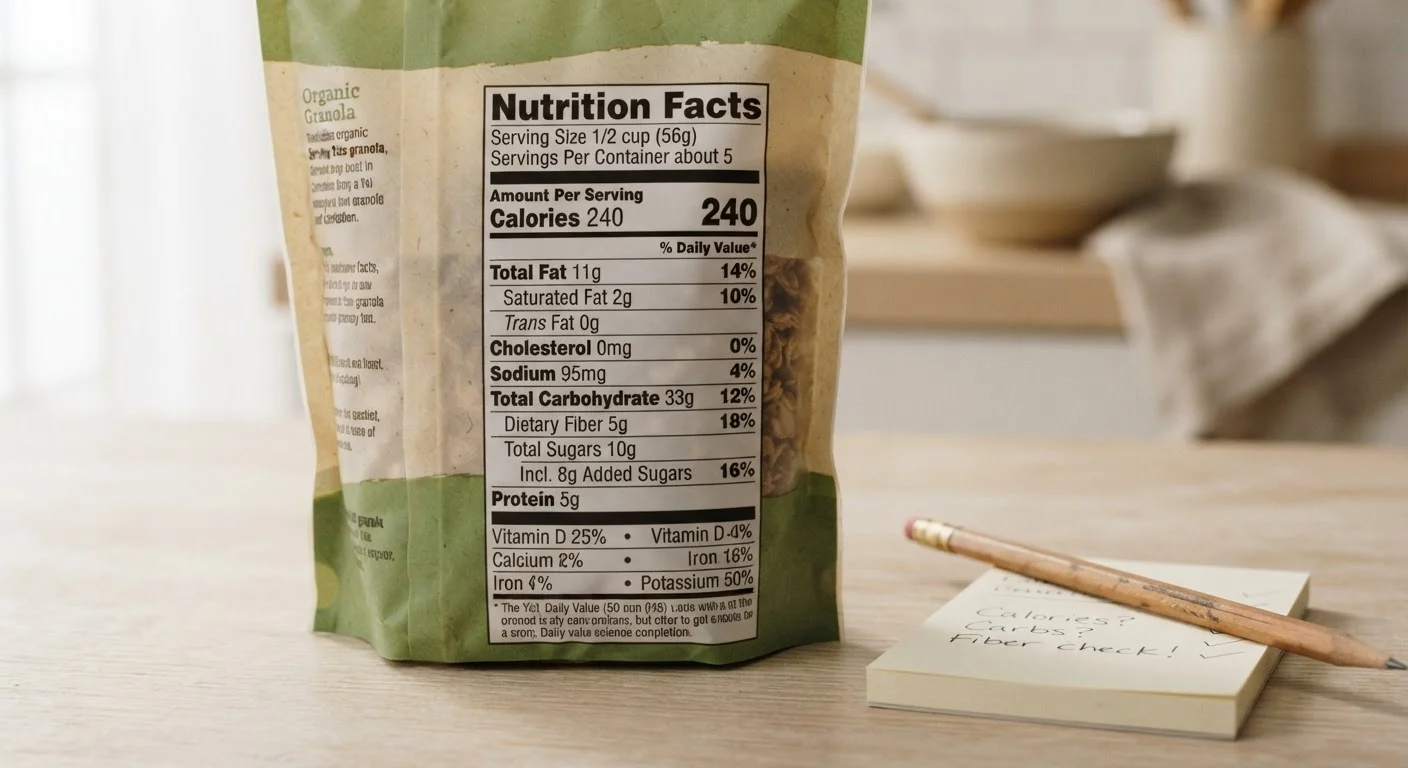
Photo: YetaWellness.com | Explore Trending Blogs editorial
What Macronutrients Are — and Why Labels Track Them
Every packaged food sold in the United States is required by the FDA to display a Nutrition Facts panel. The three largest line items — carbohydrates, protein, and fat — are the macronutrients, meaning nutrients your body needs in relatively large amounts to function. Each one serves distinct roles: carbohydrates provide quick energy, protein supports tissue repair and immune function, and fat aids hormone production and fat-soluble vitamin absorption.
If you're new to the concept, our introduction to macronutrients covers the fundamentals without the jargon. This article goes one step further — translating the specific numbers printed on labels into practical meaning.
| Calories per gram — Carbohydrates | 4 kcal/g (FDA Nutrition Labeling guidelines) |
| Calories per gram — Protein | 4 kcal/g (FDA Nutrition Labeling guidelines) |
| Calories per gram — Fat | 9 kcal/g (FDA Nutrition Labeling guidelines) |
| %DV reference calorie level | 2,000 calories/day (FDA standard reference amount for Nutrition Facts panels) |
| AMDR for Carbohydrates | 45–65% of daily calories (National Academies of Sciences, Engineering, and Medicine) |
| AMDR for Fat | 20–35% of daily calories (National Academies of Sciences, Engineering, and Medicine) |
| AMDR for Protein | 10–35% of daily calories (National Academies of Sciences, Engineering, and Medicine) |
| %DV threshold for "high" in a nutrient | 20% or more per serving (FDA %DV guidance) |
One important starting point: every gram listed on a label represents actual mass, not calories. Because each macronutrient releases a different amount of energy per gram, a food with equal gram counts of fat and carbohydrate will not have equal calorie contributions from each.
Decoding Grams, Calories, and Percent Daily Values
Three distinct units appear on virtually every label, and confusing them is one of the most common reading mistakes.
Grams (g)
The raw weight of each macronutrient in one serving. These numbers are additive — if you eat two servings, you double the grams. Use gram counts when you want to compare the actual amount of a nutrient across foods.
Calories from each macronutrient
Labels show total calories per serving, but not always the per-macronutrient calorie breakdown. You can calculate it yourself using standard energy values:
- Carbohydrates: 4 calories per gram
- Protein: 4 calories per gram
- Fat: 9 calories per gram
So a food with 10 g of fat contributes roughly 90 calories from fat alone — more than double the calorie load of 10 g of carbohydrate or protein. This is why fat-dense foods are calorically compact without necessarily being large in volume.
Percent Daily Value (%DV)
The %DV tells you how much a nutrient in one serving contributes toward a general daily reference amount. The FDA bases these on a 2,000-calorie-per-day diet — a benchmark, not a universal prescription. Use %DV as a quick relative guide: 5% or less is generally considered low for a nutrient, and 20% or more is considered high. For a fuller walkthrough of the entire panel, see reading a nutrition label without getting lost in the numbers.
Macronutrient Ratios: What They Mean in Practice
A macronutrient ratio expresses how much of a food's total calories come from each macronutrient, typically as a percentage. For example, a food where 50% of calories come from carbohydrates, 30% from fat, and 20% from protein has a 50/30/20 ratio.
Dietary guidelines from the National Academies of Sciences, Engineering, and Medicine suggest general Acceptable Macronutrient Distribution Ranges (AMDRs) for healthy adults:
- Carbohydrates: 45–65% of total daily calories
- Fat: 20–35% of total daily calories
- Protein: 10–35% of total daily calories
These ranges are intentionally wide because individual needs vary based on age, activity level, health status, and personal goals. Rather than targeting an exact ratio, most nutrition professionals recommend focusing on food quality within a reasonable range. To explore where specific foods fall, food sources ranked by macronutrient density provides a useful lookup reference.
Remember that macronutrients are only part of the nutritional picture. vitamins and minerals (micronutrients) play equally essential roles that the macronutrient section of a label doesn't capture.
This article is for general informational and educational purposes only and is not a substitute for personalized medical or dietary advice. Consult a registered dietitian or qualified healthcare provider for guidance specific to your health needs.
The content on this site is for informational purposes only and is not a substitute for professional advice. Always consult a qualified professional for guidance specific to your situation.