
Whole Foods vs. Processed Foods: Understanding the Spectrum

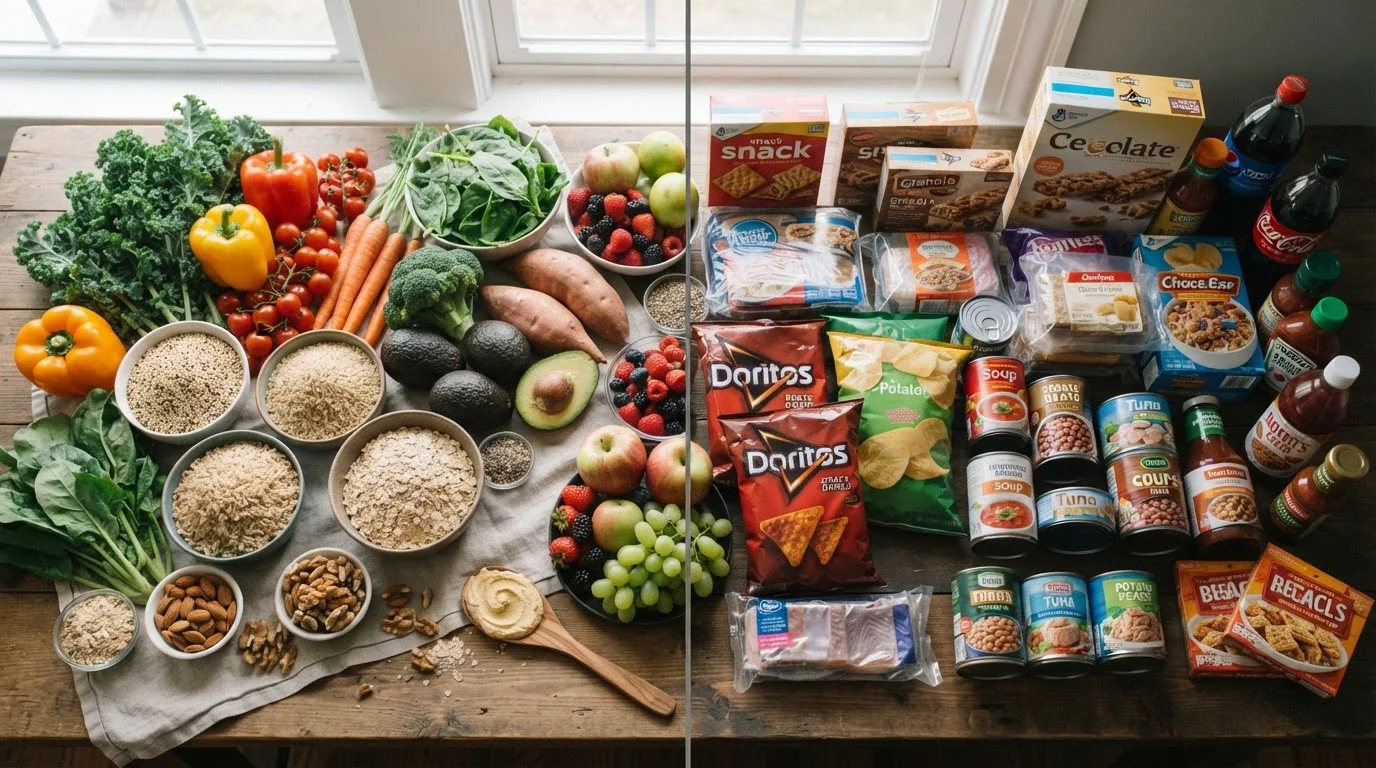
Photo: YetaWellness.com | Explore Trending Blogs editorial
Key Takeaways
- Processing exists on a spectrum; canned beans and packaged cookies are not nutritionally equivalent.
- The NOVA classification system organizes foods into four groups based on the nature and degree of processing.
- Ultra-processed foods, not minimally processed ones, are most consistently linked to adverse health outcomes in research.
- Whole foods preserve the natural 'food matrix' — the structure that influences how nutrients are absorbed.
- A realistic, healthy diet can include some processed foods alongside a foundation of whole and minimally processed options.
What 'Processed' Actually Means
The word processed triggers alarm for many consumers, but it describes an enormous range of foods — from pasteurized milk to neon-colored snack cakes. Before comparing whole foods against processed ones, it helps to understand that virtually all food is processed in some way. Washing, cutting, cooking, and fermenting are all forms of processing.
The more useful question is: how much has a food been altered from its original state, and what was added or removed in the process? Two widely used frameworks help answer this. The DGA distinguishes nutrient-dense minimally processed foods from nutrient-poor highly processed ones, while the NOVA classification system — developed by researchers at the University of São Paulo — divides all foods into four groups based on the degree and purpose of industrial processing.
NOVA's four groups are: (1) unprocessed or minimally processed foods, such as fresh fruit, plain oats, and dried beans; (2) processed culinary ingredients, such as olive oil, flour, and salt; (3) processed foods, such as canned fish, cheese, and cured meats; and (4) ultra-processed foods (UPF), such as packaged snacks, reconstituted meat products, and sugar-sweetened beverages. Group 4 is where most research concern is concentrated.
How Whole Foods and Ultra-Processed Foods Differ
| Criterion | Whole Foods | Ultra-Processed Foods |
|---|---|---|
| Degree of alteration | Minimal to none | Extensive industrial reformulation |
| Food matrix integrity | Largely preserved | Disrupted or absent |
| Additive content | None or minimal | High — emulsifiers, flavors, colors |
| Fiber content | Typically high | Often low after refinement |
| Added sugar / sodium | Naturally occurring only | Frequently high |
| Convenience | Variable; may require preparation | High; ready-to-eat |
| Cost | Variable; can be affordable | Often low per serving |
| Research association | Linked to better diet quality | Associated with higher chronic disease risk |
Whole foods — think a raw apple, a handful of walnuts, or a cup of cooked brown rice — arrive at your plate with their food matrix largely intact. The food matrix refers to the physical and chemical structure of a food that affects how its nutrients are digested and absorbed. Fiber in an apple, for example, slows sugar absorption differently than the same sugars dissolved in apple juice stripped of its fiber.
Ultra-processed foods, by contrast, are industrially formulated from refined ingredients and typically contain additives — emulsifiers, artificial flavors, colorings, and preservatives — that are not found in home kitchens. Research published in journals including The BMJ and JAMA Internal Medicine has associated higher ultra-processed food intake with increased risk of cardiovascular disease, obesity, and type 2 diabetes, though researchers note these are observational associations and causality is still being investigated.
For a practical look at which everyday foods deliver the most protein, carbohydrate, or fat per serving, see our macronutrient density reference guide.
Where Minimally Processed Foods Fit In
One of the most practical insights from the NOVA framework is that minimally processed foods are not the nutritional enemy. Frozen vegetables, plain canned tomatoes, unsweetened oat-based cereals, and pasteurized dairy are all processed to some degree — but they retain most of their original nutritional value and do not carry the additive load of ultra-processed products.
A realistic American grocery run rarely consists entirely of farmers'-market produce and freshly milled grains. Canned beans are shelf-stable, affordable, and nutritionally comparable to home-cooked dried beans. Frozen spinach provides the same key micronutrients as fresh spinach, sometimes with higher retention because it is flash-frozen shortly after harvest. Leaning on these minimally processed staples is not a nutritional compromise — it is a practical strategy.
Where to draw a more meaningful line is with UPF that displace whole foods at most meals. If breakfast is a sugary grain-based bar, lunch is flavored potato chips, and dinner is a reconstituted frozen entrée high in sodium, the cumulative effect on micronutrient intake and dietary quality is significant. For a deeper look at how whole foods and supplements compare for meeting micronutrient needs, see our article on food vs. supplements for micronutrient needs.
Practical Steps Toward a More Whole-Food Pattern
Shifting toward a whole-food-dominant eating pattern does not require discarding every packaged item in your pantry. Research and clinical guidance consistently support a gradual, sustainable approach:
- Use the ingredient list as a compass. A short ingredient list of recognizable items is a reliable signal that a food is minimally processed.
- Anchor meals around whole or minimally processed foods. Build your plate with a vegetable, a whole grain or legume, and a protein source first, then add condiments or convenience items as supporting players.
- Swap one UPF per week. Replace a regularly consumed ultra-processed item — sweetened breakfast cereal, flavored crackers — with a minimally processed alternative like plain oats or unsalted nuts.
- Cook more often, even simply. Preparing meals from minimally processed ingredients — even just assembling a grain bowl — dramatically reduces added sugar, sodium, and synthetic additive intake compared to most packaged ready meals.
This article is for general informational and educational purposes only and is not a substitute for advice from a qualified healthcare provider or registered dietitian. If you have specific health conditions or dietary concerns, please consult a professional.
The content on this site is for informational purposes only and is not a substitute for professional advice. Always consult a qualified professional for guidance specific to your situation.