
Food vs. Supplements: When Each One Makes Sense for Micronutrient Needs

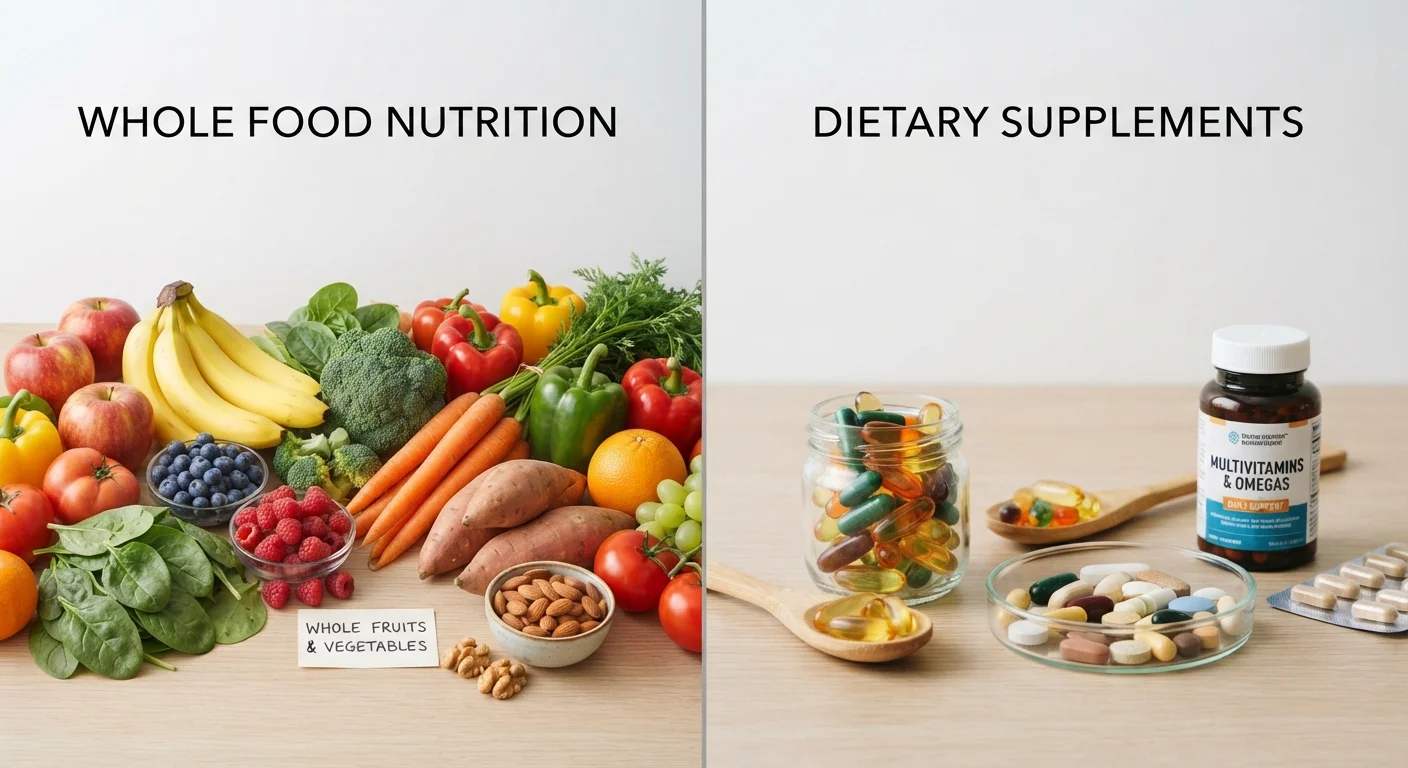
Photo: YetaWellness.com | Explore Trending Blogs editorial
Key Takeaways
- Whole foods deliver micronutrients alongside fiber, antioxidants, and other compounds that work together synergistically.
- Supplements can fill genuine gaps caused by dietary restrictions, medical conditions, or life stages like pregnancy.
- Bioavailability — how well your body absorbs a nutrient — often differs between food sources and supplement forms.
- A healthcare provider can help determine whether a supplement is necessary based on lab work and individual health history.
- Most healthy adults with varied diets do not need a broad-spectrum multivitamin to meet daily micronutrient needs.
Why Micronutrient Source Matters
Micronutrients — vitamins and minerals your body needs in relatively small amounts — are essential for everything from energy metabolism to immune defense. If you're new to the topic, our plain-language micronutrient guide covers the fundamentals.
The question of where those nutrients come from matters more than many people realize. Whole foods package micronutrients alongside fiber, phytonutrients (plant compounds with biological activity), and other vitamins and minerals that interact in ways that influence absorption and function. Supplements, by contrast, isolate or combine specific nutrients at standardized doses — useful in some situations, but structurally different from food.
Understanding these differences helps you make smarter choices rather than defaulting to either extreme: skipping supplements entirely or relying on pills to compensate for a poor diet.
The Case for Whole Foods
Nutrition science consistently supports a food-first approach because the benefits of whole foods extend well beyond their nutrient content on a label. Here's what makes them the preferred source for most people:
- Synergistic nutrients: Foods contain nutrient combinations that enhance each other's absorption. Vitamin C in bell peppers, for example, boosts iron uptake from plant foods eaten at the same meal. Our article on micronutrient synergies explores these interactions in depth.
- Natural bioavailability: Many nutrients in food come bound to compounds that aid digestion and absorption. Heme iron from meat, for instance, is absorbed more efficiently than the non-heme iron found in most supplements.
- Fiber and phytonutrients: These non-nutrient components support gut health, reduce inflammation, and appear to lower chronic disease risk — benefits that isolated supplements cannot replicate.
- Lower toxicity risk: It is very difficult to overconsume fat-soluble vitamins like A, D, E, and K through food alone. Supplements carry a real risk of exceeding safe upper limits, particularly for fat-soluble vitamins and minerals like selenium.
If you want practical strategies for getting more nutrients from foods you already eat, small preparation and pairing changes can make a meaningful difference without adding new items to your grocery list.
| Whole Foods | Dietary Supplements | |
|---|---|---|
| Nutrient complexity | Bundled with fiber, phytonutrients, co-factors | Isolated or combined at fixed doses |
| Bioavailability | Generally high; enhanced by food matrix | Varies by form and nutrient type |
| Toxicity risk | Very low for most nutrients | Real risk with fat-soluble vitamins |
| Best for deficiency correction | Slower; dependent on diet variety | Faster and more targeted |
| Accessibility and cost | Varies; fresh produce can be costly | Widely available; costs vary by product |
| Suitability for restrictions | Limited by dietary choices | Addresses gaps from restrictive diets |
| Regulatory oversight | Standard food safety rules apply | Less rigorous than pharmaceuticals (FDA) |
When Supplements Fill Legitimate Gaps
Supplements are not inherently unnecessary — they serve a real purpose in specific circumstances. Recognizing those circumstances prevents both over-reliance and under-use.
- Confirmed deficiencies: Blood tests can identify low levels of vitamin D, iron, B12, folate, and other nutrients. When a deficiency is confirmed, supplementing at a clinically appropriate dose is often the most direct corrective tool.
- Dietary restrictions: Vegans and vegetarians face higher risks of low vitamin B12 (found almost exclusively in animal products), omega-3 fatty acids, zinc, and iodine. Supplementation addresses gaps that food choices create.
- Pregnancy and lactation: Folate needs rise sharply in early pregnancy to support neural tube development, and prenatal vitamins are broadly recommended by healthcare providers for this life stage. If you are pregnant or planning to become pregnant, consult your obstetrician or midwife before starting any supplement regimen.
- Malabsorption conditions: Conditions like Crohn's disease, celiac disease, and bariatric surgery can impair nutrient absorption regardless of dietary intake, making targeted supplementation medically necessary.
- Limited sun exposure: Vitamin D synthesis in the skin depends on sunlight. People who live at high latitudes, work indoors, or have darker skin pigmentation may not produce adequate vitamin D from sun exposure alone.
Even in these cases, the goal is usually targeted supplementation for a specific shortfall — not a broad-spectrum multivitamin taken as nutritional insurance. A surprisingly nutritious-seeming diet can still miss certain nutrients; see our piece on common dietary assumptions that leave micronutrient gaps for details.
Key Trade-Offs at a Glance
Both options have distinct strengths and limitations. The table above summarizes where each approach tends to outperform the other. A few points worth emphasizing:
Bioavailability varies by form. Magnesium glycinate, for example, is absorbed more readily than magnesium oxide. If a healthcare provider recommends a supplement, the specific form matters — not just the nutrient name on the label.
More is not better. Fat-soluble vitamins (A, D, E, K) accumulate in body tissue and can reach toxic levels with prolonged high-dose supplementation. Water-soluble vitamins like C and most B vitamins are excreted in urine when consumed in excess, but very high doses of B6 have been associated with nerve damage in research settings.
If you prefer building nutrient density through food rather than tracking individual nutrients, our guide to building a micronutrient-rich eating pattern outlines practical, sustainable approaches. And understanding how whole foods differ from processed ones can help frame better everyday choices.
This article is for informational purposes only and is not a substitute for personalized medical or nutritional advice. Consult a qualified healthcare professional before starting any supplement regimen or making significant dietary changes.
The content on this site is for informational purposes only and is not a substitute for professional advice. Always consult a qualified professional for guidance specific to your situation.