
Reading a Nutrition Label for Vitamins and Minerals Without Getting Confused

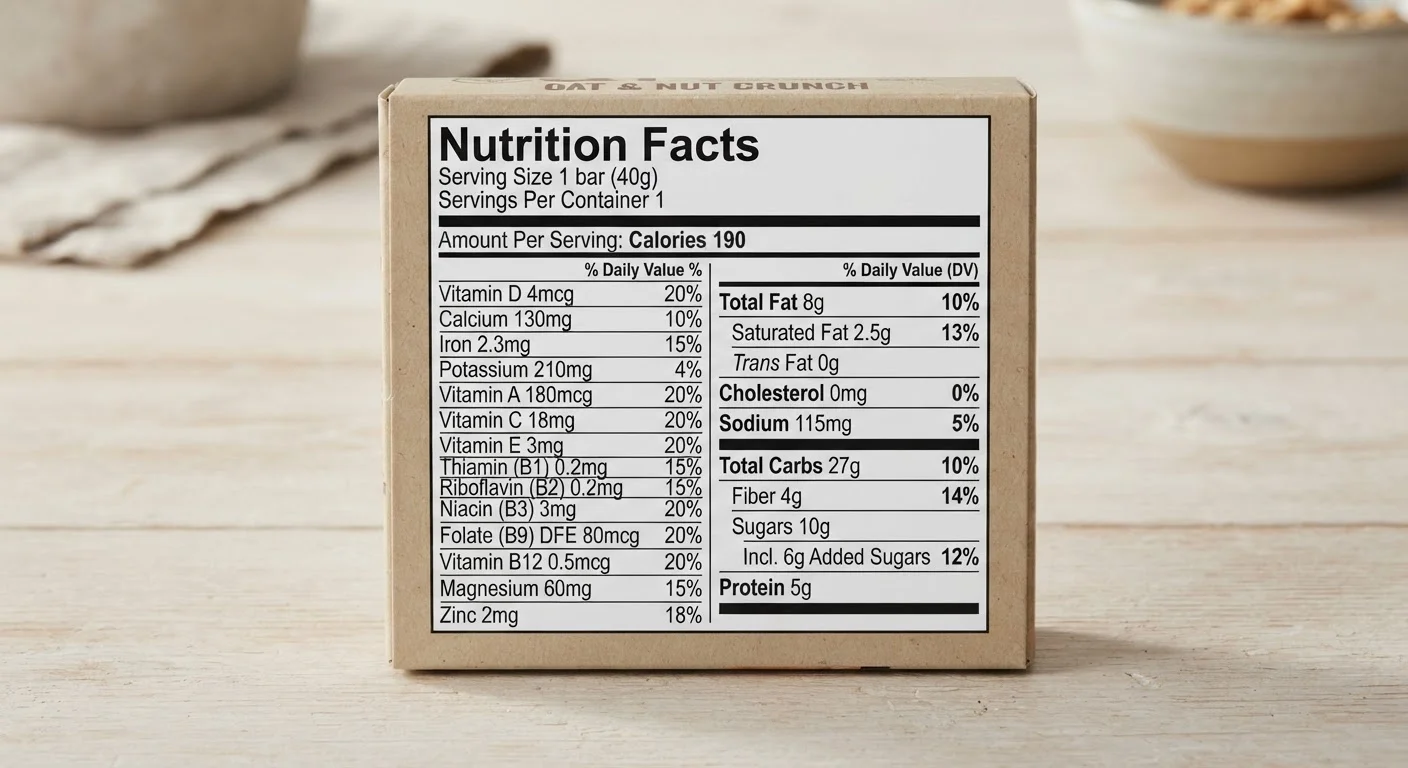
Photo: YetaWellness.com | Explore Trending Blogs editorial
Key Takeaways
- Percent Daily Value (%DV) tells you how much a nutrient one serving contributes toward a general daily goal.
- 5% DV or less is considered low; 20% DV or more is considered high for any listed nutrient.
- Only four micronutrients are federally required on all labels: vitamin D, calcium, iron, and potassium.
- Serving size directly affects every %DV figure — always check it first.
- Labels reflect a 2,000-calorie reference diet; your individual needs may differ.
- Use the label as a comparison tool, not a rigid health scorecard.
Why the Micronutrient Section Trips People Up
Most shoppers can make sense of calories or grams of fat, but the vitamin and mineral rows near the bottom of the Nutrition Facts panel feel like a different language. Units shift between micrograms (mcg) and milligrams (mg), unfamiliar nutrient names appear, and a single column of percentages seems to answer a question you haven't quite figured out how to ask.
If you're new to thinking about vitamins and minerals in your diet, the plain-language introduction to micronutrients is a useful starting point before diving into label reading. For those ready to decode the label itself, the steps below break down every element of the micronutrient section in plain terms.
What you will need
Understanding the Building Blocks Before You Read
Two concepts underpin every number in the micronutrient section. First, Percent Daily Value (%DV) is the standardized benchmark the FDA uses to show how much of a nutrient one serving of a food provides relative to a general daily goal. That goal is based on a 2,000-calorie-per-day reference diet — a number chosen for label consistency, not as a personal prescription.
Second, the absolute amount (listed in mg or mcg) is the actual quantity of the nutrient present. The FDA updated label rules in 2020 to require both figures for vitamin D and potassium, making it easier to compare foods without doing mental math.
For a deeper look at what each listed vitamin and mineral actually does in the body, the micronutrient reference guide covers all essential vitamins and key minerals clearly.
The 5–20 Rule Works Across All Nutrients
Step-by-Step: Reading the Micronutrient Rows
Follow these steps each time you pick up a packaged food and want to understand what the micronutrient section is actually telling you.
Check the serving size before anything else
Every number on the label — including all %DV figures — applies to one serving as defined on that package, not necessarily to the whole container. Find the Serving Size at the very top of the panel and confirm how many servings the package contains. If you eat two servings, every %DV figure doubles.
Identify which nutrients are listed
Federal rules require four micronutrients on every Nutrition Facts label: vitamin D, calcium, iron, and potassium. These were prioritized because Americans as a population tend to fall short on them. Manufacturers may voluntarily list additional vitamins and minerals — vitamin A, vitamin C, and B vitamins appear frequently — but their presence is not mandatory unless the manufacturer makes a nutrient claim about them.
Apply the 5–20 %DV quick rule
The FDA provides a straightforward benchmark for interpreting any %DV figure:
- 5% DV or less = a low source of that nutrient per serving
- 20% DV or more = a high source of that nutrient per serving
Values in between indicate a moderate contribution. This scale applies equally to nutrients you may want more of (calcium, iron) and nutrients where excess is a concern in other parts of the label (like sodium — though sodium is a mineral, its %DV interpretation follows the same 5–20 rule).
Read the absolute amounts for precision
For vitamin D and potassium, the FDA now requires the actual amount in mcg or mg alongside the %DV. This is especially useful if a healthcare provider has given you a specific daily target in milligrams. For nutrients that still show only %DV, you can calculate the approximate absolute amount: multiply the %DV by the Daily Value reference amount for that nutrient (e.g., the Daily Value for calcium is 1,300 mg, so 15% DV ≈ 195 mg).
Read the footnote at the bottom of the panel
The footnote states: "The % Daily Value tells you how much a nutrient in a serving of food contributes to a daily diet. 2,000 calories a day is used for general nutrition advice." This is a reminder that %DV is a population-level reference, not a personal prescription. Children, pregnant individuals, older adults, and people managing specific health conditions often have different micronutrient requirements. Use the label as a general compass, and consult a healthcare professional for personalized targets.
Putting It All Together at the Store or at Home
Once you understand %DV, the label becomes a practical comparison tool. Place two similar products side by side — say, two breakfast cereals — and look at the micronutrient rows. A higher %DV for iron or calcium at the same serving size means that food contributes more toward your daily needs from that one serving.
Keep in mind that even a thoughtful diet can have blind spots. The common micronutrient gaps article explores patterns that leave otherwise healthy eaters short on key nutrients — label literacy is one tool for catching those gaps early.
Labels are also only part of the picture. Whole, minimally processed foods like fruits, vegetables, and legumes rarely carry a Nutrition Facts panel but are among the richest micronutrient sources available. Use the label as a guide for packaged items, and let variety across whole foods fill in the rest. If you have questions about specific nutrient needs — especially for pregnancy, older adults, or chronic health conditions — consult a registered dietitian or your healthcare provider.
This article is for informational purposes only and is not a substitute for professional medical or dietary advice. Consult a qualified healthcare professional for guidance tailored to your individual health needs.
The content on this site is for informational purposes only and is not a substitute for professional advice. Always consult a qualified professional for guidance specific to your situation.