
Sleep Habits

Evening Wind-Down Routines: What Sleep Researchers Actually Recommend

Evening Wind-Down Routines: What Sleep Researchers Actually Recommend

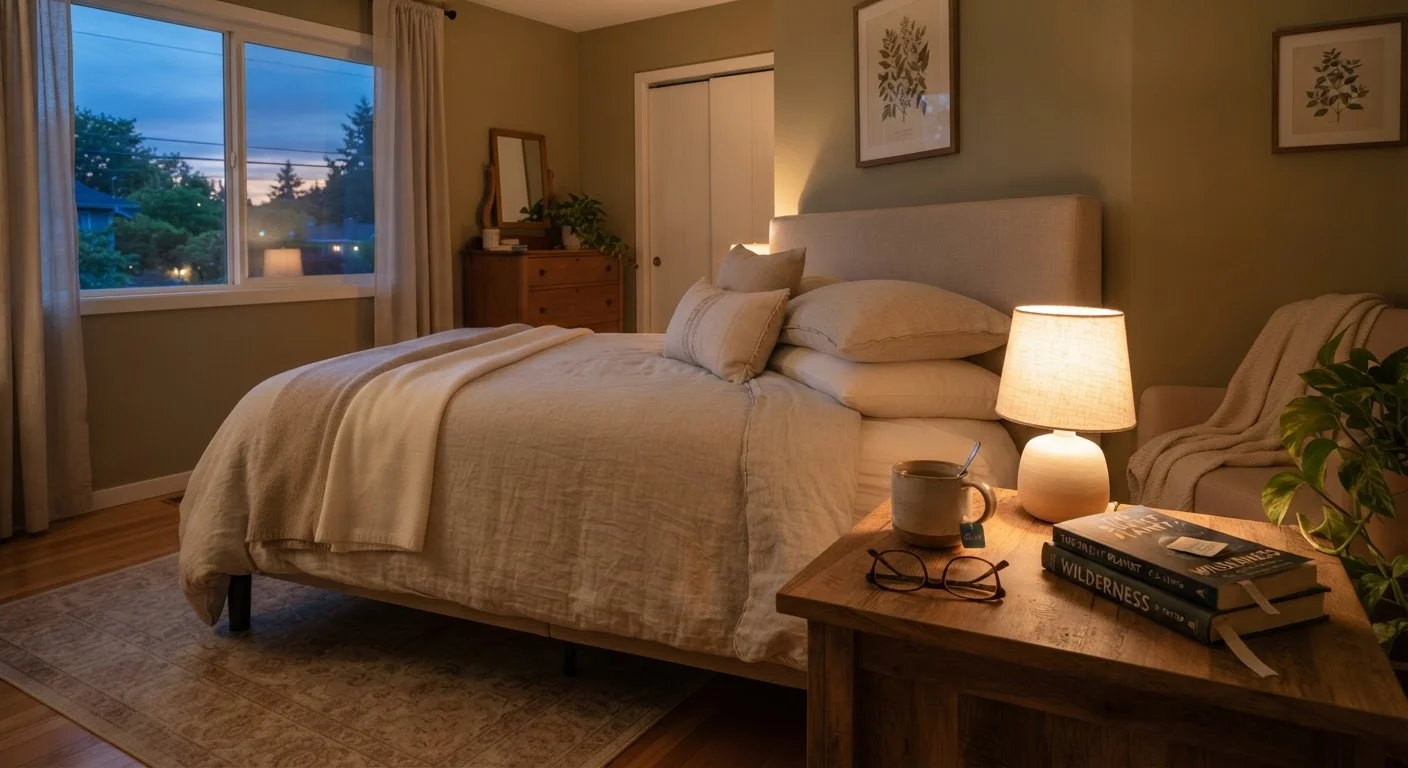
Photo: YetaWellness.com | Explore Trending Blogs editorial

A structured pre-sleep routine signals your nervous system to slow down. Here are evidence-informed habits worth building into your night.

Key Takeaways

  • Starting a wind-down routine 60–90 minutes before bed gives your nervous system time to shift out of alert mode.
  • Reducing bright and blue-spectrum light in the evening supports the natural rise in melatonin production.
  • Consistent sleep and wake times reinforce circadian timing more powerfully than any single bedtime habit.
  • Mental decompression practices — like journaling or gentle stretching — lower physiological arousal before sleep.
  • Common habits that feel relaxing, such as scrolling social media, can actually delay sleep onset.

Why a Wind-Down Routine Works

Sleep doesn't flip on like a switch. Your body transitions through a gradual physiological shift — core temperature drops, heart rate slows, and melatonin levels rise — that takes time to complete. A deliberate wind-down routine works by actively supporting this transition rather than fighting it.

From a neuroscience standpoint, the brain's arousal systems (including the noradrenergic and orexin pathways) need a period of reduced stimulation before sleep pressure can take over. When you go from a high-stimulation activity directly to bed, those systems stay active longer than they should, making it harder to fall asleep and stay asleep through the early cycles. To understand how those cycles actually unfold, see how your brain moves through sleep stages each night.

Research consistently shows that a structured pre-sleep period — generally 60 to 90 minutes — is associated with shorter sleep onset latency and improved sleep quality, particularly in adults with mild insomnia symptoms.

Evidence-Informed Practices Worth Building Into Your Night

The following practices are drawn from sleep medicine research and clinical recommendations. None of them require special equipment or significant time investment — just consistency.

1

Dim lights and eliminate blue-spectrum screens at least 60 minutes before your target bedtime.

Light — especially short-wavelength blue light from phones, tablets, and LED overhead fixtures — suppresses melatonin secretion via retinal photoreceptors called intrinsically photosensitive retinal ganglion cells (ipRGCs). Suppressing melatonin delays the circadian signal for sleep onset. Dimming your environment removes this interference and allows melatonin to rise on its natural schedule.
Example: Switch overhead lights to a warm-toned lamp around 9 p.m. and place your phone face-down or in another room. If you need to use a device, enable a night-mode setting that shifts the screen toward warmer tones.
2

Set a consistent 'anchor' bedtime and wake time — including weekends.

Your circadian clock is regulated by consistent timing cues. Irregular sleep schedules create a form of 'social jet lag' that fragments sleep architecture and reduces the proportion of restorative slow-wave sleep. Anchoring both endpoints of your sleep window — not just bedtime — strengthens circadian rhythmicity over time.
Example: If you want to wake at 6:30 a.m., count back your needed sleep hours (typically 7–9 for most adults) and set a firm lights-out time around 10:30–11 p.m. every night, Saturday included.
3

Perform a brief 'cognitive offload' — write tomorrow's tasks or concerns onto paper before bed.

Pre-sleep cognitive arousal, including worry and planning thoughts, is one of the most commonly cited barriers to sleep onset. Research published in journals such as Experimental Brain Research has found that writing a specific, concrete to-do list for the next day can meaningfully reduce time spent awake before falling asleep, more so than journaling about completed tasks.
Example: Spend five minutes writing out three to five specific tasks or unresolved thoughts before getting into bed. The act of externalizing them onto paper reduces the brain's need to rehearse them.
4

Incorporate gentle physical relaxation — progressive muscle relaxation or light stretching — in the final 30 minutes.

Muscle tension is a physiological marker of stress arousal. Progressive muscle relaxation (PMR), a technique developed by Edmund Jacobson in the early 20th century and extensively validated in clinical sleep research, systematically reduces neuromuscular tension and lowers sympathetic nervous system activity. Light yoga stretching achieves a similar effect without equipment.
Example: Lie down and work through each muscle group from feet to forehead — tense each for five seconds, then release for 10. A single pass takes about 10 minutes and measurably lowers heart rate.
5

Keep your wind-down environment cool, quiet, and consistent.

Core body temperature naturally drops as part of sleep initiation. A bedroom environment that is too warm slows this process. Research suggests a room temperature between roughly 65–68°F (18–20°C) supports optimal thermoregulation for most adults, though individual preference varies. Consistent environmental cues also act as conditioned stimuli that reinforce sleep behavior over time.
Example: Set a programmable thermostat to lower the room temperature 30 minutes before your target bedtime, or use a fan for both airflow and consistent ambient sound masking.

Quick Wins You Can Start Tonight

If you're not sure where to begin, these are the changes with the strongest evidence-to-effort ratio. They complement a broader approach — see a comprehensive sleep habit guide for the full picture.

high Put your phone in a different room — or at minimum, flip it face-down and silence notifications — starting 60 minutes before bed tonight.
high Write down three specific tasks you need to do tomorrow on a notepad by your bed before turning out the light.
medium Lower your thermostat or turn on a fan to cool your bedroom before you begin your wind-down period.
medium Replace overhead lighting with a single warm-toned lamp in the room where you spend your last hour before bed.
high Set a recurring 'wind-down alarm' 90 minutes before your target bedtime as a consistent cue to begin your routine.

This article provides general health information for educational purposes and is not a substitute for personalized medical advice. If you experience persistent sleep difficulties, please consult a qualified healthcare professional.

Sleep Health Editorial Team

YetaWellness.com | Explore Trending Blogs

Sleep Health Editorial Team is the collective byline for our editorial team and contributor network. Articles published under this byline or an editorial pen name are researched, written, and reviewed according to our editorial standards for clarity, consistency, and independence before publication.

Sleep ScienceSleep HabitsSleep Disorders
View author profile

The content on this site is for informational purposes only and is not a substitute for professional advice. Always consult a qualified professional for guidance specific to your situation.