
Sleep Science: A Complete Guide to How Rest Works in the Human Body

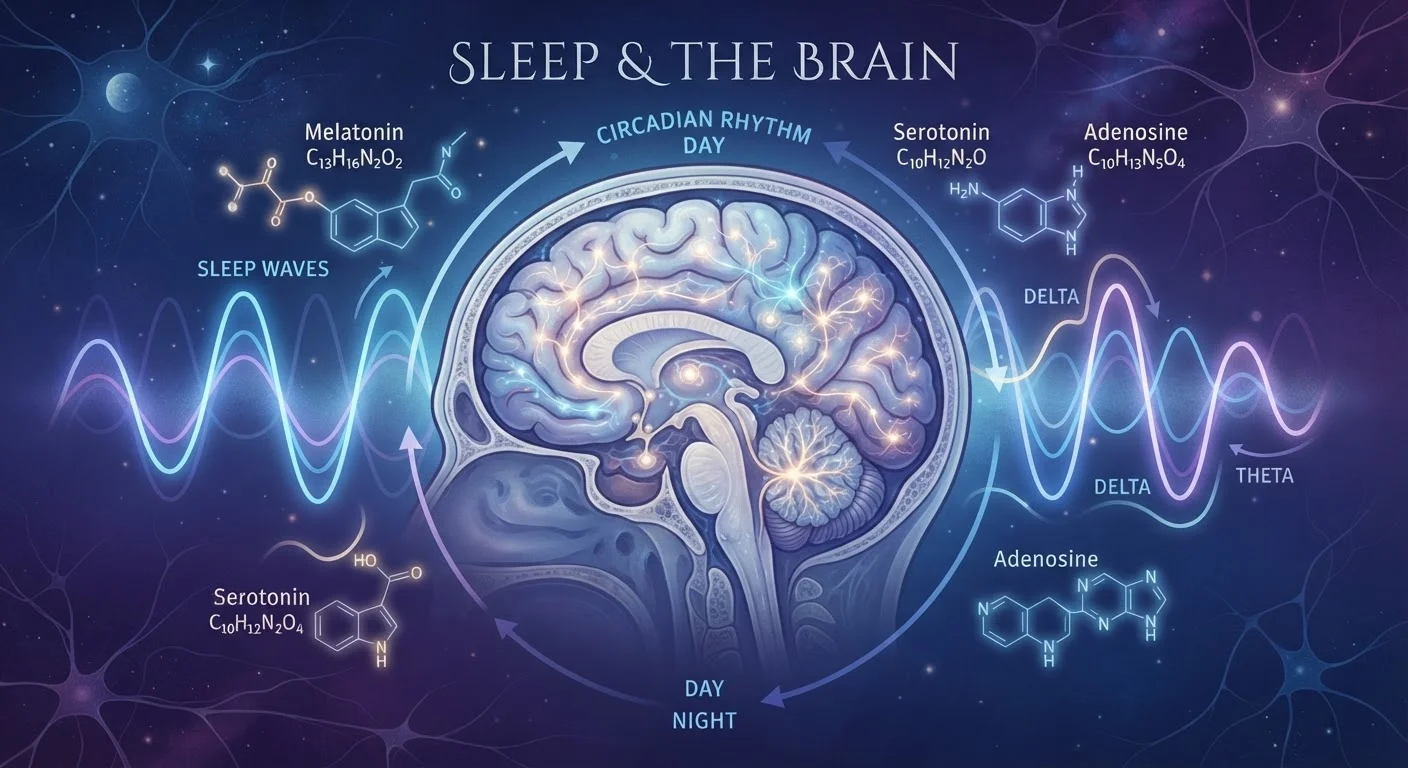
Photo: YetaWellness.com | Explore Trending Blogs editorial
Key Takeaways
- Sleep is a biologically active state driven by circadian rhythms and homeostatic pressure.
- The brain cycles through distinct NREM and REM stages, each serving unique restorative functions.
- Hormones like melatonin and cortisol regulate sleep timing and depth in measurable ways.
- Chronic sleep deprivation is linked to impaired cognition, immune function, and metabolic health.
- Evidence-based habits aligned with your biology can meaningfully improve sleep quality.
Why We Sleep: The Biological Imperative
Sleep is not passive downtime. Every hour of sleep triggers a cascade of biological processes — cellular repair, immune reinforcement, memory consolidation, and hormonal regulation — that cannot be fully replicated during wakefulness. Researchers describe sleep as governed by two interacting systems: the circadian process (an internal ~24-hour clock regulated by the suprachiasmatic nucleus in the brain) and the homeostatic process (a pressure that builds with every waking hour, driven largely by adenosine accumulation).
When both systems align — a well-timed circadian signal coinciding with sufficient sleep pressure — the conditions for deep, restorative sleep emerge. Disrupting either system, through irregular schedules or artificial light exposure late at night, diminishes sleep quality even when total time in bed appears adequate. For readers who want a jargon-free introduction to these concepts, see our beginner's guide to sleep science.
Sleep Architecture: Cycles and Stages Explained
A full night's sleep is structured into repeating 90-to-110-minute cycles, each containing distinct stages. These stages fall into two broad categories: NREM sleep and REM sleep.
- NREM Stage 1 (N1): A brief transitional phase lasting a few minutes, characterized by slowing brain waves and muscle relaxation.
- NREM Stage 2 (N2): The most time-dense stage across the night; sleep spindles and K-complexes appear — neural events associated with memory processing and sensory gating.
- NREM Stage 3 (N3 / Slow-Wave Sleep): The deepest, most physically restorative stage. Growth hormone secretion peaks here, and immune function is actively supported.
- REM Sleep: Characterized by vivid dreaming, near-paralyzed muscles, and highly active brain regions. Critical for emotional regulation and procedural memory consolidation.
Early cycles in the night are weighted toward N3 slow-wave sleep; later cycles shift toward longer REM periods. This architecture means cutting sleep short disproportionately reduces REM — a fact with real implications for mood and learning. Our detailed article on sleep cycles and stages explores each phase in greater depth.
Track your wake time first, not your bedtime. A fixed, consistent wake time is the single most reliable anchor for your circadian clock — bedtime will naturally follow once sleep pressure and rhythm align.
Avoid using caffeine to override late-afternoon sleepiness. That dip — often called the post-lunch dip — is a genuine circadian trough, and masking it with caffeine can push your sleep onset later without reducing the underlying sleep pressure.
The Hormones That Drive Sleep
Several hormones are central to sleep regulation, acting as biochemical signals that prepare the body for rest or wakefulness.
- Melatonin
- Produced by the pineal gland in response to darkness, melatonin signals that it is nighttime — it does not force sleep, but it shifts the body's internal clock toward readiness for it. Light exposure, particularly blue-spectrum light, suppresses melatonin production.
- Cortisol
- Often called the "stress hormone," cortisol follows a diurnal rhythm — lowest around midnight, rising sharply in the early morning to promote alertness. Chronic stress disrupts this rhythm, contributing to difficulty falling or staying asleep.
- Growth Hormone
- Secreted predominantly during N3 slow-wave sleep, growth hormone supports tissue repair, muscle maintenance, and metabolic regulation.
- Adenosine
- A metabolic byproduct that accumulates during wakefulness and is cleared during sleep. Caffeine works by blocking adenosine receptors, temporarily masking the sensation of sleepiness without eliminating the underlying pressure.
What the Brain Does While You Sleep
Far from shutting down, the sleeping brain is remarkably active. Neuroimaging studies show that during REM sleep, regions associated with emotion processing — including the amygdala and prefrontal cortex — show activity patterns distinct from wakefulness, supporting the hypothesis that sleep helps recalibrate emotional responses.
One of the most significant recent areas of sleep neuroscience involves the glymphatic system — a waste-clearance network that becomes substantially more active during sleep, flushing metabolic byproducts including beta-amyloid proteins linked to neurodegenerative disease. This research underscores that sleep is not merely rest for the brain; it is maintenance. For a broader perspective on how rest supports the mind, see the science behind the rest-mind connection.
Sleep Deprivation: What the Research Shows
The consequences of inadequate sleep are well-documented across multiple body systems. Cognitive performance — including reaction time, working memory, and decision-making — degrades measurably after even one night of shortened sleep. Crucially, individuals often underestimate their own impairment, which is itself a known effect of sleep deprivation.
1 in 3
American adults reporting insufficient sleep
According to the CDC, more than a third of U.S. adults report regularly sleeping less than the recommended seven hours per night.
17+ hrs
Wakefulness equating to impairment similar to alcohol
Research published in peer-reviewed journals has found that 17–19 hours of sustained wakefulness produces cognitive impairment comparable to a blood alcohol level of 0.05%.
70 million
Americans affected by sleep disorders
The American Academy of Sleep Medicine estimates approximately 70 million Americans are affected by chronic sleep disorders.
Metabolically, insufficient sleep is associated with altered insulin sensitivity and shifts in appetite-regulating hormones (ghrelin and leptin) that favor increased caloric intake. Immunologically, sleep-deprived individuals show reduced antibody responses following vaccination in controlled studies. If patterns of poor or disrupted sleep are affecting your daily life, reviewing the range of recognized sleep disorders may help you identify whether an underlying condition warrants professional evaluation.
Translating Sleep Science Into Daily Practice
Understanding the biology of sleep points directly toward evidence-based adjustments. Consistency matters most: the research consistently shows that irregular sleep timing disrupts circadian alignment even when total hours appear sufficient. Anchoring both a fixed wake time and a consistent bedtime — even on weekends — is among the most impactful single behaviors supported by sleep science.
Light management shapes melatonin timing: bright, natural light in the morning helps anchor the circadian clock, while dimming artificial light in the two hours before bed supports its natural rise. Temperature also plays a measurable role — core body temperature drops as part of sleep initiation, and a cool sleep environment facilitates this process.
For a comprehensive framework that translates these principles into lasting routines — including environment, stress management, and behavioral strategies — see our guide on building a sleep habit that lasts. Good sleep habits are not rigid rules; they are behaviors calibrated to your own biology.
This article is for informational purposes only and does not constitute medical advice. If you are experiencing significant or persistent sleep problems, please consult a qualified healthcare professional.
The content on this site is for informational purposes only and is not a substitute for professional advice. Always consult a qualified professional for guidance specific to your situation.