
Sleep Timing vs. Sleep Duration: Which Matters More for Health?

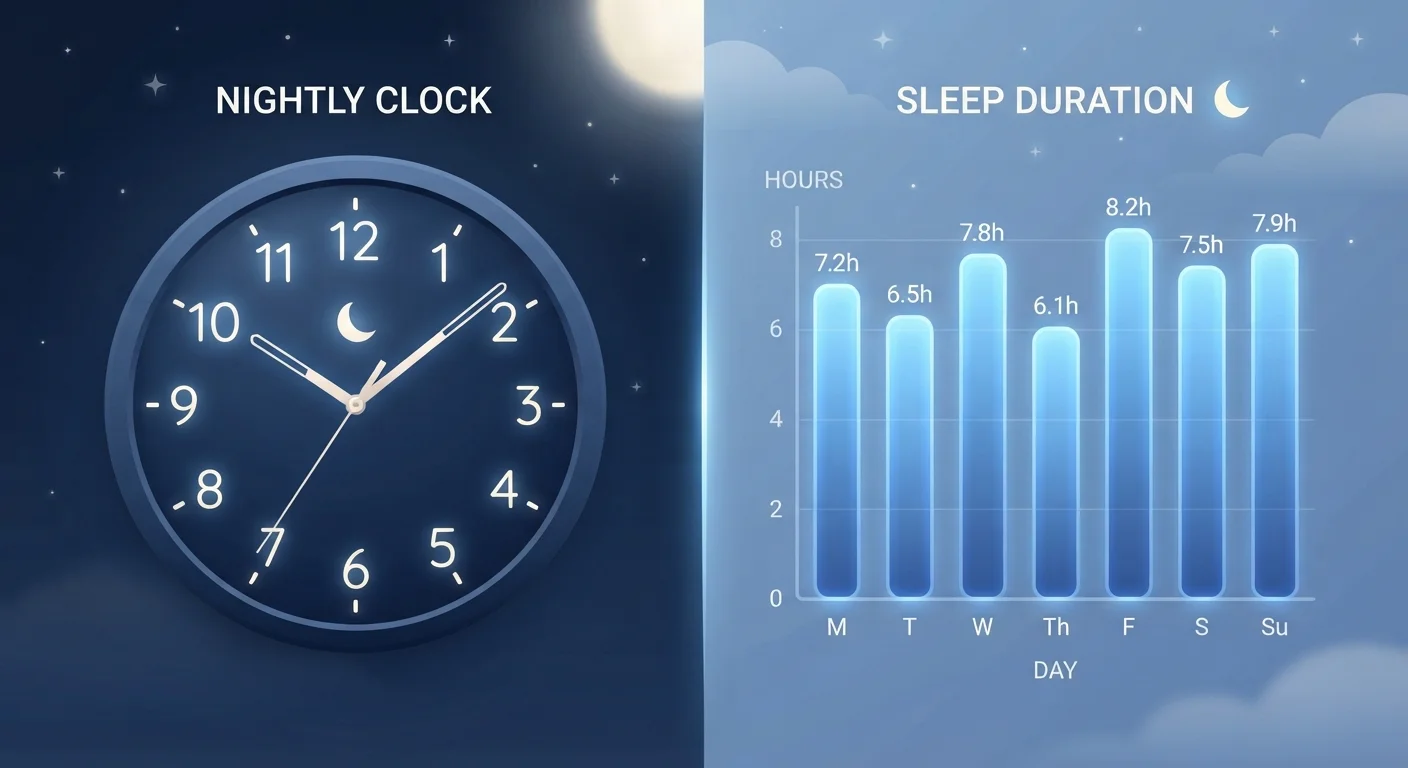
Photo: YetaWellness.com | Explore Trending Blogs editorial
Key Takeaways
- Both sleep timing and sleep duration independently influence metabolic, cardiovascular, and cognitive health.
- Sleeping against your body's natural circadian rhythm can harm health even when total hours are adequate.
- Most adults need 7–9 hours of sleep, but those hours are most restorative when aligned with their chronotype.
- Consistent sleep and wake times reinforce the circadian system and improve sleep quality over time.
- Individuals with shift work or late chronotypes face elevated health risks tied specifically to mistimed sleep.
The Core Question: Is When You Sleep as Important as How Long?
For decades, public health messaging focused almost exclusively on sleep duration — the widely cited recommendation of 7–9 hours for adults from the American Academy of Sleep Medicine. But a growing body of chronobiology research is complicating that picture: the timing of those hours, relative to your internal body clock, appears to carry its own significant health weight.
This distinction has real consequences. Someone who consistently sleeps from 2 a.m. to 10 a.m. logs the same hours as someone sleeping 10 p.m. to 6 a.m. — yet their metabolic, hormonal, and cognitive outcomes can differ meaningfully. Understanding why requires a brief look at how the circadian system works.
The human body runs on a roughly 24-hour internal clock governed by the suprachiasmatic nucleus in the brain. This clock regulates the release of melatonin, cortisol, body temperature, and dozens of other physiological processes in a time-dependent pattern. Sleep that aligns with this rhythm is processed differently — and more efficiently — than sleep that fights it. For more on how consistency shapes this system, see how a consistent bedtime affects your body clock.
What Sleep Duration Research Actually Shows
The evidence linking insufficient sleep duration to poor health outcomes is robust. Adults who regularly sleep fewer than 7 hours per night show elevated risks for obesity, type 2 diabetes, cardiovascular disease, and impaired immune function, according to reviews published in journals including Sleep and JAMA Internal Medicine. Cognitive impairment — including reduced attention, working memory, and emotional regulation — is measurable after even one or two nights of restricted sleep.
Importantly, not everyone's duration needs are identical. Genetics play a documented role in determining how much sleep an individual requires to function optimally. Genetic research on short and long sleepers reveals that a small subset of people carry variants that allow them to function on less sleep — but these individuals are rare, and self-reported tolerance for short sleep is a poor predictor of actual physiological resilience.
It's also worth noting that sleeping too long — consistently more than 9 hours without a medical explanation — is associated with its own health risks, though researchers debate whether long sleep is a cause or a symptom of underlying illness.
| Sleep Duration | Sleep Timing | |
|---|---|---|
| Primary health concern addressed | Total restorative hours obtained | Alignment with circadian rhythm |
| Key associated risks when inadequate | Cognitive impairment, metabolic disease, immune suppression | Metabolic syndrome, cardiovascular disease, mood disruption |
| Influenced by genetics | Yes — individual sleep need varies | Yes — chronotype is partly heritable |
| Practical levers for improvement | Earlier bedtime, reduced sleep disruption | Light exposure, consistent schedule, reducing social jetlag |
| Evidence base | Extensive, long-established research | Strong and growing; some findings still emerging |
| Flexibility for shift workers | Achievable with schedule adjustment | Difficult; misalignment is often unavoidable |
What Sleep Timing Research Reveals
Chrono-epidemiology — the study of how biological timing affects disease risk — has produced striking findings in recent years. Studies of shift workers, who routinely sleep at biologically misaligned times, consistently show higher rates of metabolic syndrome, cardiovascular disease, and certain cancers compared to day workers, even when total sleep hours are controlled for.
Beyond shift work, research on social jetlag — the mismatch between a person's natural sleep timing and their social schedule — shows that even modest misalignment of one to two hours on weekdays versus weekends is associated with increased inflammatory markers and poorer cardiometabolic profiles. This phenomenon is explored further in our piece on sleeping in on weekends versus keeping a fixed schedule.
Timing also shapes the architecture of sleep itself. Slow-wave (deep) sleep is weighted toward the first half of a sleep period, while REM sleep predominates in the second half. Sleeping at an unusual circadian phase can compress or distort these stages, meaning eight hours at the wrong time may not deliver the same restorative benefit as eight hours at the right one. Sleep consistency versus duration research adds further nuance to this comparison.
Chronotype: Why 'Right Timing' Differs Between People
One complexity in this debate is that optimal sleep timing is not universal — it is shaped by each person's chronotype, their genetically influenced tendency toward being an early riser or a late sleeper. Forcing a confirmed evening chronotype to sleep on an early-bird schedule imposes its own form of circadian misalignment, with measurable consequences for daytime alertness and mood.
This is why rigid prescriptions like "everyone should be asleep by 10 p.m." miss the point. The more meaningful goal is aligning sleep timing with your personal circadian phase as much as your life allows — then protecting that window consistently. Light exposure is a primary tool for shifting or anchoring your circadian rhythm: bright morning light advances the clock (making earlier sleep easier), while blue light in the evening delays it.
For readers wondering whether their sleep pattern reflects a true disorder versus a natural variation, our article on the difference between short sleep and insomnia provides useful context. Physical activity timing also intersects with chronotype; exercise and sleep timing research explains how workout scheduling affects your body clock.
This article is for general informational purposes only and is not a substitute for professional medical advice. If you have concerns about your sleep health, please consult a qualified healthcare provider.
The content on this site is for informational purposes only and is not a substitute for professional advice. Always consult a qualified professional for guidance specific to your situation.