
Standing Desks vs. Sit-Stand Routines: What the Evidence Supports

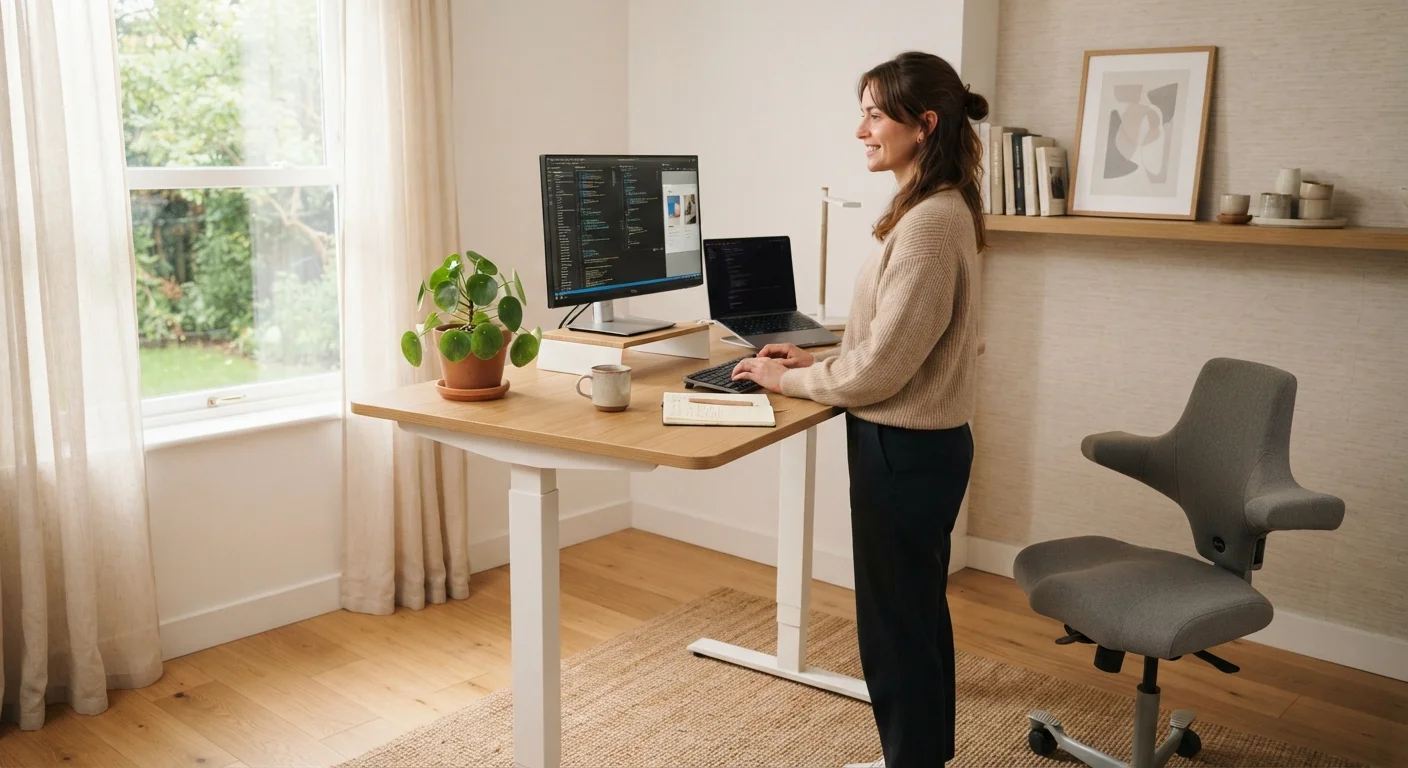
Photo: YetaWellness.com | Explore Trending Blogs editorial
Key Takeaways
- Standing all day is not the same as being physically active - it carries its own health risks.
- Alternating between sitting and standing is better supported by current evidence than either extreme alone.
- Short movement breaks, such as walking or stretching, add meaningful benefits beyond just changing postures.
- Proper ergonomic setup matters regardless of whether you sit, stand, or alternate.
- Consult a healthcare professional before making significant changes if you have musculoskeletal conditions.
Why This Comparison Matters
Most desk workers in the United States spend the majority of their workday seated. In response, standing desks have grown popular as a seemingly straightforward fix. But the conversation often conflates two distinct approaches: replacing sitting with standing entirely, versus alternating between sitting and standing throughout the day. These are meaningfully different, and the evidence treats them differently.
To understand why this distinction matters, it helps to start with what research says about breaking up sedentary time suggests: the body responds not just to total sitting time, but to how long any one posture is held continuously.
What Standing-Only Desk Use Actually Does
Proponents of standing desks often frame them as a direct antidote to the harms of sitting. While standing does engage more postural muscles and slightly elevates energy expenditure compared to seated work, research has raised important cautions about treating standing as uniformly beneficial.
Prolonged static standing - staying upright for hours without shifting position - has been linked to increased lower-limb discomfort, fatigue, and in some studies, a higher risk of varicose veins and musculoskeletal strain in the lower back and legs. A 2017 study published in Ergonomics found that two hours of prolonged standing led to significant increases in discomfort and mental fatigue in otherwise healthy workers.
The core issue is that standing-only replaces one static posture with another. Sedentary behavior and physical inactivity are related but distinct concepts - and standing motionless at a desk does not constitute physical activity in the way that brisk walking does.
| Criterion | Standing-Only Desk Use | Sit-Stand Routines |
|---|---|---|
| Evidence base | Mixed; benefits overstated in popular media | Stronger; supported by systematic reviews |
| Posture variety | Replaces one static posture with another | Actively cycles between multiple postures |
| Fatigue risk | High with prolonged use | Lower when intervals are managed |
| Lower limb strain | Elevated with extended standing | Reduced through regular position changes |
| Ease of adoption | Simple but often unsustainable long-term | Requires prompting; sustainable with habit formation |
| Equipment needed | Fixed-height standing desk | Adjustable-height desk plus behavioral cues |
What the Evidence Says About Sit-Stand Routines
Sit-stand routines - deliberately cycling between seated and standing postures at regular intervals - are better supported by current research. Guidelines from public health bodies, including those aligned with occupational health guidance, generally recommend breaking up sitting every 30 to 60 minutes, incorporating brief standing or movement breaks rather than standing continuously.
A 2018 systematic review in Applied Ergonomics found that height-adjustable workstations combined with behavioral prompting reduced sitting time and improved short-term comfort outcomes. The key mechanism isn't simply standing more - it's the act of changing posture and encouraging intermittent movement.
For practical strategies to work more movement into a desk-bound day without disrupting productivity, see turning a sedentary workday into a moving one.
A Note on Movement Breaks vs. Posture Changes
Making Either Approach Work Better
Regardless of which approach you take, ergonomic setup is non-negotiable. When standing, the desk surface should allow elbows to rest at roughly a 90-degree angle, with the monitor at eye level to avoid neck flexion. An anti-fatigue mat can reduce lower limb discomfort significantly during extended standing periods.
For sit-stand routines specifically, structured transitions work better than informal ones. Setting a timer or using a simple prompt - visual, audio, or app-based - meaningfully improves how consistently people actually alternate postures rather than defaulting to sitting.
Adding walking or stretching during transitions amplifies benefits further. Even a two-minute walk to refill water or move between rooms contributes to breaking up static time. Desk job stiffness relief techniques can address the cumulative effects of time spent in any fixed position.
This article is for general informational purposes only and does not constitute medical advice. If you have existing musculoskeletal conditions or concerns about your work setup, consult a qualified healthcare professional before making significant changes.
The content on this site is for informational purposes only and is not a substitute for professional advice. Always consult a qualified professional for guidance specific to your situation.