
Compound Movements vs. Isolation Exercises

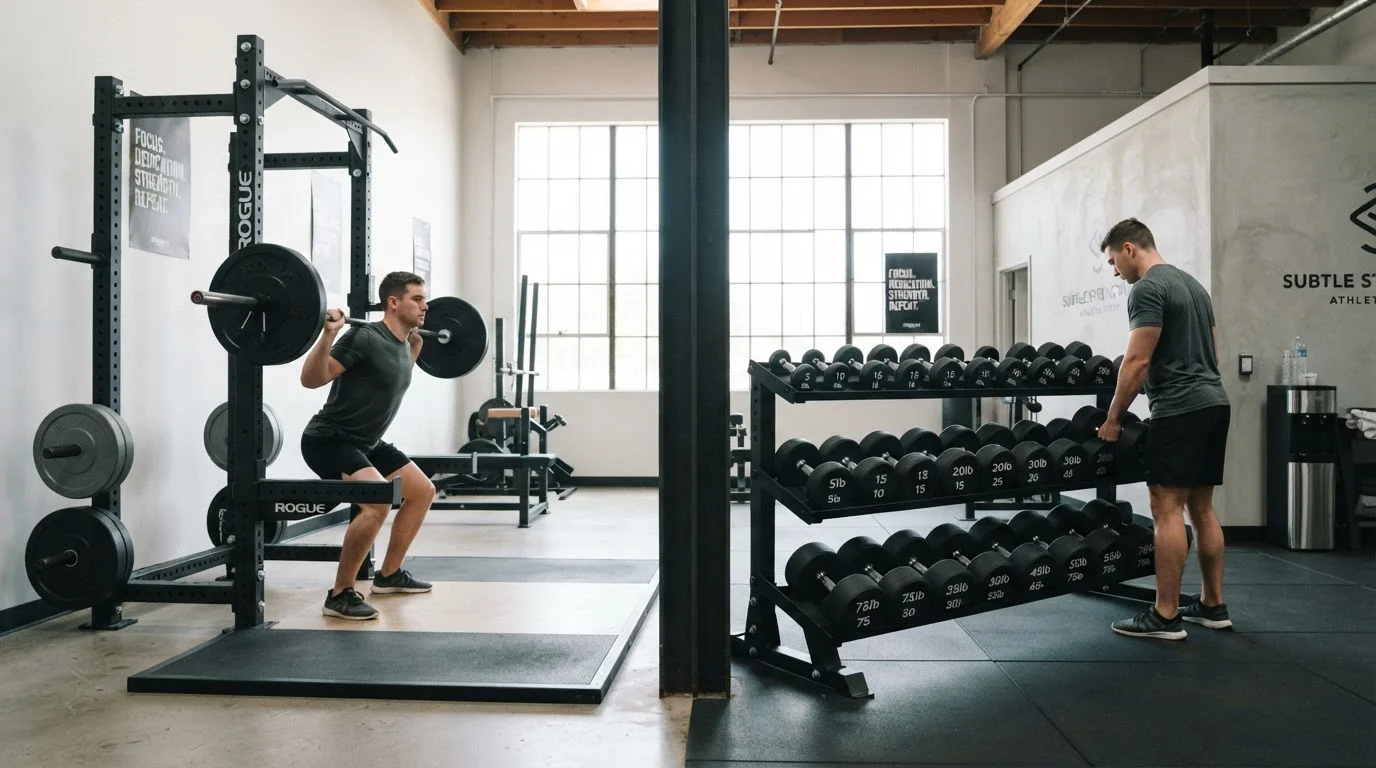
Photo: YetaWellness.com | Explore Trending Blogs editorial
Key Takeaways
- Compound movements recruit multiple muscle groups and joints simultaneously, making them highly time-efficient.
- Isolation exercises zero in on one muscle, useful for correcting imbalances or building specific muscle definition.
- Most exercise science supports leading workouts with compound movements and finishing with isolation work.
- Neither type is universally superior — program design depends on individual goals, experience, and health status.
- Beginners generally benefit most from compound movements before adding targeted isolation exercises.
What Sets These Two Exercise Types Apart
Every resistance exercise you've ever done falls into one of two categories: compound or isolation. The distinction is straightforward but important.
A compound movement involves two or more joints working together, recruiting multiple muscle groups in a single motion. A squat, for example, engages the hips, knees, and ankles while activating the quads, hamstrings, glutes, and core simultaneously. Other classic compound movements include deadlifts, pull-ups, bench press, overhead press, and rows.
An isolation exercise, by contrast, moves just one joint and targets one primary muscle. A bicep curl flexes only the elbow; a leg extension straightens only the knee. These moves are designed to load a single muscle as directly as possible.
Understanding this distinction is foundational to intelligent program design. As explored in functional movement patterns, human movement is built on multi-joint actions — squatting, hinging, pushing, and pulling — which is exactly why compound exercises often mirror real-world physical demands better than isolation work.
| Criterion | Compound Movements | Isolation Exercises |
|---|---|---|
| Joints involved | Two or more joints | One joint |
| Muscles recruited | Multiple groups at once | One primary muscle |
| Time efficiency | High — full-body stimulus per set | Lower — one area per exercise |
| Calorie burn per set | Generally higher | Generally lower |
| Functional carryover | Strong real-world transfer | Limited functional transfer |
| Best use case | Strength, conditioning, efficiency | Imbalance correction, rehab, hypertrophy |
| Recommended session placement | Beginning of workout | End of workout |
| Beginner suitability | Excellent starting foundation | Better after base is established |
The Case for Compound Movements
Compound exercises consistently show up at the core of evidence-based training programs, and for good reason. Because they recruit more total muscle mass, they generate a larger hormonal and metabolic response. More muscle working simultaneously means more calories burned per session and greater stimulus for system-wide strength adaptations.
They also build functional strength — the kind that transfers to carrying groceries, getting up from a chair, or hiking uneven terrain. A deadlift pattern, for instance, mimics the mechanics of picking anything up from the floor. Strength built in compound movements tends to carry over into everyday life in ways that bicep curls simply don't.
From an efficiency standpoint, compound movements are hard to beat. A well-programmed session of squats, rows, and push-ups can train nearly every major muscle in 30–45 minutes. For people with busy schedules, this efficiency often makes the difference between training consistently and not training at all.
For older adults especially, compound movements also support balance, coordination, and the kind of full-body muscle preservation that protects long-term independence. Consistency and moderate compound training tend to serve this population particularly well.
Where Isolation Exercises Earn Their Place
Isolation exercises aren't the enemy — they're a specialized tool. Their value becomes clearest in three specific contexts.
1. Correcting muscle imbalances. If one muscle is noticeably weaker or underdeveloped relative to its opposite or its synergists, isolation work lets you direct load precisely where it's needed. A runner with weak hip abductors, for example, might use lateral band walks or clamshells to address that gap without taxing their entire lower body.
2. Rehabilitation and injury recovery. Physical therapists routinely use isolation exercises to safely strengthen muscles around an injury without stressing other structures. This controlled environment is invaluable. If you're working through an injury, always work under qualified professional guidance rather than self-prescribing a protocol.
3. Hypertrophy-focused training. For those with specific aesthetic goals — developing the biceps, delts, or calves beyond what compound work provides — targeted isolation volume can stimulate localized muscle growth more effectively. Bodybuilders have long understood this, layering isolation exercises on top of a compound foundation.
The key insight is sequencing: isolation exercises work best after compound movements in a session, not before. Fatiguing a small stabilizer muscle before a heavy compound lift undermines performance and increases injury risk.
Whether your training happens at a gym, at home, or outside also shapes which options are most practical — a theme covered in detail in outdoor vs. indoor movement.
This article is for general informational and educational purposes only and does not constitute medical or professional fitness advice. Consult a qualified healthcare provider before beginning any new exercise program, particularly if you have an existing health condition or injury.
The content on this site is for informational purposes only and is not a substitute for professional advice. Always consult a qualified professional for guidance specific to your situation.