
Outdoor vs. Indoor Movement: What Each Offers That the Other Doesn't

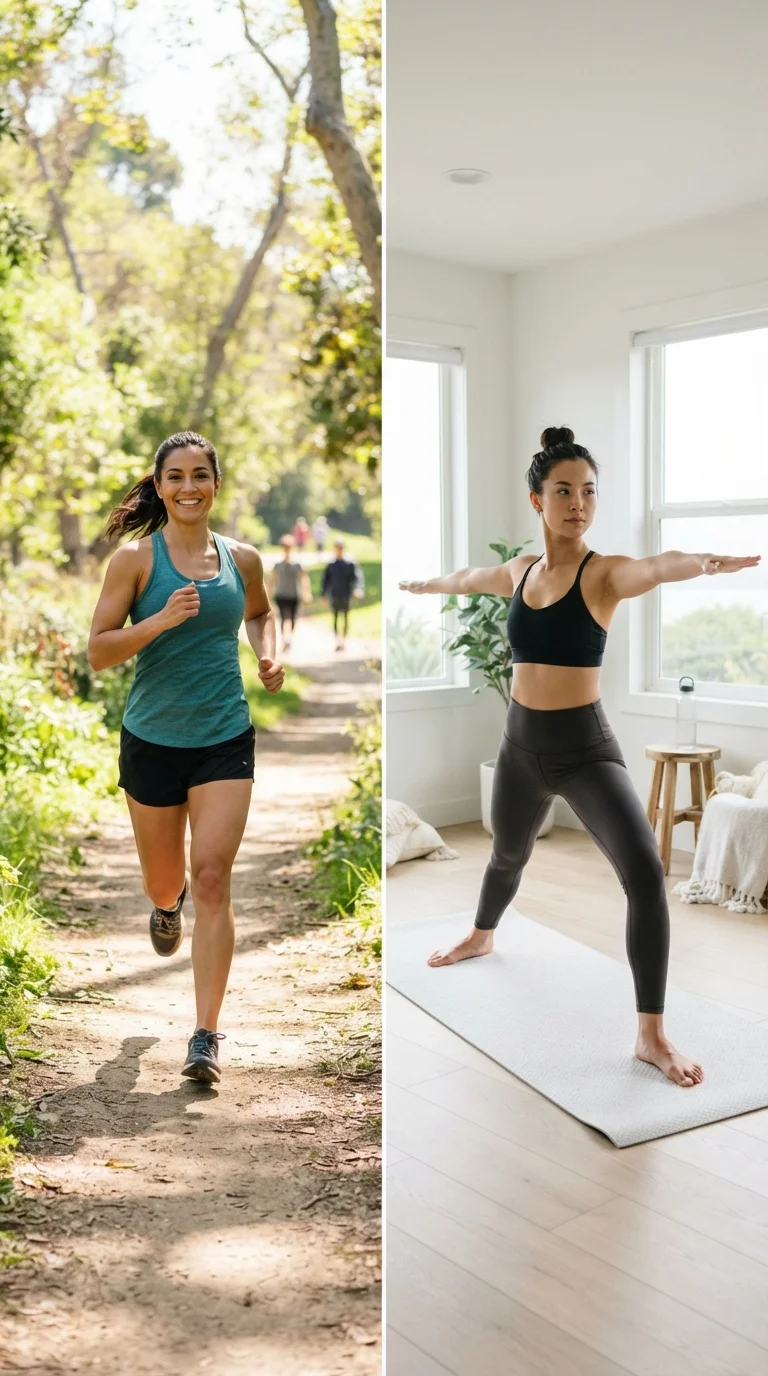
Photo: YetaWellness.com | Explore Trending Blogs editorial
Key Takeaways
- Outdoor exercise offers unique mental health benefits, including reduced stress hormones and improved mood.
- Indoor movement provides consistency, safety, and control over environment - especially in extreme weather.
- Neither setting is inherently superior; combining both can support a more well-rounded active lifestyle.
- Seasonal changes, personal safety, and health conditions are key factors when choosing your movement setting.
- You don't need a gym or structured routine to stay meaningfully active in either environment.
The Unique Benefits of Moving Outdoors
Exercising outdoors does something no treadmill fully replicates: it places you in a dynamic, sensory-rich environment. Research published in journals such as Environmental Health and Preventive Medicine has consistently linked time spent in natural settings - parks, trails, even tree-lined sidewalks - with lower cortisol levels and reduced perceived stress. This effect is sometimes called "green exercise."
Uneven terrain outdoors also recruits stabilizing muscles that flat gym floors don't challenge. Walking on a gravel path or grassy hill activates ankle and hip stabilizers in ways a smooth treadmill belt cannot. Over time, this can contribute to better balance and functional strength for everyday tasks.
Fresh air and natural light exposure support circadian rhythm regulation, which in turn affects sleep quality and energy levels. Morning outdoor walks in particular offer a dose of daylight that signals your body's internal clock to stay alert during the day and wind down at night.
Cost is another advantage. Outdoor movement - walking, jogging, bodyweight circuits in a park - typically requires no membership fee or equipment. For a deeper look at non-gym movement options, see movement strategies without a membership.
What Indoor Movement Does Better
Indoor exercise excels at one thing above all: reliability. Rain, extreme heat, poor air quality days, or icy sidewalks don't cancel your workout when you're moving inside. This consistency factor is arguably the most important variable for long-term fitness - a workout you can do every week beats a perfect workout you skip half the time.
Controlled surfaces reduce certain injury risks. Older adults, people recovering from lower-body injuries, or anyone with balance concerns may find that a stable, well-lit indoor floor provides meaningful protection. For a detailed breakdown of these tradeoffs by age and ability, see our guide for older adults.
Indoor settings also allow precise exercise selection. You can target specific muscle groups or movement patterns - a distinction covered thoroughly in our article on compound versus isolation exercises. That level of programming control is harder to replicate in an open park.
Finally, indoor environments offer privacy - a genuine motivator for beginners or anyone self-conscious about exercising in public. That psychological comfort can make the difference between starting a habit and not starting at all.
| Factor | Outdoor Movement | Indoor Movement | |
|---|---|---|---|
| Mood & mental health | Strong evidence for stress reduction | Benefits vary by activity type | |
| Weather dependence | High - limited in extreme conditions | None - consistent year-round | |
| Cost | Often free or low-cost | Equipment or membership may apply | |
| Surface & joint safety | Variable terrain, higher fall risk | Controlled, stable surfaces | |
| Muscle activation variety | Natural terrain engages stabilizers | Targeted via equipment selection | |
| Air quality control | Depends on local environment | Filtered air, consistent quality | |
| Privacy & comfort | Public - may deter beginners | Private - lower social barrier |
Seasonal and Safety Considerations
Season and local environment shape which option is practical, not just preferable. During summer, high heat and humidity raise the risk of heat exhaustion during vigorous outdoor activity - a real physiological concern, not just discomfort. The CDC advises exercising outdoors during cooler morning or evening hours and hydrating proactively during warm months.
In winter, icy sidewalks and reduced daylight hours create hazards and motivation barriers. Moving activity indoors during harsh weather is a straightforward adaptation, not a fitness compromise.
Air quality is a factor many people overlook. On high-pollution days - common in urban areas during wildfire season or heavy traffic periods - outdoor exercise can expose the lungs to elevated particulate matter. Checking an air quality index before outdoor workouts is a sound practice for anyone with respiratory sensitivities.
Personal safety matters too. Exercising outdoors in low-traffic, well-lit areas, telling someone your route, and avoiding headphones at full volume are standard precautions worth building into any outdoor routine. For those exploring different activity types, walking versus running is a practical starting-point comparison.
Building a Flexible Movement Routine Across Both Settings
The most resilient approach treats outdoor and indoor movement as complementary, not competing. A practical framework: anchor your weekly movement in whichever setting requires less friction for you personally - then use the other as a supplement when conditions are right.
For example, someone who walks outdoors on weekdays might shift to home bodyweight exercises during a cold snap, then return outside when weather improves. This flexibility prevents the all-or-nothing thinking that often derails consistency.
You don't need a gym to build this kind of routine. Building a daily movement practice without a gym membership offers structured guidance for weaving activity into ordinary days - indoors or out. And if you're weighing a more formal indoor option, working out at home versus going to a gym walks through the practical tradeoffs.
The goal is sustainable movement, not a perfect setting. Both environments can support real fitness progress - the one that works is the one you'll keep returning to.
This article is for general informational purposes only and is not a substitute for professional medical advice. Consult a qualified healthcare provider before beginning any new exercise program, especially if you have existing health conditions.
The content on this site is for informational purposes only and is not a substitute for professional advice. Always consult a qualified professional for guidance specific to your situation.