
Strength Training and Aerobic Exercise: What Older Adults Actually Need from Both

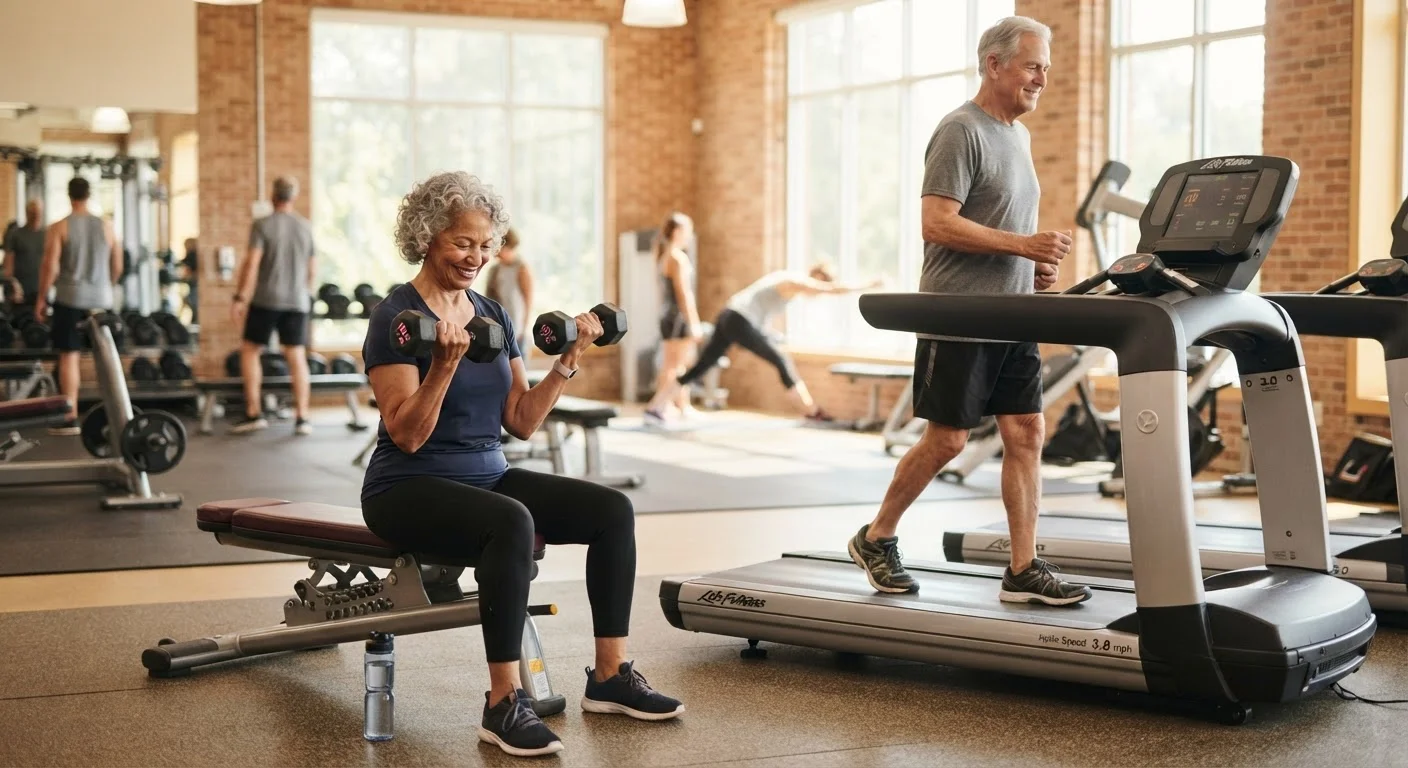
Photo: YetaWellness.com | Explore Trending Blogs editorial
Key Takeaways
- Muscle mass declines roughly 3–8% per decade after age 30, making resistance training essential for older adults.
- Aerobic exercise supports cardiovascular health, blood sugar regulation, and emerging evidence links it to brain health.
- Most major health guidelines recommend combining both types of exercise each week, not choosing between them.
- Either form of exercise can be adapted for nearly any fitness level, mobility limitation, or health condition.
- Consistency over intensity is the most reliable predictor of long-term benefit from any exercise routine.
Why the Debate Misses the Point
For decades, fitness conversations have framed strength training and aerobic exercise as competing priorities. Among older adults, this framing is especially misleading — the evidence strongly supports treating both as complementary pillars of a healthy-aging routine, not rivals for your weekly schedule.
The American College of Sports Medicine and the CDC's Physical Activity Guidelines for Americans both recommend that adults 65 and older engage in at least 150 minutes of moderate aerobic activity per week alongside muscle-strengthening activities on two or more days. The guidelines don't ask you to choose — they expect both, for good reason.
That said, understanding what each type of exercise actually does for an aging body helps you prioritize intelligently, adapt when health conditions limit options, and stay motivated. See our overview of how movement needs shift across life stages for broader context.
What Strength Training Does for the Aging Body
Sarcopenia — the gradual, age-related loss of skeletal muscle mass — begins in early adulthood and accelerates after 60. Left unaddressed, it contributes to reduced mobility, increased fall risk, slower metabolism, and loss of independence. Resistance training is the most effective countermeasure currently known.
Beyond muscle preservation, strength training improves bone density (reducing osteoporosis risk), enhances insulin sensitivity, supports joint stability, and has been associated with better balance and faster reaction times — all directly relevant to fall prevention. Research also suggests resistance exercise contributes to improved sleep quality and reduced depressive symptoms in older populations.
Importantly, strength gains are achievable at any age. Studies consistently show that adults well into their 70s and 80s can build meaningful muscle with appropriately structured resistance programs. For guidance on adapting resistance training as your physiology changes, strength training after 50 covers the key adjustments.
| Criterion | Strength Training | Aerobic Exercise |
|---|---|---|
| Primary benefit | Muscle mass & bone density | Cardiovascular & lung function |
| Fall prevention | Direct — improves balance and stability | Indirect — improves coordination and endurance |
| Cognitive health support | Emerging evidence, modest effect | Consistent evidence, stronger effect |
| Metabolic benefits | Raises resting metabolic rate | Improves insulin sensitivity, lowers blood sugar |
| Recommended frequency | 2+ days per week | 150+ min/week moderate intensity |
| Joint-friendly options | Bands, machines, bodyweight | Swimming, cycling, walking |
| Mood & mental health | Reduces depression symptoms | Reduces anxiety and depression reliably |
What Aerobic Exercise Contributes That Strength Training Cannot
Cardiovascular exercise — walking, swimming, cycling, dancing — trains the heart and lungs in ways resistance work simply doesn't replicate. Regular cardio lowers resting heart rate, improves arterial flexibility, reduces LDL cholesterol, and helps regulate blood pressure. For older adults managing hypertension or type 2 diabetes risk, these effects are clinically significant.
Aerobic activity also has a well-documented relationship with brain health. Sustained moderate-intensity cardio increases blood flow to the brain and appears to support neuroplasticity — the brain's capacity to adapt and form new connections. For a deeper look at this research, aerobic exercise and cognitive health explores what scientists currently understand and where uncertainty remains.
On the psychological side, aerobic exercise reliably reduces anxiety and depressive symptoms, in part through mechanisms involving endorphins and stress-hormone regulation. Many older adults also report that rhythmic cardio activities — particularly those done outdoors or in social settings — provide meaningful mood and motivation benefits. Outdoor versus indoor exercise examines those environment-specific trade-offs in detail.
Building a Balanced Routine That Actually Works
The practical challenge for most older adults isn't choosing between strength and cardio — it's fitting both into a sustainable weekly routine. The good news: they don't require separate days or large time blocks. A 30-minute session can combine a brief aerobic warm-up with resistance exercises and still fulfill the intent of both guidelines.
Beginner-friendly approaches include bodyweight exercises (squats, wall push-ups, step-ups) paired with brisk walking. As fitness improves, resistance bands, light free weights, or machine-based equipment can be introduced. Water-based exercise offers a low-impact option that combines elements of both modalities for those with joint limitations.
The most underappreciated variable in any exercise plan is consistency. A moderate routine maintained week after week produces far better long-term outcomes than intense programs abandoned after a month. Why consistency beats intensity after 60 explains why this principle is especially important as we age.
This article is for general informational purposes only and does not constitute medical advice. Always consult a qualified healthcare provider before beginning or significantly changing an exercise program, particularly if you have existing health conditions or physical limitations.
The content on this site is for informational purposes only and is not a substitute for professional advice. Always consult a qualified professional for guidance specific to your situation.