
DXA, BIA, Skinfold Calipers: A Plain-Language Guide to Body Composition Testing Methods

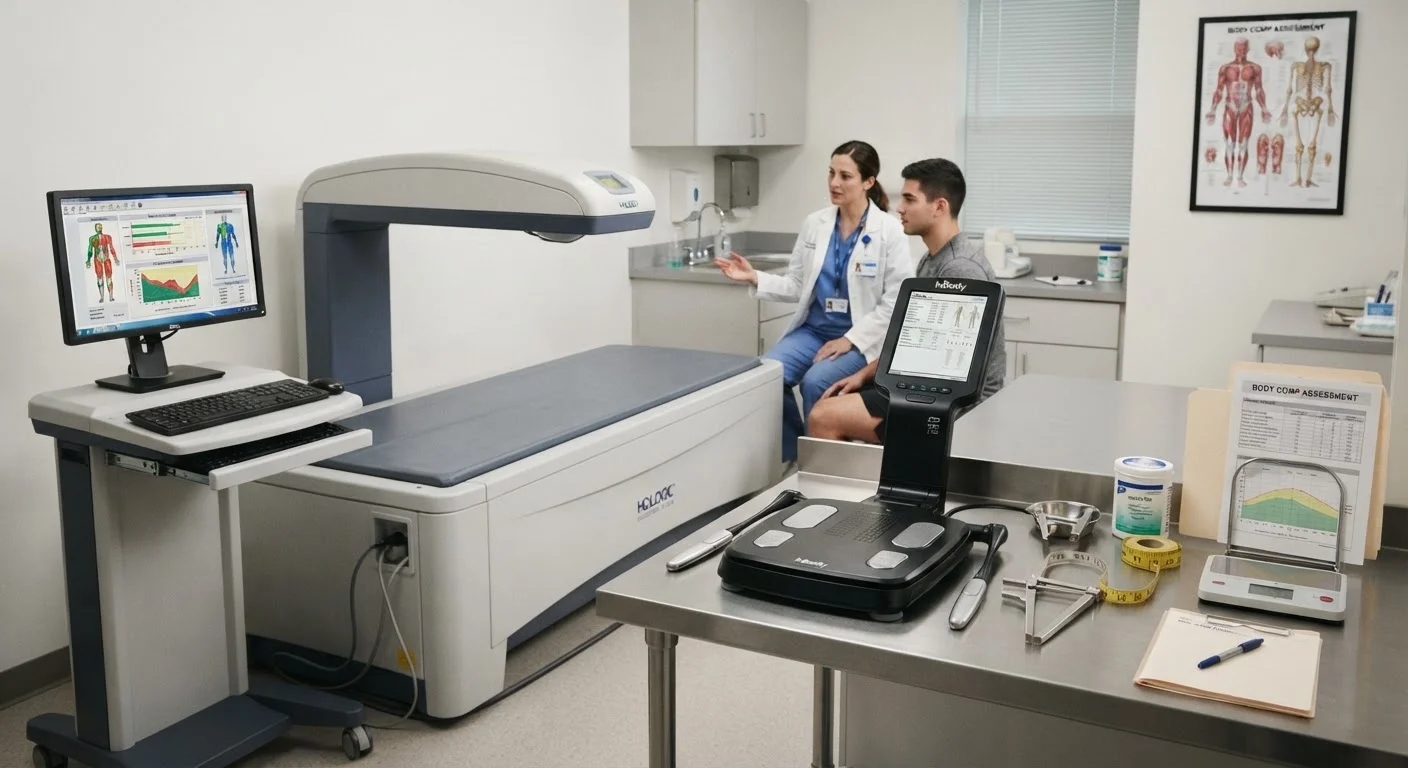
Photo: YetaWellness.com | Explore Trending Blogs editorial
Why Body Composition Testing Matters
Your bathroom scale reports one number: total body weight. It cannot distinguish between muscle, fat, bone, and water - all of which influence health in very different ways. Body composition testing goes deeper, giving a more complete picture of what your body is actually made of.
As covered in our foundational explainer on body composition, knowing your ratio of fat mass to lean mass can provide context that a weight reading simply cannot. But how that ratio gets measured matters - different methods carry different levels of precision, cost, and practical availability.
This guide breaks down the three most widely used methods - DXA, BIA, and skinfold calipers - in plain language, so you can understand what each one actually does and how much confidence to place in its results.
| DXA typical error range | ±1-3% (Under standardized clinical conditions) |
| Consumer BIA typical error range | ±3-8% (Compared to DXA; varies by hydration and device) |
| Skinfold caliper error (skilled tester) | ±3-5% (With consistent protocol and experienced technician) |
| DXA radiation dose | Very low (Far below diagnostic CT scan levels) |
| Most accessible method | Consumer BIA scales (Available as at-home devices) |
| Highest regional detail | DXA (segmental analysis) (Reports arms, legs, and trunk separately) |
DXA (Dual-Energy X-Ray Absorptiometry)
How it works: DXA uses two low-dose X-ray beams at different energy levels to differentiate between bone mineral, lean soft tissue, and fat tissue. Originally developed to measure bone density, it has become a reference standard in body composition research.
Accuracy: DXA is among the most precise methods available outside of cadaver analysis. It can distinguish regional fat distribution - including visceral fat around organs - and provides segmental data (arms, legs, trunk separately). Measurement error is generally estimated at 1-3% under standardized conditions.
Limitations: DXA scans require clinical or research settings, carry a small radiation exposure (far below diagnostic CT levels), and can cost $50-$200+ per session depending on location. Results can also be influenced by hydration status and the specific DXA software used. Different scanner manufacturers may produce slightly different outputs, which can complicate comparisons across facilities.
Best for: Clinical research, baseline assessments with high precision needs, or when tracking changes in muscle and bone over time under consistent conditions.
BIA (Bioelectrical Impedance Analysis)
How it works: BIA passes a low-level electrical current through the body. Because fat tissue conducts electricity poorly while lean tissue (which contains more water and electrolytes) conducts it well, the device estimates body fat percentage based on resistance to the current.
Accuracy: BIA devices vary considerably in accuracy. Research-grade multi-frequency BIA machines used in clinical or laboratory settings perform meaningfully better than single-frequency consumer scales. Population-level studies suggest consumer BIA devices can err by 3-8 percentage points compared to DXA, with accuracy varying by sex, age, ethnicity, and fitness level.
Limitations: BIA is highly sensitive to hydration. Dehydration inflates fat percentage estimates; overhydration suppresses them. Eating, exercising, and even the time of day affect results. For a fuller picture of what throws off these readings, see what factors skew body composition readings.
Best for: Convenient, low-cost tracking over time when conditions are standardized - same time of day, same hydration state, same device.
Skinfold Calipers
How it works: A trained technician uses calipers to pinch and measure the thickness of subcutaneous fat (fat just beneath the skin) at specific body sites - typically 3, 7, or more locations. These measurements are entered into validated equations to estimate total body fat percentage.
Accuracy: When performed by a skilled, experienced technician using a validated protocol, skinfold measurement can achieve accuracy comparable to BIA. Error rates with skilled testers are often cited at 3-5%. However, inter-tester variability - differences between two technicians measuring the same person - can be substantial, making consistency critical.
Limitations: Accuracy depends heavily on the technician's skill and the equation used, which may not have been validated for every population. Skinfold measurement only captures subcutaneous fat and cannot directly assess visceral fat or lean mass quality. It is also less comfortable for some individuals.
Best for: Field settings, athletic programs, and situations where cost and portability matter - provided the same trained tester uses the same protocol each time.
To understand how to get the most reliable data regardless of method, see how to approach assessments more reliably.
Choosing the Right Method for You
No single method is universally superior for every context. The right choice depends on your goals, access, and budget. The table below summarizes the key trade-offs.
| Method | Typical Accuracy | Cost | Accessibility |
|---|---|---|---|
| DXA | High (±1-3%) | $$-$$$ | Clinical/research settings |
| BIA (clinical) | Moderate-High | $-$$ | Clinics, gyms, some hospitals |
| BIA (consumer) | Variable (±3-8%) | $ | At-home scales widely available |
| Skinfold Calipers | Moderate (±3-5%) | $ | Gyms, athletic programs |
A key principle across all three methods: consistency matters more than absolute accuracy for personal tracking. Choosing one method and measuring under the same conditions each time - hydration, time of day, proximity to meals and exercise - produces more meaningful trend data than switching between methods. For a guide to interpreting what your results actually mean, see how to read a body composition report.
You may also find it useful to compare how these testing methods relate to broader metrics like body fat percentage, BMI, and waist-to-hip ratio.
This article is for general informational and educational purposes only and is not a substitute for professional medical advice. Consult a qualified healthcare provider for any personal health decisions or concerns.
The content on this site is for informational purposes only and is not a substitute for professional advice. Always consult a qualified professional for guidance specific to your situation.